Last week we awarded our annual £500 prize for the best Loop blog piece in the previous calendar year, as judged by an independent jury. Here, Managing Editor Kate Hawkins presents the longlisted pieces — and reveals who has taken this year's top spot
The Loop's annual award allows our team to showcase blogs with particular relevance to current events; to honour pieces likely to influence political opinion; and to highlight those which might have particular appeal to a readership beyond academe.
By the end of 2025, the editorial team had assembled a longlist of 13 impressive blog pieces. Our three-member Jury then scrupulously assessed each one, awarding marks out of ten for originality, readability, and real-world significance / relevance.
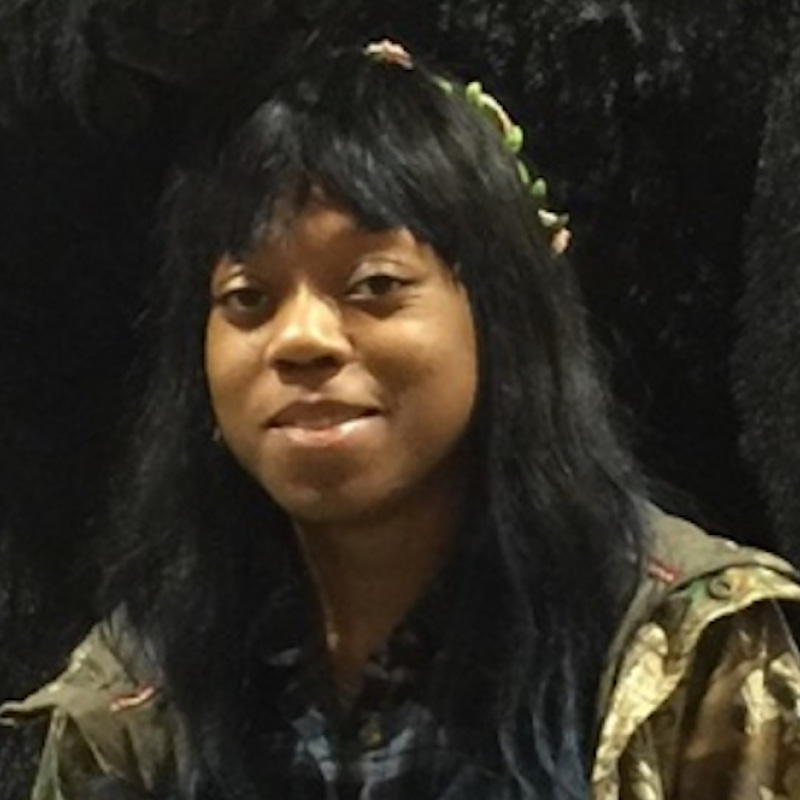 | Akudo McGee (PhD, Maastricht University) is a senior advisor in democracy and the rule of law at the Netherlands' Council for Public Administration. Her research interests include illiberalism, EU integration, norm contestation, and the role of civil society under illiberal governments. | |
 | Alejandro Tauber is a publisher at EUObserver. According to his LinkedIn profile, he is 'good at talking and writing about complicated things in an approachable and attractive way, and making people feel excited about things they did not know they would be excited about!' | |
 | Priscyll Anctil Avoine — joint winner of our 2024 Prize — is a Researcher in Feminist Security Studies and Associate Senior Lecturer at Swedish Defence University. Her research focuses on embodied and emotional processes in contemporary wars, with emphasis on women’s political militancy in leftist insurgencies. |
Jurors scored each piece independently, against the three key qualities, to arrive at the following shortlist of highest-scoring blog pieces:
 | The world at our fingertips, just out of reach: the algorithmic age of AI Artificial Intelligence promises unprecedented access to the world’s knowledge, yet delivers a curated illusion. Soumi Banerjee explores how algorithmic mediation deepens inequalities, shaping not just what we see — but how, and whether, we understand it. |
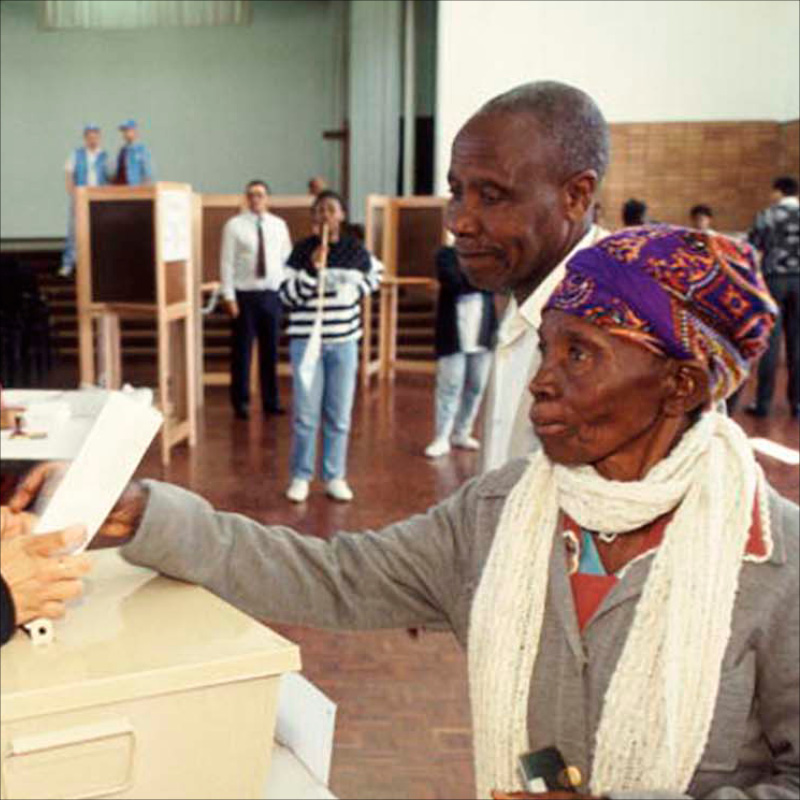 | 🎭 What the West gets wrong about democracy Western democratic ideals have been imposed upon former colonies around the world. In Africa, this imposition reveals liberal democracy’s contradictions. Mebratu Kelecha invites a radical reimagining, through decolonial praxis and epistemic rupture. |
 | 🌈 Metapolitical digital wars on gender, race, and queer life Silvia Díaz Fernández reveals how proponents of the far-right metapolitical project are shaping public discourse to fit their anti-democratic interests. Digital violence against women, racialised people and queer communities is all part of their strategy. |

When the figures were totted up, the piece by Silvia Díaz Fernández on 🌈 Metapolitical digital wars on gender, race, and queer life had accumulated the highest score. In their laudation, Jury members told us:
'Silvia’s compelling blog piece tackles a phenomenon – digital violence against women and minorities – which is receiving growing attention in politics, academe and entertainment. Cleverly, she reframes reactionary politics as a form of resistance, explaining how online movements and sentiments are shaping current online discourse and a new political culture.
To make sense of current far-right politics, Silvia revisits established theories such as Antonio Gramsci’s 'war of position' to lay bare the workings of the manosphere – a concept which has yet to be effectively theorised and pathologised in the academic space. Silvia did a wonderful job of articulating and finding a theoretical basis for this troubling new phenomenon, equipping us with the tools to reclaim, in her words, ‘the terrain of culture, humour, and emotion as spaces for feminist, queer and anti-racist democratic imagination.'
Silvia is a Ramón y Cajal Researcher at Instituto de Políticas y Bienes Públicos, Spanish National Research Council. Her work explores digital culture, anti-feminism and far-right politics from an interdisciplinary perspective bridging sociology, media studies and political science. On learning of her win, Silvia told us:

'I’m truly honoured to receive The Loop’s Best Blog Prize. At a time when the digitalisation of far-right politics and manospheric imaginaries continues to chip away at the dignity of racialised communities, queer people, and women, receiving this award feels especially meaningful. It reassures me that this work matters, and I sincerely appreciate the jury’s recognition. I hope to keep contributing to conversations that not only challenge these harms, but also help build more just and feminist futures.'
In December 2025, The Loop welcomed Paloma Caravantes González, Laura Eigenmann and Francesca Feo as new editors of our thriving 🌈 Gendering Democracy series exploring the gendered face of democratic backsliding. The three took over from founding series eds Conny Roggeband (UvA) and Andrea Kriszán (CEU). Gendering Democracy has now published more than 30 path-breaking instalments under the 🌈 banner, which have chalked up over 30,000 readers.
Silvia's prize-winning blog piece was the very first commission for the new series editors. Recalling how the collaboration came about, Francesca told us:

We invited Silvia to contribute to 🌈 Gendering Democracy because her innovative research highlights the importance of understanding anti-feminist and illiberal politics as central to the cultural hegemonic project of far-right forces. Her prize-winning article illuminates the epistemic work underpinning far-right metapolitics in digital spaces – an issue of growing importance. We are therefore delighted to see Silvia’s work receive the recognition it deserves!
Our heartfelt thanks to all nominated authors, and congratulations once again to this year's deserving winner.