
Ursula von der Leyen’s move to group Türkiye with Russia and China jeopardises the EU’s new security architecture. Murat Aktaş warns that treating an official EU candidate and ally as an 'excluded partner' is a strategic miscalculation. This deepening crack between rhetoric and reality creates an ontological crisis, threatening the credibility of the enlargement policy
European integration and enlargement are built on a delicate balance between normative aspirations and strategic imperatives. As Veronica Anghel argued in her foundational contribution to this series, enlargement is not merely an optional policy instrument, but a cornerstone of the EU’s capacity to adapt, evolve, and thrive.
Russia's 2022 invasion of Ukraine put enlargement back on the EU’s political agenda. The recent shift in EU discourse indicates security and geopolitics are now priorities. EU Commission President Ursula von der Leyen's speech in Hamburg on 20 April to mark the 80th anniversary of the German newspaper Die Zeit was a striking manifestation of this shift in rhetoric and strategy.
By emphasising the need to 'complete' European integration, EU discourse suggests expansion has moved beyond a normative process to an explicit instrument of power projection
Von der Leyen emphasises the need to 'complete' European integration. The discourse suggests expansion has moved beyond a normative process to become an explicit instrument of power projection. She also added that the EU must not become vulnerable to influence from Russia, China, and Türkiye, indicating the EU considers its periphery an arena of geopolitical competition.
Her Die Zeit speech illustrates the EU's shift away from the classic narrative of European integration as a civilian project only. It reveals instead a vision of a strategic space defined by sharper boundaries. Von der Leyen suggests the era of cheap Russian energy and Chinese production has ended, as have the benefits of a US security umbrella. As Von der Leyen herself points out, this model is no longer sustainable.
The EU is now rebuilding its economic and military capabilities in pursuit of 'strategic autonomy'. Recent developments reveal that enlargement has become part of a strategy to expand security and influence. The thesis that enlargement is now a direct instrument of relational geopolitics has gained strength since the Russia-Ukraine war. Enlargement binds the European Union and selected third parties through shared rules, institutions, and mutual obligations. Rather than excluding potential partners, this transforms participating actors and the Union itself. However, the gap between the EU’s official rhetoric and its actual policy is becoming increasingly evident: an ontological problem.
While EU accession negotiations have been at a standstill, Türkiye has continued to collaborate with the EU on climate, migration and counter-terrorism issues
One of the most striking contradictions is Von der Leyen’s positioning of Türkiye alongside Russia and China. In 2018, the Council of the EU decided that accession negotiations with Türkiye were at a standstill, citing continuing backsliding in reforms in the key areas of the enlargement strategy, in particular in the functioning of the democratic system, respect for fundamental rights, and independence of the judiciary. However, the EU and Türkiye continue to collaborate intensely on issues such as climate, migration, security, counterterrorism and the economy.
Türkiye remains a critical transit hub for Caspian and Middle Eastern energy resources, a central actor in Black Sea security, and an indispensable military power on NATO’s southeastern flank. Former European Council president Charles Michel recently defended Ankara as a key ally.
Von der Leyen’s statement thus sits in contrast with many of the collaborative EU-Türkiye programmes the EU deploys, and raises questions about the EU’s commitment to geopolitics.
The Commission President's approach also calls into question the credibility of EU enlargement policy under a security imperative.
Oversimplifying Türkiye’s position in this equation is risky. Amid the EU's quest for strategic autonomy, aligning Türkiye with Russia and China could have damaging consequences, particularly in energy security and defence cooperation.
Moreover, a recent survey showed that more than half of Türkiye's population still hopes for a future in the EU. Preserving that societal orientation matters strategically: public support for Europe creates long-term political space for cooperation, regulatory alignment, and democratic convergence, whereas sustained exclusion risks empowering anti-Western narratives and accelerating Türkiye’s geopolitical drift away from Europe.
It is worth considering the criticism advanced by Nacho Sánchez Amor, the European Parliament’s Türkiye rapporteur, who described the grouping of Türkiye alongside Russia and China as 'geopolitically flawed'. He argued that such framing is 'totally inconsistent with recurrent signals for stronger cooperation and defence'. These tensions point to a broader lack of coherence in how the EU currently articulates its geopolitical strategy.
Von der Leyen’s statements illustrate how enlargement policy is increasingly framed as security and strategic competition. Yet the increasing securitisation of enlargement also creates tensions between the EU’s normative commitments, its institutional practice, and its broader strategic interests.
Enlargement policy is increasingly framed as security and strategic competition, but this creates tensions between the EU’s normative commitments
In this context, distancing Türkiye carries potential long-term costs. Since the launch of accession negotiations, the EU’s uneven commitment to Türkiye’s membership perspective has already affected the credibility of the enlargement process. Further rhetorical exclusion risks deepening mistrust at a moment when cooperation remains necessary across defence, migration, energy, regional stability, and Black Sea security.
Redefining relations with Türkiye, revitalising negotiation channels, and deepening security cooperation would offer a direction more aligned with the EU’s strategic interests. If it fails to do so, the EU’s geopolitical future would be significantly impaired.

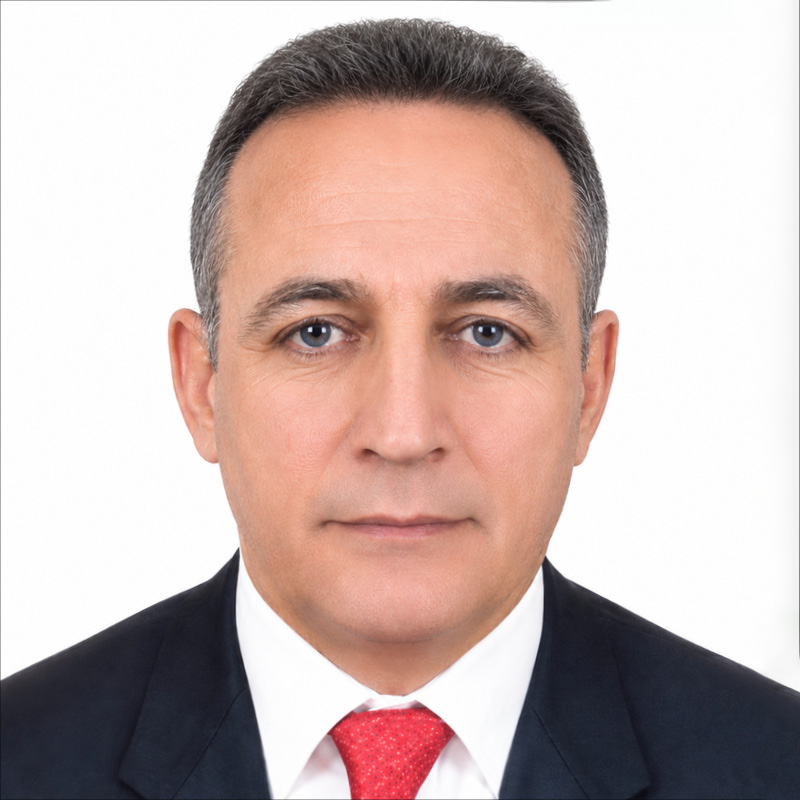
Murat specialises in European politics, artificial intelligence, human rights, and democracy.
He obtained his PhD from Paris University VII (Denis Diderot), where his doctoral research focused on EU-Turkey relations.
His research addresses key challenges in contemporary European politics, including the rise of the far right, democratic backsliding, and the evolving dynamics of EU governance.
Over the course of his academic career, he has held several international positions, including postdoctoral visiting researcher at EHESS (École des Hautes Études en Sciences Sociales) and visiting professor at the Department of European & International Studies, King’s College London.
Murat is the author and editor of numerous books and academic publications on European politics, as well as a special issue of International Sociology on The Rise of the Far Right and Populist Movements in Europe.
He is guest editor of a forthcoming special issue of Frontiers in Political Science on Democratic Backsliding and the Rise of Radical Right and Populist Parties.
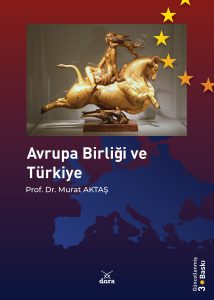
European Union and Türkiye
2024 Bursa: Dora, 3rd Edition
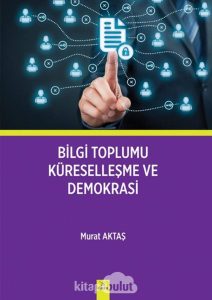
Information Society Globalisation and Democracy
2020 Bursa: Dora Yayıncılık



A Turk whitewashing Turkey's aggressivity against its neighbours including occupying EU territory. You almost caught us.