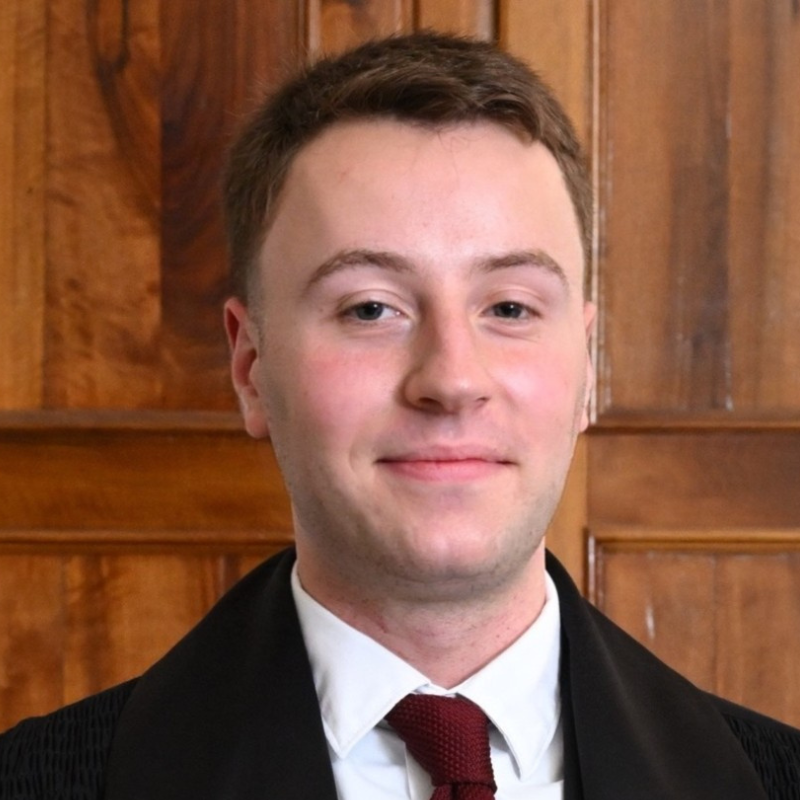
Britain’s debate over private schooling often treats fairness as a choice between a divided system and a common one. Pierce Leslie argues that equality depends on whether funding, capacity and accountability reach the pupils who need them most
Private education remains one of the most divisive questions in English schooling. The debate is often treated as a test of fairness. If some families can afford to educate their children outside the state system, the argument runs, a more equal system should make that choice less attractive. Yet this confuses institutional uniformity with educational equality. The harder question is whether public money, school places and specialist support reach the pupils who need them most.
This is not to deny privilege, selection or social advantage. Private education is instead part of the institutional architecture around state education. Since January 2025, private-school fees have been subject to 20% VAT. Private schools educate 6.3% of pupils in England, and enrolment fell 3.8% in the year to January 2026. That decline matters, but the Department for Education (DfE) states that demographics are primarily driving the fall in pupil numbers across school types. The point, then, is not that private provision should sit outside public scrutiny, but that reducing institutional difference does not automatically improve outcomes.
On the surface, England’s classrooms appear to have significant spare capacity. The most recent school-capacity survey identifies 1.2 million unfilled state-funded primary and secondary places, representing 13% of available places. Only 47,000 pupils were in places above their school's reported capacity.
England’s classrooms may appear to have significant spare capacity, but spare places are not interchangeable across planning areas, year groups, or school types
This does not mean every private-school pupil could move readily into a nearby state school. Spare places are not interchangeable across planning areas, year groups, or school types. DfE data show variation within and between local authorities. IFS similarly notes that falling rolls will not necessarily offset private-to-state transfers in the same places.
This matters fiscally, with average spending in 2025–26 standing at about £7,000 per primary pupil and £7,800 per secondary pupil. But average expenditure is not the marginal cost of one additional pupil. IFS modelling estimated a lower marginal cost, reflecting existing capacity and the difference between average and incremental expenditure. The government's VAT modelling still expects tax revenue to exceed the additional cost of pupils moving into state schools.
The sharper constraint is special educational needs and disabilities. More than 1.8 million pupils in England have Special Educational Needs (SEN); 538,500 have an Education, Health and Care (EHC) plan. Across the wider system, active EHC plans reached 718,800 in January 2026, 12.5% higher than a year earlier. Moreover, 45.3% of pupils with an EHC plan are eligible for free school meals, compared with 22.7% with no identified SEN.
More than 1.8 million pupils in England have special educational needs and disabilities. 538,500 have an Education, Health and Care plan
This is where a crude state-versus-private argument becomes least useful. Among EHC-plan pupils in special schools, 16.8% attend an independent special school. Councils can already reclaim VAT on EHCP-named private placements they fund. Treating this provision as equivalent to an ordinary fee-paying school obscures the capacity problem policymakers encounter.
Teacher supply tells a similar story. State-funded schools had 466,400 full-time-equivalent teachers in 2025/26, while recorded vacancies fell to 1,600. Recruitment has improved but remains uneven. Postgraduate secondary recruitment reached 89% of target in 2025–26, while physics reached only 78%. This suggests the problem is less a universal shortage than a mismatch of subject, specialist, and local capacity.
None of this makes private education socially neutral. Sutton Trust research finds that 36% of people in Britain's leading positions were privately educated, compared with around 6% of current pupils. Academic research also points to substantial resource gaps and social segmentation between fee-paying and state schools.
Yet those inequalities do not prove that reducing private provision alone will improve state education. One Millennium Cohort Study found the raw GCSE advantage of private-school pupils disappears overall after adjusting for socioeconomic background. Selection, family resources, and accumulated advantage matter alongside school type.
The policy objective should therefore reduce unequal opportunity without assuming that equal treatment requires identical institutions. England already accepts this principle elsewhere. Pupil Premium follows indicators of disadvantage, while high-needs funding adds support where a pupil's needs exceed what mainstream schools are expected to provide.
A stronger model would extend that logic. Rather than subsidising private fees or suppressing private provision, the government should direct additional funding to measurable disadvantage, SEND (Special Educational Needs & Disabilities) need, and genuine local capacity pressure. The design principle resembles Access to Work, with support following functional need rather than institutional status.
Rather than suppressing private provision, the government should direct additional funding to measurable disadvantage, SEND need, and genuine local capacity pressure
This should not mean another assessment bureaucracy. Existing mechanisms include the Pupil Premium and high-needs top-ups. The government has introduced an Inclusive Mainstream Fund and is consulting on a local SEND inclusion formula. The useful reform is to make support earlier, more portable, and less dependent on crossing a high administrative threshold.
Existing growth funds could be adapted for this purpose. Where verified transfers from private to state schools generate unanticipated pressure within a planning area, temporary funding ought to follow the additional pupils. Where rolls are falling, and spare capacity exists, no compensatory payment would be warranted.
Mixed provision still requires common rules. Independent schools in England must meet statutory Independent School Standards, and the DfE can intervene where they fail. The next step should focus on comparable publication of attainment, destinations, inspection and inclusion information, while retaining different institutional models.
Private schools do not strengthen state education simply by existing. Nor is this an argument against taxing them. A fair system should judge policy by whether disadvantaged pupils receive better teaching, adequate specialist support and access to good local schools.
Institutional uniformity may appear egalitarian while leaving inequalities unaddressed. A more defensible settlement is one that combines a strong universal state offer, targeted funding where need is greatest, and common minimum standards across recognised schools. Fairness should describe the quality of opportunity pupils receive, not whether every family receives it through the same institution.