A fascist zeitgeist has replaced the populist one. Luca Manucci explains how, to attract voters, the contemporary far right exploits a widespread saudade for the authoritarian past. The firewall has fallen, the stigma has gone, and the Iberian countries are no longer ‘exceptional’
From the second half of the1970s until just a few years ago, the Iberian Peninsula seemed immune to the electoral success of far-right parties. The collective memory of Franco and Salazar and their decades-long dictatorships continued to cast a long shadow, rendering authoritarian ideas 'untouchable', toxic. This Iberian exception became more visible in the 2000s: while far-right parties gained ground across Europe, Portugal and Spain stood apart and, despite seemingly favourable conditions, the far right remained marginal at best.
Things changed in 2019, when the far right entered the parliaments of Portugal and Spain. Although VOX and Chega had no direct ties to their countries' former authoritarian regimes, they succeeded with an ideology, a discourse, and practices reminiscent of those dark pasts. Nativism, law and order policies, tough stances against minorities, promotion of traditional gender roles and, in the case of VOX, an extreme nationalism against Catalan separatism. These were the distinctive traits that put the two parties in line with the rest of the European far right. But how was this possible? What brought about the end of Iberian exceptionalism?
Although far-right parties VOX and Chega had no direct ties to their countries' former authoritarian regimes, they succeeded with an ideology, a discourse, and practices reminiscent of those dark pasts
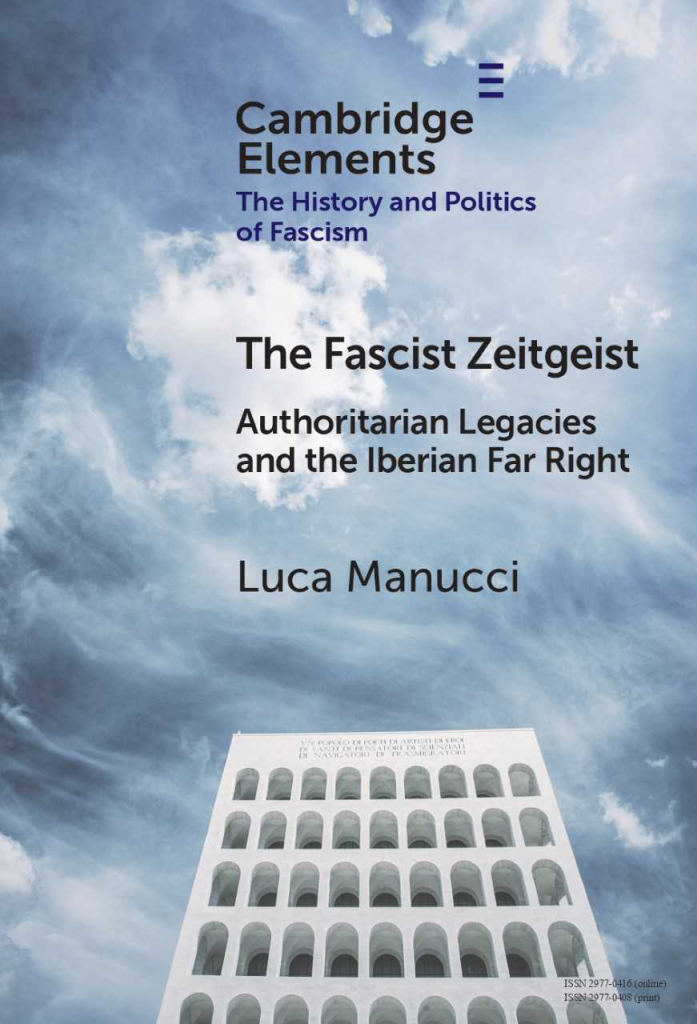
My new book The Fascist Zeitgeist: Authoritarian Legacies and the Iberian Far Right argues that the leaders of VOX and Chega captured a favourable opportunity structure. The media, meanwhile, granted them all the visibility (and hence, credibility) they needed.
VOX leader Santiago Abascal and Chega leader André Ventura exploited provocative rhetoric and capitalised on high-profile events. As we show in another recently published work, the media fell under their spell. Converting controversy into visibility and latent nativist sentiment into votes, Abascal and Ventura remodelled their parties. Vox and Chega transformed from marginal splinters into a major political force capable of exploiting authoritarian nostalgia for electoral gain.

Literature on the far right has long treated the authoritarian past as something from which parties must distance themselves. Showing democratic credentials, and pursuing dédiabolisation, seemed necessary to become credible political actors.
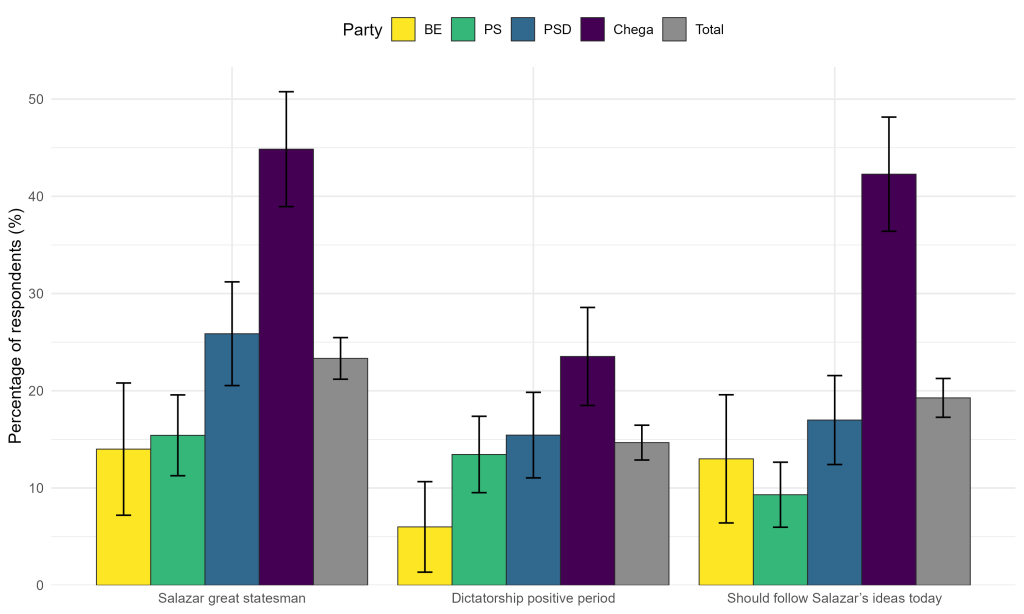
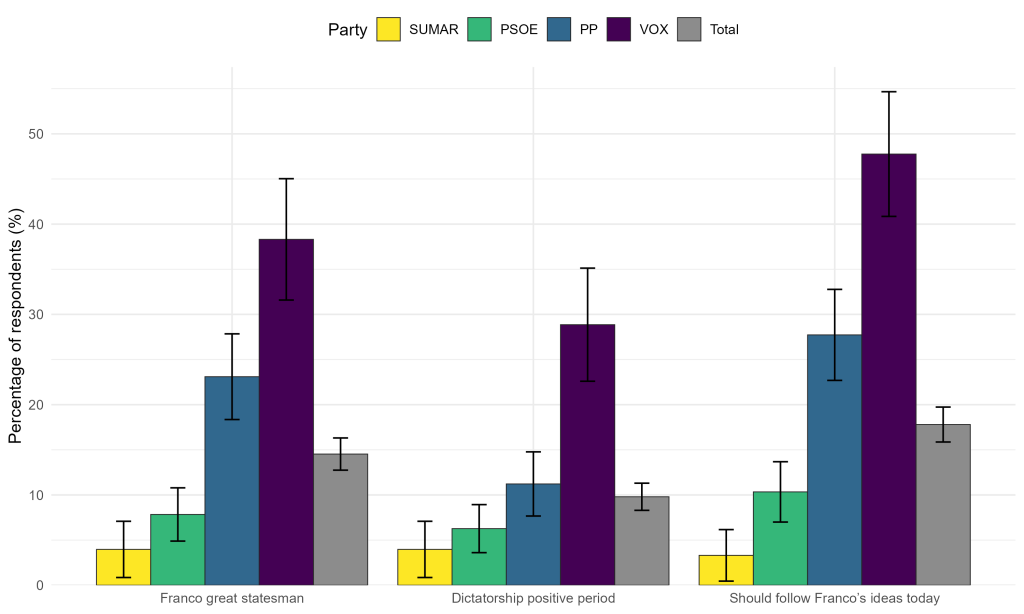
My recent paper with Steven van Hauwaert challenges this assumption. Using POLAR survey data from Spain and Portugal, we show that authoritarian nostalgia – favourable views of the regimes of Spanish dictator Francisco Franco and Portugal's António de Oliveira Salazar – is a key marker of VOX and Chega supporters, and positively associated with voting for them. Embracing the authoritarian past could thus reward, rather than penalise, such parties.
Nostalgia for former dictatorships in Spain and Portugal is a key marker of VOX and Chega supporters
My book shows how nostalgia for the authoritarian past attracts support from voters of diverse age, gender, and education. According to VOX and Chega voters, Franco and Salazar were among the greatest statesmen in their countries’ history. Populist voters want to follow their ideas today so that their countries can regain international status. Unsurprisingly, these voters also hold a much more positive view of right-wing dictatorships than the rest of the population.
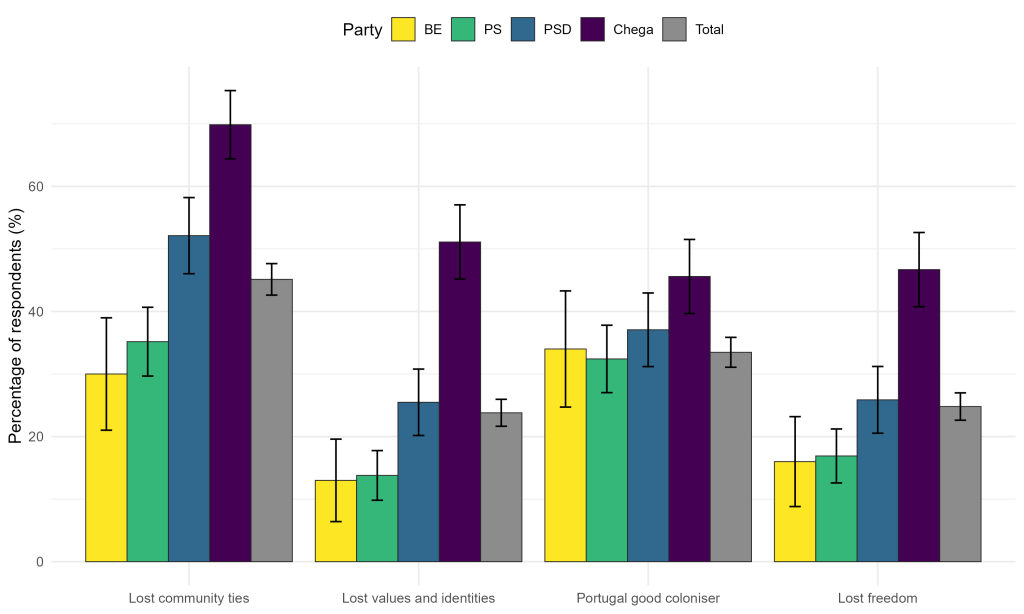
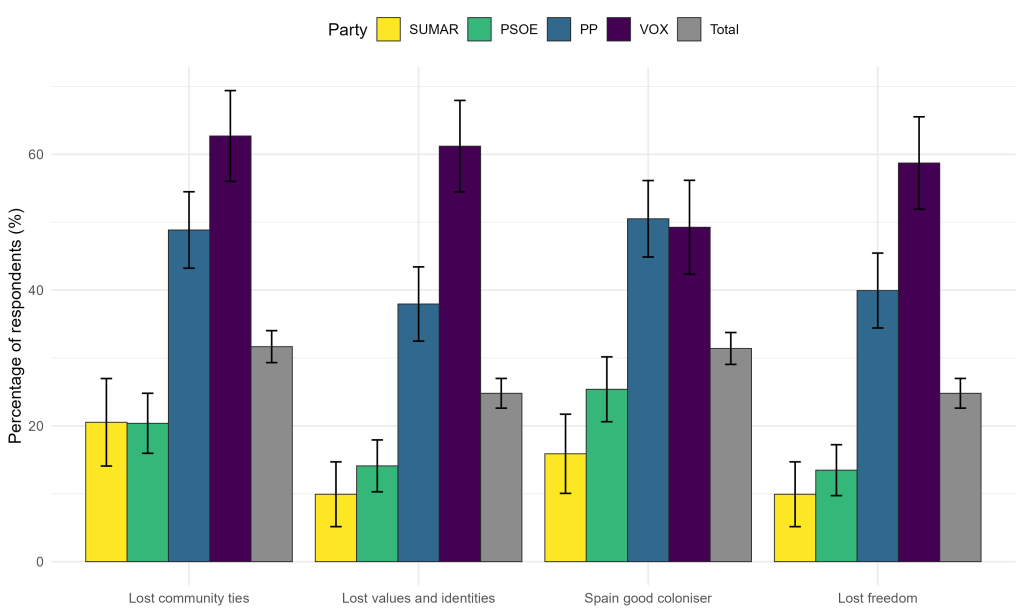
I also asked whether people thought things were better or worse after 1974 (Portugal's Carnation revolution) and 1975 (Franco’s death). Once again, VOX and Chega voters stand out. After dictatorship, respondents believe, their countries lost community ties, identity, values, and freedom. Interestingly, the idea of Spain and Portugal as 'good colonisers' is so widespread that far-right voters are pretty much in line with the rest of the population.
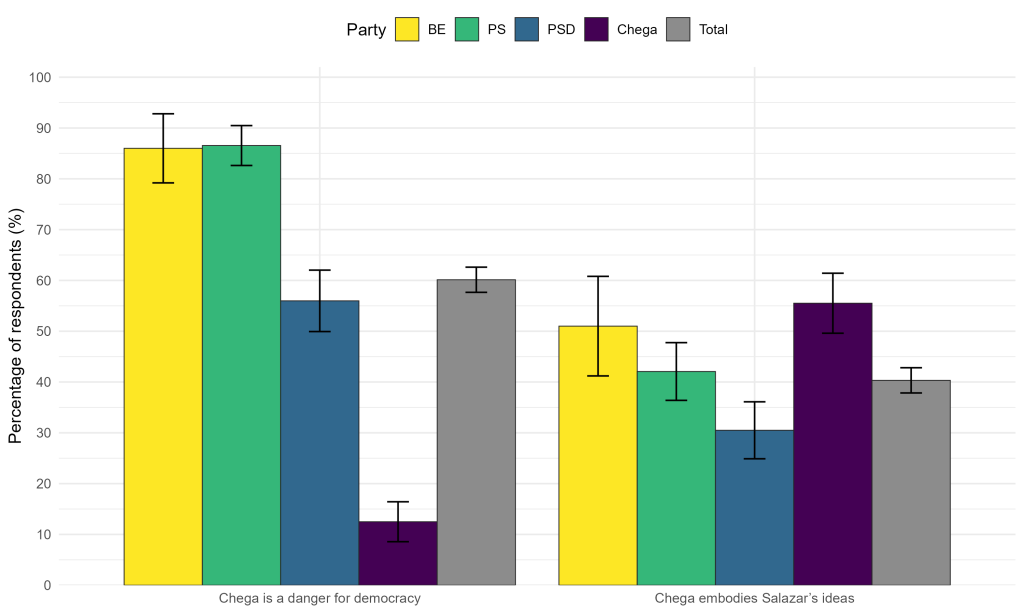
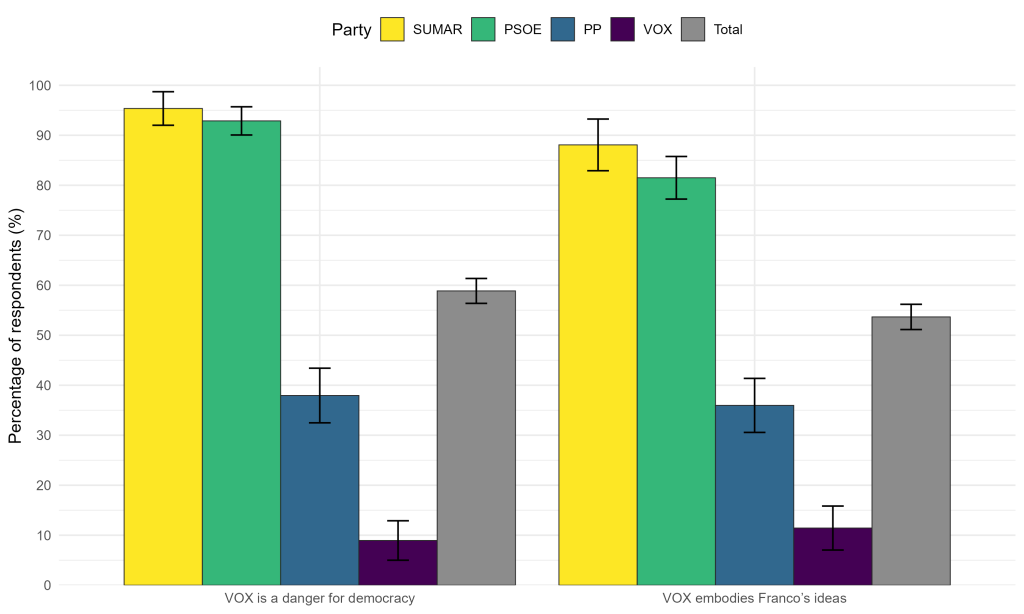
Finally, I asked whether Chega (or VOX) posed a danger for democracy, and whether the party embodied these dictators' ideas. Chega supporters do not see their party as a threat to democracy. At the same time, however, they clearly see its link to Salazar’s ideas. Nor do VOX voters believe their party constitutes a threat to democracy. Surprisingly, however, they also claim they do not see it as a continuation of Franco’s ideas.
Spain and Portugal show that collective memory evolves, stigma diminishes, and opportunities shift. The far right can achieve electoral relevance when persistent demand for authoritarian ideas coincides with far-right political entrepreneurs with broadly perceived democratic credentials and intense media visibility.
If the past is not critically examined and responsibly transmitted to future generations, it remains available for political mobilisation
Nostalgia for the dictatorships of Franco and Salazar did not vanish with democratic transition but persisted as a latent attitudinal resource. It has been transmitted across generations and now resonates even with younger voters. Democratic transitions do not erase these legacies. If the past is not critically examined and responsibly transmitted to future generations, it remains available for political weaponisation, with lasting political consequences for the quality of democracy.
As I argued earlier in this series, the process of autocratisation across the world is not inevitable, and there are many ways to resist it. Engaging with our authoritarian past, rather than whitewashing it, can foster democracy. Another thing we can do, is to keep our analytical rigour intact. As I mentioned in this series' foundational article, commentators and pundits (but also academics) spent years lumping racism, nativism, and authoritarianism together under the label of populism, which dulled our ability to see the rising illiberal threat to democracy. Finally, beyond classic items such as nativism, authoritarianism, and traditional values, it is essential to include authoritarian nostalgia to explain the electoral success of the far right.
No.51 in a thread on the 'illiberal wave' 🌊 sweeping world politics

Luca is currently working in the project Populus: Rethinking Populism.
He is interested in the link between populism and collective memory. His research also focuses on political communication and political parties.
Luca studied in Bologna and Brussels, then received his PhD from the University of Zurich.
Populism Observer blog archive
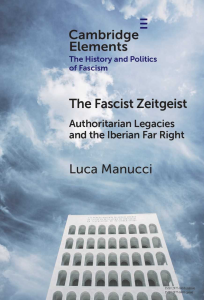
The Fascist Zeitgeist: Authoritarian Legacies and the Iberian Far Right
Cambridge University Press, 2026
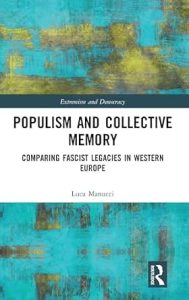
Populism and Collective Memory: Comparing Fascist Legacies in Western Europe
Routledge, 2019