Antonin Lacelle-Webster
Jean-Paul Gagnon’s ambitious project expands our democratic imaginaries. While inspiring, Antonin Lacelle-Webster argues that making sense of democracy requires more than a lexicon. Resisting the prevailing sense of disrepair in today’s democratic politics asks us to pay more attention to democracy's appropriation, design, and normative value Read more
Martino Comelli
Christian democracy is the political culture that has been the driving force behind European integration. Yet, according to Martino Comelli, it has also facilitated the democratic backsliding of some countries of central and east Europe by providing an illiberal political toolbox of narratives and policies Read more
Hager Ali
The study of regime types, Hager Ali argues, is imbalanced. Theories and concepts of democracy have received attention for decades. But amid the resurgence of autocracies, scholars of authoritarianism still do not have the luxury of nuanced typologies to dissect the broad spectrum of non-democratic regimes Read more
Leonardo Fiorespino
Leonardo Fiorespino finds Jean-Paul Gagnon’s proposed lexicon of democracy wanting in its base assumptions around knowledge and arbitrariness. Moreover, he wonders, can we really trust 'democracy's words'? Read more
Alistair Cole
Incumbent French President Macron has been re-elected for a second five-year term. This is not a simple success story, Alistair Cole argues. The election revealed disturbing trends in French democracy. Read more
Pablo Ouziel
Today, democratic imaginaries are diluted while parochial understandings of democracy are presented as universal. Such a state of affairs, argues Pablo Ouziel, calls for a deeply diverse speaking-with multilogue amongst democratic traditions Read more
Viktor Orri Valgarðsson
Viktor Valgarðsson argues that words are not enough to understand the concept of democracy. 'Democracy' denotes an important ideal that we must not sacrifice on a mountain of words. Read more
Hannah Muzee
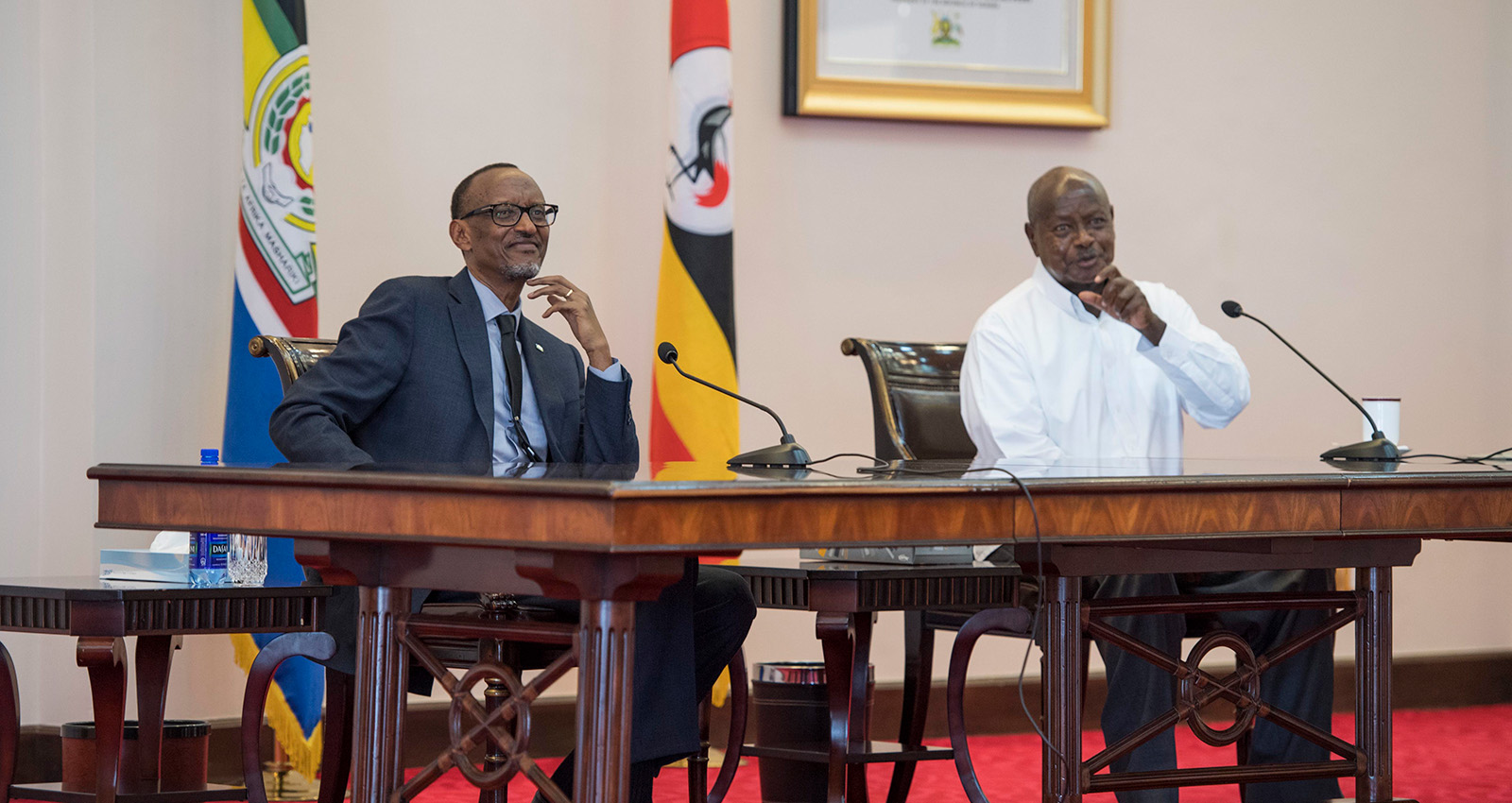
The new democratically oriented regimes that emerged in Rwanda and Uganda after the 1980s aspired to overcome postcolonial sectarianism. Those aspirations now appear largely to have receded, argue Hannah Muzee and Femi Mimiko, as both regimes have drifted into personalised politics and illiberal practices Read more
We use necessary cookies to make our site work. We'd also like to set analytics cookies that help us make improvements by measuring how you use the site. These will be set only if you accept.
▼
Strictly Necessary Cookies
Necessary cookies enable core functionality such as security, network management, and accessibility. You may disable these by changing your browser settings, but this may affect how the website functions.
▼
Analytics Cookies
Google Analytics
We'd like to set Google Analytics cookies to help us improve our website by collecting and reporting information on how you use it. The cookies collect information in a way that does not directly identify anyone. For more information on how these cookies work please see our Privacy Notice.