
Laura Southgate finds that democracy alone does not consistently reduce disaster impacts across Southeast Asia. A clearer pattern concerns administrative capacity and whether governments can turn political decisions into coordinated action when hazards place institutions under pressure
It makes sense that democracy should help governments protect people from disasters. That is because elected leaders face public scrutiny, and citizens can punish governments for their failures. More open political systems should also allow information about risk and suffering to circulate more freely. However, my research with Thomas O’Brien, Komal Aryal, and Ahmet Cenk Sarı, across all 11 Southeast Asian countries, finds that democracy alone is not consistently associated with lower disaster impacts. That does not mean democracy is irrelevant, but it does mean that political accountability is only one part of the story.
Our ESRC-funded Disaster Governance and Resilience Evidence Hub (DG-HUB) examines deaths, people affected and economic losses alongside political institutions, government administration, development and hazard exposure between 1991 and 2021. The project brings these comparative data and related research together in an open evidence hub. We separate two things that scholars often bundle together as ‘good governance’: electoral accountability and bureaucratic autonomy. By bureaucratic autonomy, we mean the professional and organisational quality of the administration through which governments put decisions into practice.
Our findings show a clearer negative pattern emerging around this administrative dimension, although it varies depending on whether we examine mortality, people affected or economic damage.
This distinction becomes particularly important when hazards unfold quickly. Storms, floods, earthquakes and other rapid-onset events compress the time available for governments to make decisions. Political leaders may recognise a threat and have good plans on paper, but protection also depends on warning chains, evacuation procedures, logistics and coordination between agencies and levels of government.
Political leaders may have good disaster plans on paper, but protection also depends on warning chains, evacuation procedures, logistics, and coordination
Our results suggest that bureaucratic autonomy may matter particularly during rapid-onset disasters, when governments have very little time to respond. The pattern is not equally strong across every outcome, so we should treat it with some caution. It nevertheless points to an important distinction between recognising the need to act and having the administrative capacity to respond effectively.
Democratic accountability can create incentives for governments to protect citizens. Administrative institutions help turn those incentives into warnings, evacuation, relief and recovery. We should therefore treat the two as distinct but potentially complementary parts of government.
This is important for governments and international partners and the way they think about disaster preparedness. There are established political and administrative routes for adopting disaster-management strategies, creating agencies and passing legislation. The harder challenge is making these measures work in practice. A second strand of our research reinforces this point. Implementation of national disaster-risk-reduction strategies shows some suggestive evidence that subsequent disaster severity is lower. But the pattern is fragile and varies substantially across countries. Formal local mandates and the integration of disaster risk into planning do not show the same robust protective pattern.
Emergency agencies need good working relationships with other parts of government, and communities need information they trust when agencies tell them to move
Those measures tell us whether formal provisions exist, not whether they are well funded, enforced or implemented. The more important question is what happens after a government adopts a reform, and whether it actually changes what government can do in practice. Warning systems need communications infrastructure, while local authorities need staff, resources and authority. Emergency agencies also need working relationships with other parts of government, and communities need information they trust and realistic options when agencies tell them to move. A new law or strategy may be of little use if the main constraint lies in implementation.
We examine Laos to consider this distinction in more detail. In that country, external support does not arrive in an institutional vacuum. Domestic systems help determine how losses are assessed, how requests are coordinated and how assistance is channelled. Major disasters can activate procedures and international support without necessarily producing lasting changes across the wider system.
Our Laos research therefore distinguishes between temporary mobilisation and durable institutional learning. The evidence from major disaster episodes shows considerable mobilisation and some specific adaptations, but it does not establish a simple story in which a disaster automatically produces lasting improvements in governance.
This is becoming more important as spending on climate adaptation and disaster preparedness grows. We should not judge success only by whether a government adopts another strategy or receives additional funding. It also matters whether institutions can continue to implement measures once the immediate crisis has passed.
Disasters also show how political and administrative institutions work together in practice. Political institutions shape which risks receive attention and how governments are held to account, but effective response still depends on the administrative capacity to translate those pressures into action.
Political institutions may shape which risks receive attention. But effective response still depends on the administrative capacity to translate pressure into action
Our findings do not suggest that less democratic government is preferable, nor do they show that bureaucracies should be insulated from accountability. We find the opposite; that professional administrative capacity is most valuable when it helps responsive government turn public commitments into protection. Disasters therefore test more than whether governments are accountable. They test whether accountability can be turned into action.
The research discussed in this article was conducted as part of the ESRC-funded Disaster Governance and Resilience Evidence Hub (ES/X014762/1), with Thomas O’Brien (University of York), Komal Aryal (Aston University) and Ahmet Cenk Sarı (Aston University)

Laura's research focuses on international security, Southeast Asian politics, the Indo-Pacific region, disaster governance and resilience.
Her research has also been published in Asian Security, The RUSI Journal, Asia Policy, Political Science, International Politics, Intelligence and National Security, and the Journal of Asian Security and International Affairs.
She currently leads the ESRC-funded Disaster Governance and Resilience Evidence Hub (DG-HUB).
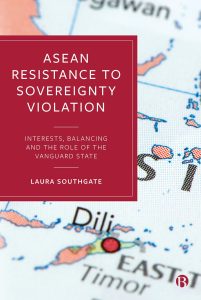
ASEAN Resistance to Sovereignty Violation: Interests, Balancing and the Role of the Vanguard State
Bristol University Press, 2019
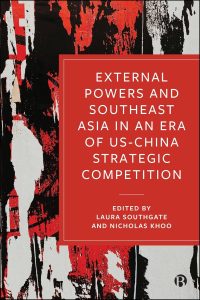
External Powers and Southeast Asia in an Era of US-China Strategic Competition
Co-editor, with Nicholas Koo
Bristol University Press, 2026


