
Football’s global spectacle does not suspend politics, says Ilan Kapoor. Rather, it reveals how national identity remains emotionally powerful, commercially valuable, and geopolitically charged
The media often describes the FIFA World Cup as 'a festival of global unity'. For a month, billions watch the same matches, sing the same songs, and recognise the same drama.
Its appeal is obvious. At a time of war, polarisation, border anxiety, and geopolitical fragmentation, football appears to offer a rare common language.
Yet the World Cup does not move us beyond nationalism. It gives nationalism one of its most legitimate and emotionally intense stages.
Flags, anthems, colours, historical grievances, collective pride, and fantasies of national destiny are all mobilised. Football fans do not treat them as dangerous or outdated, but celebrate them with passion.
This is what makes the tournament politically revealing. In many other contexts, we associate nationalism with exclusion, xenophobia, authoritarianism, or violence. The World Cup, however, sanitises nationalism through sport.
It becomes the last acceptable nationalism.
The 2026 World Cup makes this especially clear.
The tournament is the largest in history, with 48 teams and 104 matches across Canada, Mexico, and the United States. Its scale reinforces the image of inclusion: more countries, more fans, more stories, more representation.
But inclusion into the tournament does not mean the disappearance of national rivalry. Quite the opposite. Expansion multiplies the number of national dramas available for global consumption.
World Cup success offers small countries a place on the world stage that is otherwise denied by military, economic, or diplomatic hierarchies
Every match becomes a miniature referendum on national character. Pundits describe teams as resilient, arrogant, disciplined, emotional, naïve, mature, underachieving, or heroic. These adjectives rarely remain purely sporting. They attach themselves to wider ideas about people, culture, history, and political status.
This is why the World Cup is never only about football. It is about recognition.
For established powers, victory confirms status. For smaller or historically marginalised countries, success offers a way of appearing on the world stage that is otherwise denied by military, economic, or diplomatic hierarchies.
Morocco’s continued success is a powerful example. After becoming the first African and Arab team to reach a World Cup semi-final in 2022, Morocco has again used the tournament to claim global visibility. Its 3-0 victory over Canada in the round of 16 set up another politically resonant meeting with France, the former colonial power it faced in 2022.
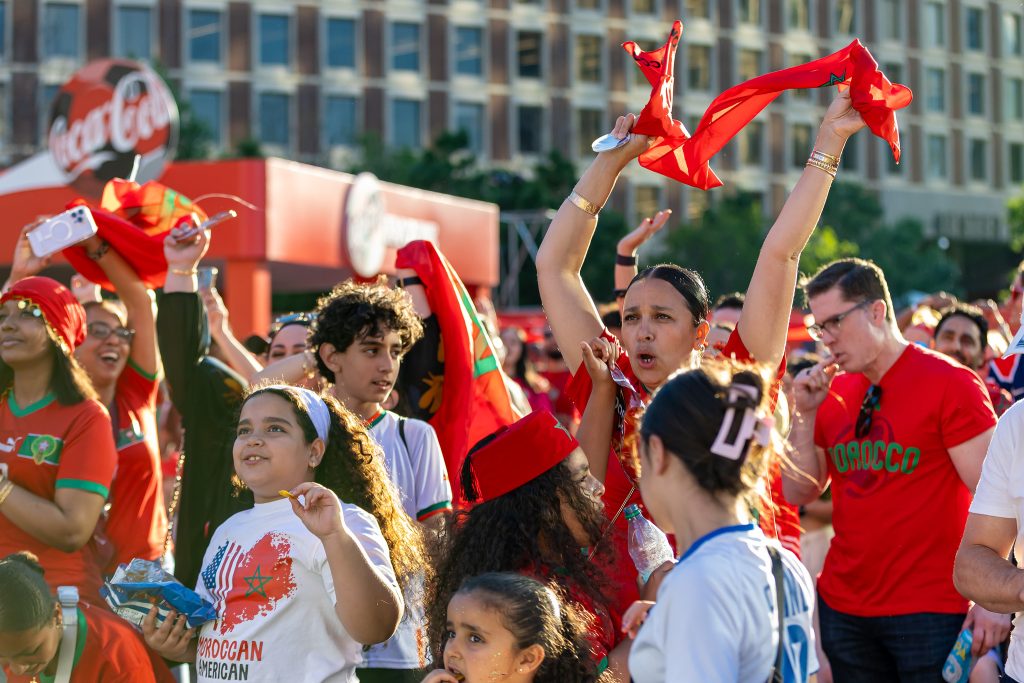
The politics here are not reducible to a simple anti-colonial script. Morocco’s team is itself shaped by migration, diaspora, European academies, and transnational football labour. But that is precisely the point. World Cup nationalism today is not old-fashioned territorial nationalism. It is nationalism made through globalisation.
Diasporic players, migrant fans, satellite television, social media, global sponsorships, and cross-border identities all help produce the nation as a footballing object.
The nation remains powerful, but it is assembled through transnational networks.
This matters because the World Cup now unfolds in a more multipolar international order.
Western dominance is less secure. China, the Gulf states, India, Brazil, and others are seeking greater influence. African and Arab teams increasingly demand recognition beyond the old hierarchy of European and South American football. Host states use sport to project modernity, competence, and global relevance.
The 2026 tournament is itself politically charged. It is co-hosted by three North American countries at a time when the United States, Canada, and Mexico are entangled in disputes over borders, trade, migration, and regional power. Human rights organisations have warned that the World Cup’s promise of openness sits uneasily with US immigration policies, visa bans and deportation raids that can restrict access for fans, journalists, workers and local communities.
Sport therefore does not escape geopolitics. It translates geopolitics into a more emotionally acceptable register.
This is why the World Cup is so useful to states. It allows them to perform openness while policing borders, celebrate diversity while managing dissent, and invite the world while ranking nations through spectacle.
Sport does not escape geopolitics, but translates it into a more emotionally acceptable register
FIFA benefits from the same contradiction. It markets the tournament as universal, but it organises this universality through national competition. The world comes together only by separating itself into teams, flags, anthems, and winners.
Even the soundscape of the tournament reflects this managed nationalism. Reuters recently reported that FIFA works with national associations to curate stadium music, including songs connected to particular teams and countries. The result is not spontaneous national feeling alone, but national identity packaged for broadcast, sponsorship, and emotional consumption.
To be sure, World Cup nationalism is not always reactionary.
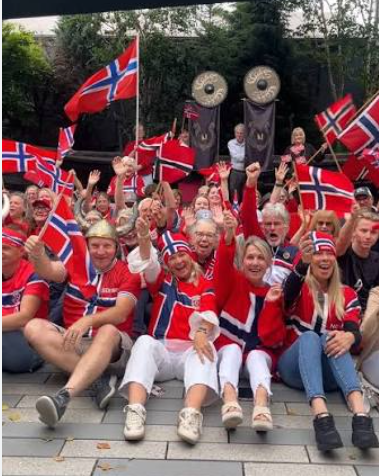
Football can produce real joy, solidarity, and dignity. It can allow diasporic communities to gather publicly around shared belonging. It can give smaller countries a sense of visibility otherwise denied in global politics. And it can unsettle Eurocentric assumptions about who belongs among football’s elite.
Norwegian fans perform the 'Viking Row', a team celebration where fans mimic the movement of rowing a boat, while chanting Ro! Photo: Facebook
But this is precisely why we should take it seriously.
Football enables diasporic communities to gather publicly around shared belonging, giving smaller countries a visibility otherwise denied in global politics
Indeed, the World Cup shows that nationalism remains one of the most powerful affective forms in modern politics. It can be exclusionary, but it can also be emancipatory. It can serve states and corporations, but it can also express the pride of communities long treated as peripheral.
The problem is that FIFA, broadcasters, sponsors, host governments, and security apparatuses increasingly govern these emotions. National belonging becomes both a collective experience and a commercial asset.
Fans create the atmosphere. States claim the prestige. Corporations capture the value.
The World Cup may appear to suspend politics. It does the opposite.
The tournament concentrates politics into an intensely watchable form. It shows how national identity survives globalisation, how soft power operates through popular emotion, and how nations fight for recognition in symbolic as well as material arenas.
This is why the tournament matters for political science. It is not a distraction from world politics. It is one of the places where world politics becomes visible.
In a supposedly global age, the World Cup reminds us that the nation has not disappeared. It has been televised, sponsored, securitised, and made spectacular.
Nationalism did not leave the field. It became the game.

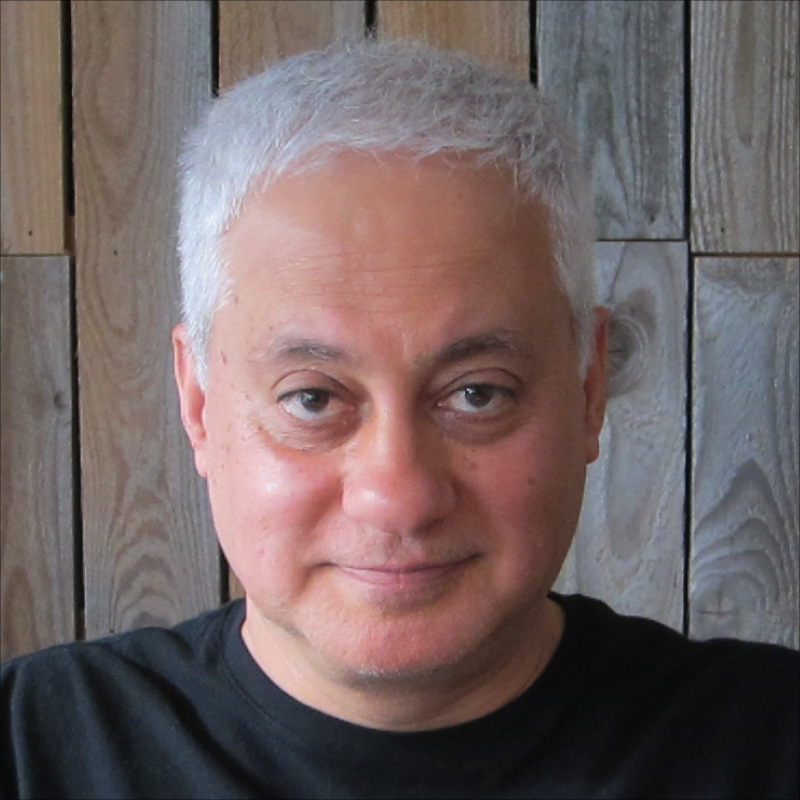
Ilan’s research is in critical development studies, focusing on global politics, political ecology, and comparative critical theory (democracy, postcoloniality, psychoanalysis).
Rethinking Development Politics
Edward Elgar, 2024 (with Gavin Fridell)
Global Libidinal Economy
SUNY Press, 2023 (Co-author, with Gavin Fridell, Maureen Sioh and Pieter de Vries)

Universal Politics
Oxford University Press, 2022 (Co-author, with Zahi Zalloua)
Confronting Desire: Psychoanalysis and International Development
Cornell University Press, 2020
Psychoanalysis and the Global
University of Nebraska Press, 2018 (Editor)
Celebrity Humanitarianism: The Ideology of Global Charity
Routledge, 2013
The Postcolonial Politics of Development
Routledge, 2008



Good piece. The point about World Cup nationalism being "assembled through transnational networks" rather than old territorial nationalism is the strongest argument here — Morocco's diaspora-driven squad really does complicate the usual anti-colonial reading. One thing I'd push on: you frame FIFA, sponsors, and states as capturing the value of fan-created atmosphere, but fans aren't passive here. Diasporic communities actively use the tournament's visibility for their own political ends, not always in ways aligned with state or corporate interests. The tension might be less "fans create, corporations capture" and more a contested space where all parties try to instrumentalise the same emotions. Would be interesting to hear more on where that contestation actually breaks down in FIFA's favour.
Thanks — this is exactly right. I agree that “fans create, corporations capture” risks making the process sound too one-way. Diasporic communities are not simply raw material for FIFA’s spectacle; they often actively use the World Cup to claim visibility, rewrite national identity, challenge exclusion, and stage forms of belonging that exceed both the state and the market.
Where I think it breaks down in FIFA’s favour is at the level of infrastructure and circulation. Fans can generate meanings FIFA does not control, but FIFA controls the tournament architecture through which those meanings become globally visible: ticketing, broadcast rights, sponsorship frames, stadium regulations, branding, disciplinary codes, and the permissible forms of display. So the affect may be contested, but the conditions of amplification remain highly unequal. Diasporic joy can interrupt official nationalism, but it is still largely routed through a commercial and state-managed apparatus that monetises, sanitises, and contains it.