
Hossein Kermani argues that the Islamic Republic’s staying power relies as much on fracturing its opposition as it does on repression. Here, he explains how depolarising rhetoric, personal and institutional transparency, and durable organisation will sustain pressure, protect activists during crackdowns, and ensure the failure of the regime's divide-and-conquer tactics
The Iranian regime’s political durability rests on extreme repression and propaganda. But it also operates a strategy of negative control. The regime prevents viable alternatives consolidating by fragmenting opposition networks, cultivating mistrust among potential allies, and rendering competing discourses politically ineffective.
Opposition activists among the Iranian diaspora must therefore organise to counteract these strategies. Prominent figures, whose coalition-building efforts during the Woman, Life, Freedom (WLF) mobilisation proved ultimately ineffective, feel this duty particularly keenly. Authoritarian incumbents benefit when challengers remain divided; opposition fragmentation can strengthen regime endurance by weakening coordination, credibility, and collective capacity.
Opposition activists among the Iranian diaspora must mobilise to counteract the Iranian regime strategy of extreme repression and polarisation
Here, I outline the opposition’s most consequential responsibilities, and suggest steps to render the regime's tactics politically inert.
Persistent weaknesses of Iran’s opposition, conspicuous during the WLF movement, are polarisation, factionalism, and mutual delegitimation: terrain on which the regime’s divide-and-conquer strategy thrives. Pro-regime actors (and opportunistic amplifiers) magnify disagreements, personal rivalries, and tactical missteps until they harden into identity-based hostility.
This often takes the form of communication sabotage. Regime supporters reframe errors by prominent figures as deliberate betrayal. Constructive critique descends into sarcasm, ridicule, and profanity. Trust collapses, dialogue becomes costly, and coalition-building politically toxic.
The damage deepens when opposition leaders and their close circles mirror this style and legitimise it among supporters. During and after WLF, some monarchist-leaning networks attacked other anti-regime groups with derogatory slogans such as مرگ بر سه فاسد/ملا چپی مجاهد (roughly: 'death to the three "corrupt": the mullah, the leftist, and the Mojahed') or فاندی_باندی (a slang-like label implying a clique/grift network).
Conversely, some supporters of Masih Alinejad used slurs such as سطلی_سپاهی (roughly: 'Sepahi stooge'; a colloquial insult implying collusion) to portray monarchists as regime-adjacent. Such language does more than offend: it draws hard lines, deters cooperation, and makes coordination impossible. This, of course, delivers what the regime wants: a divided opposition.
The regime can also exploit the opacity of the opposition’s ecosystem. When funding, decision-making, and political commitments are unclear, the resulting information vacuum fills with rumours, which become wedge issues. To stoke division, regime-aligned actors only need amplify uncertainty until they reframe legitimate questions as proof of corruption, capture, or hidden agendas.
Prominent opposition figure Reza Pahlavi has faced sustained speculation about his resources and the governance structures surrounding his activities abroad. Hamed Esmaeilion has been drawn into controversies over political associations and coalition boundaries. Masih Alinejad has attracted criticism for her highly personalised campaigning. The credibility of such claims varies, but the political effect is consistent: when leaders do not clarify basics, adversaries and supporters all default to the most suspicious interpretation.
To stoke division, regime-aligned actors reframe legitimate questions as proof of corruption or hidden agendas. This leads adversaries and supporters to the most suspicious interpretation
Transparency is also essential to legitimacy: what exactly is the plan? Programmatic ambiguity fuels fears of an authoritarian replacement, especially when transition proposals are vague on constitutional constraints, checks and balances, and guarantees of pluralism. In that context, scepticism is not cynicism, but rational risk assessment.
The fix is institutional, not cosmetic. Opposition figures who seek broad legitimacy should publish clear, verifiable information about:
Just as importantly, they should acknowledge mistakes, correct misstatements, and clarify shifts in position. Doing so denies the regime a weaponisable information vacuum, and turns transparency into a source of trust rather than another arena of polarisation.
Regime change under severe repression is rarely the result of spontaneity alone. Without planning, even the strongest protest waves surge and fade, because they lack infrastructure to convert peak energy into sustained pressure. Iran’s opposition has struggled for years to build that backbone, especially during mass mobilisation.
This weakness matters because the repression is not random; it follows a cycle. First comes brutal crackdown – often accompanied by communication disruption – at the height of unrest. Then, when public attention drops, comes a critical phase of 'cooling' tactics: propaganda, selective concessions, and deliberately confusing information. Finally comes deterrence: raising the cost of participation through fear, exemplary punishments, and staged legal performances. The regime counts on solidarity – inside Iran and internationally – declining after the peak, allowing it to reimpose control at lower political cost.
Effective organisation can prevent post-peak collapse. A credible opposition infrastructure would sustain pressure after the headlines move on, through coordination routines, clear task distribution, and coalition maintenance rather than ad hoc reactions. And it would prepare for the regime’s maximum-threat moves: escalated violence and communication shutdowns.
Opposition figures must replace symbolic calls to action with feasible strategies; citizens are unlikely to strike unless they know the risks are mitigated, and they have reliable support networks
That also means replacing symbolic calls to action with feasible strategies. Opposition figures, including Pahlavi, have called for strikes. But under severe regime coercion and amid economic precarity, citizens are unlikely to strike unless they know the risks are mitigated, and they have reliable support networks. The same applies to communication: if people know shutdowns are inevitable, the opposition must invest not just in slogans but practical continuity plans.
The regime is continuously upgrading its coercive and informational toolkit. The opposition, meanwhile, tends to operate on a business-as-usual basis. A serious opposition strategy would therefore treat research, learning, and capacity-building as core political work. It would develop countermeasures, evaluate what works, and institutionalise coordination.
If the regime’s core advantage lies in preventing opposition factions consolidating, the opposition must facilitate consolidation. That requires disciplined de-polarisation; institutional transparency, denying adversaries an information vacuum to weaponise; and an organisation built for endurance rather than brief bursts of visibility.
These are not secondary PR concerns; they are the practical foundations of coordination and credible collective action. Without them, even the most courageous mobilisation risks being absorbed by the regime’s cycle of repression and demobilisation. With them, the regime’s negative-control tactics become progressively less effective and, ultimately, politically unsustainable.

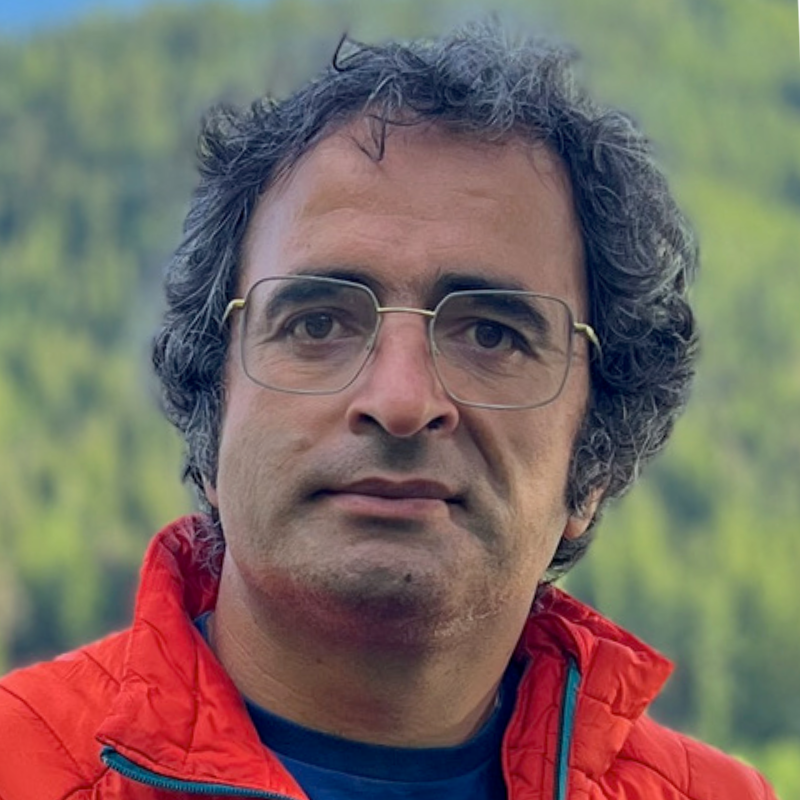
Hossein is studying social media, digital repression, computational propaganda, and political activism in restrictive contexts, with particular attention to Iran.
His research mainly revolves around a) the discursive power of social media in changing the microphysics of power and playing with the political and social structures, and b) the strategies that have been employed to manipulate and dismantle social media activism in non-democratic societies.
In his research, Hossein is primarily combining social and communication theories with computational techniques, particularly Social Network Analysis (SNA), Natural Language Processing (NLP), and critical discourse analysis.
He is the principal investigator of the BeyondCBA project, which is funded by WWTF.
Hossein has recently published in, among others, New Media & Society, Big Data & Society, Information, Communication and Society, and Asian Journal of Communication.
His first book, Social Media Research in Iran (in Farsi), was published in 2020. His first English book, Twitter Activism in Iran, was published in 2025. Hossein is now working on his second monograph, The Art of Delirium: Social Media Suppression in Authoritarian Regimes, which will be published by Springer Nature in 2027.
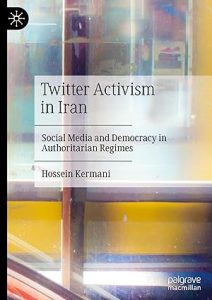
Twitter Activism in Iran, Palgrave Macmillan, 2025



A compelling and well-argued piece. The way you break down the internal challenges while also pointing to constructive solutions makes this a very balanced contribution to the discussion. Thought-provoking and clearly written.