The attack on Iran by Israel and the US is an attempt to force regime change. Yet, says Cristian Pîrvulescu, authoritarian regimes rarely collapse when leaders fall. Systems built around institutions often survive because they reproduce power through structures that organise coercion and coordinate elites
The war now unfolding began with a strategic wager that has appeared repeatedly in modern conflicts. By striking the Islamic Republic's leadership and attempting to dismantle the political and military elite surrounding it, the Israeli-American campaign seems to assume that it can destabilise the system itself through political decapitation. The killing of the supreme leader and the targeting of senior military figures signal not merely a military operation but an attempt to fracture the institutional core of the regime.
Strategies like this rest on a familiar assumption about authoritarian systems. Such regimes appear highly centralised and dependent on a narrow ruling elite. Eliminating that elite should thus logically dismantle the political order itself. Yet political history suggests a different pattern. Symbols of power may disappear rapidly under the pressure of war. The institutional structures that sustain authoritarian rule, however, often prove far more durable than observers expect.
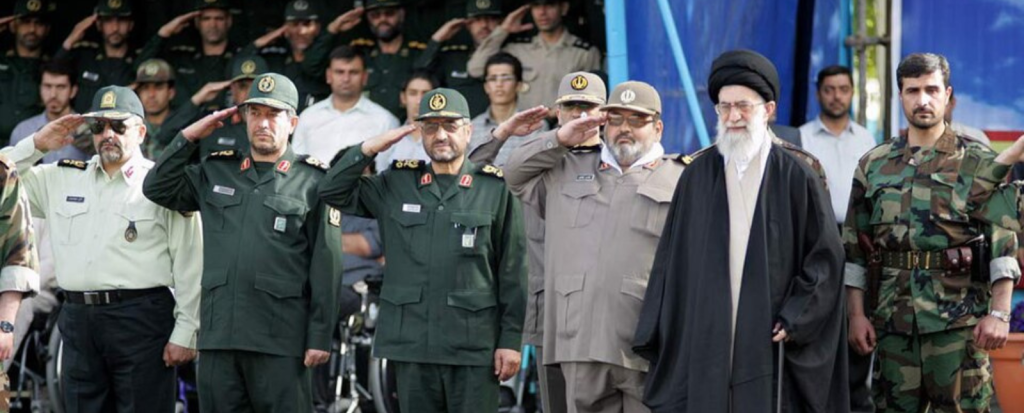
Understanding this resilience requires us to return to the origins of the Islamic Republic. The revolution that overthrew the Shah in 1979 was not, at first, a purely clerical project. Rather, it was a broad social upheaval that mobilised different segments of Iranian society. Religious networks, nationalist forces and radical political groups converged in a moment of revolutionary rupture that destabilised the monarchy.
What followed was a gradual process through which this heterogeneous movement reorganised. Ultimately, it was monopolised by a clerical leadership capable of transforming revolutionary mobilisation into political institutions. The revolutionary moment produced not only ideological change but also a new architecture of power. Security organisations, religious authorities and political structures were progressively integrated into a system that allowed the clerical elite to consolidate control over the state.
The Islamic Republic began as a revolutionary movement but gradually turned into a regime whose stability rests on on a dense institutional structure capable of reproducing authority
Over time, the Islamic Republic evolved into a political system in which religious authority, security institutions and political organisations became mutually dependent pillars of power. What began as a revolutionary movement gradually turned into a regime whose stability rested less on charismatic leadership than on a dense institutional structure capable of reproducing authority beyond the revolutionary generation.
The current war's strategy appears designed to destroy that structure of power by eliminating the leadership that coordinates it. The targeting of the supreme leader and senior commanders reflects the belief that removing the central figures of an authoritarian regime will create confusion within the ruling coalition and eventually produce political collapse.
Regimes depend on institutional networks that distribute power across security organisations and bureaucratic structures. Eliminating leadership thus rarely produces political collapse
Yet regimes rarely function as simple pyramids of authority. Even highly personalised systems depend on institutional networks that distribute power across security organisations, bureaucratic structures and patronage systems. These networks tie elites to the survival of the regime because their own position and resources depend on it.
Authoritarian regimes often survive political shocks because authority becomes embedded in institutions capable of reproducing power even when leaders disappear. Security services, military organisations and administrative hierarchies create channels through which to reorganise authority under conditions of crisis.
External military pressure may even strengthen regimes by encouraging coordination among elites whose survival becomes tied to its preservation
Once these structures become established, regimes acquire a form of institutional inertia. Leadership may change and authority may be redistributed, yet the underlying system can continue to function. External military pressure may even strengthen this dynamic by encouraging coordination among elites whose survival becomes tied to the preservation of the regime.
Institutionalisation alone does not guarantee survival. Communist regimes in Eastern Europe were also highly institutionalised political systems. They possessed powerful party organisations, extensive bureaucratic structures and formidable security services.
Nevertheless, these regimes collapsed with remarkable speed at the end of the 20th century. The reason was not the absence of institutions but the erosion of their capacity to coordinate elite interests and respond to social pressures. Economic stagnation, ideological exhaustion and growing social discontent gradually weakened the cohesion of ruling elites. When crisis finally emerged, the institutions that had once sustained the regime proved incapable of managing political transformation.
The war between Iran, Israel and the US therefore illustrates a broader lesson about the nature of authoritarian politics. Military power can eliminate leaders and destroy the visible architecture of power, yet the deeper structures that sustain authoritarian regimes often remain intact.
Political authority in such regimes rarely resides solely in the figures who embody it. It is embedded in networks of institutions that organise coercion, distribute resources and coordinate elites.
Symbols of power can fall in a single moment of war. Regimes collapse only when the institutions that coordinate elites stop working.