The US capture and extraction of Venezuelan leader Nicolás Maduro on 3 January 2026 was an act without precedent. But Ruairidh Brown argues that recent events in Caracas were only the second Act in an unfolding post-exceptionalist world order
Since the seizure of Nicolás Maduro, the world’s eyes have been on the western hemisphere.
US President Donald Trump told Colombian President Gustavo Petro to ‘watch his ass’ because intervention in Colombia ‘sounds good’. Secretary of State Marco Rubio warned the Cuban regime to ‘be concerned’. The Trump administration has even issued threats to close NATO ally Denmark over its intention to acquire Greenland.
While precedents for Trump’s interventionism exist in US-Latin American history, experts regard his most recent move as largely unprecedented.
The clearest parallel is the 1989 US invasion of Panama, in which the Bush administration removed Panamanian leader Manuel Noriega from power and tried him for involvement in the narcotics trade. Unlike Maduro, however Noreiga was, technically, not a head of state.
Decapitating a hostile regime by removing its head of state appears to be new move in US history.
It is not, however, an unprecedented move for Russia.
In February 2022, Moscow attempted a rapid assault on Hostomel airport, approximately twenty-five kilometres from Kyiv. The plan was to create an ‘air bridge’ into the capital, bypassing border defences, and allowing for a quick decapitation of government.
Meanwhile, the mercenary Wagner Group and the Kadyrovites, an elite special forces team based in Chechnya, aimed to eliminate Ukraine's President Volodymyr Zelenskyy.
If Zelenskyy had been captured or killed, the Kremlin would have rapidly installed a favourable Belorussian-style regime.
In 2022, a Russian operation to eliminate Zelenskyy failed. The Americans' recent mission in Caracas succeeded largely thanks to superior intelligence
CIA intelligence and stout Ukrainian defence, however, repelled the Hostomel attack. Prewarning from anti-war agents in the Russian Federal Security Service kept Zelenskyy safe from the kill squads. Failure to decapitate Ukrainian leadership resulted in the current deadly war of attrition.
In contrast, cyber and electronic warfare allowed the US to quickly overwhelm Venezuela’s air defences. Meticulously detailed intelligence-gathering, from details about Maduro’s eating and dressing habits to knowledge of his pets, allowed the US to pinpoint and extract Maduro within two-and-a-half hours, and with zero US casualties.
Kyiv proves a clearer precedent to Caracas: an attempt to decapitate an antagonistic regime in the near-abroad. The difference was one of execution; success and failure largely depending on better intelligence.
When we take these two acts together, we can watch a new world order unfold. It is one which bears resemblance to the geopolitical vision of German political theorist Carl Schmitt.
In his 1950 book The Nomos of the Earth: In the International Law of the Jus Publicum Europaeum, Schmitt advocated for a global world order divided into Großräume or ‘great spaces’, each controlled by a sovereign regional power, or Reich.
Schmitt took inspiration from the US Monroe Doctrine, interpreting it as Washington’s intent to become the Reich of the western hemisphere. Schmitt was sorely disappointed when the twentieth century saw the US instead follow in the footsteps of the British Empire and assume the mantle of global policeman.
The Trump administration, however, has rejected this global role, ending, in the process, a century of American exceptionalism.
In its place Trump now advocates for the ‘Donroe Doctrine’: an interpretation of the Monroe Doctrine eerily reminiscent of Schmitt’s. Trump's doctrine, however, is not a mandate to protect the western hemisphere from European imperialists, as President Monroe originally intended. It is to lay claim to Washington’s unrivalled dominance over it.
Donald Trump's interpretation of the Monroe Doctrine is merely a way to lay claim to Washington's dominance over the western hemisphere
The extraction of Maduro captures this doctrine acutely: the removal of an antagonist to Washington’s rule; the US exercising its assumed right to act as juristic authority over its ‘great space’.
Similarly, to justify its invasion of Ukraine, the Putin regime has long claimed it intends to carve out a great ‘Russian space’ centred around Moscow. The difference is that whereas Trump's Donroe Doctrine echoes Schmitt, Putin’s ideologies draw directly from Schmitt's thought.
Kyiv and Caracas represent moves by these regional Reichs to secure dominance over their ‘great spaces’ as the age of American exceptionalism comes to an end.
China's intellectual community is also experiencing ‘Schmitt fever’. Many regard the philosopher as providing justification for exceptional extra-legal measures in recovering international rule over its ‘great space’. Key to this is reunification with Taiwan. Could Beijing use Trump’s strategy here?
China has been highly critical of Maduro's extraction, largely because it breaches another nation's sovereignty. This is not relevant in the Taiwan case, because Beijing sees Taiwan merely as a rebel province.
Lack of international recognition for Taiwan strengthens China's position. Beijing, among others, recognised Maduro as a legitimate sovereign leader. Yet the US is committed to the One China policy, which regards Taiwan as part of China.
The policy does prohibit the use of force – Chinese invasion – to change the status quo. But what of the extraction of a criminal? Washington insists it is not at war with Venezuela. Could Beijing decapitate Taiwan on the same grounds? China’s increasing criminalisation of Taiwanese ‘separatism’ could be a precursor.
Washington insists it is not at war with Venezuela. But could its ousting of Maduro embolden China to decapitate Taiwan on the same grounds?
In 2024, new judiciary guidelines specify that crimes of secession by Taiwanese ‘separatists’ are punishable under Chinese law, authorising trials in absentia, and the death penalty.
Beijing even launched a tip-off hotline to report separatist acts, allowing it to identify Taiwan’s leadership as criminals, try them in absentia, find them guilty, and even sentence them to death. It could thus frame extracting Taiwan’s leadership as the pursuit of a criminal ringleader within China.
So, there is precedent and legal foundation in Beijing’s framework for such a move. Yet could China pull it off? Military experts remain sceptical. Critical intelligence is there, but experts doubt Beijing’s air capabilities. They also insist decapitating a democracy is different from deposing an authoritarian regime.
Nevertheless, as Xi Jinping remains committed to reunification, Caracas doubtless looks more attractive to him than Kyiv.
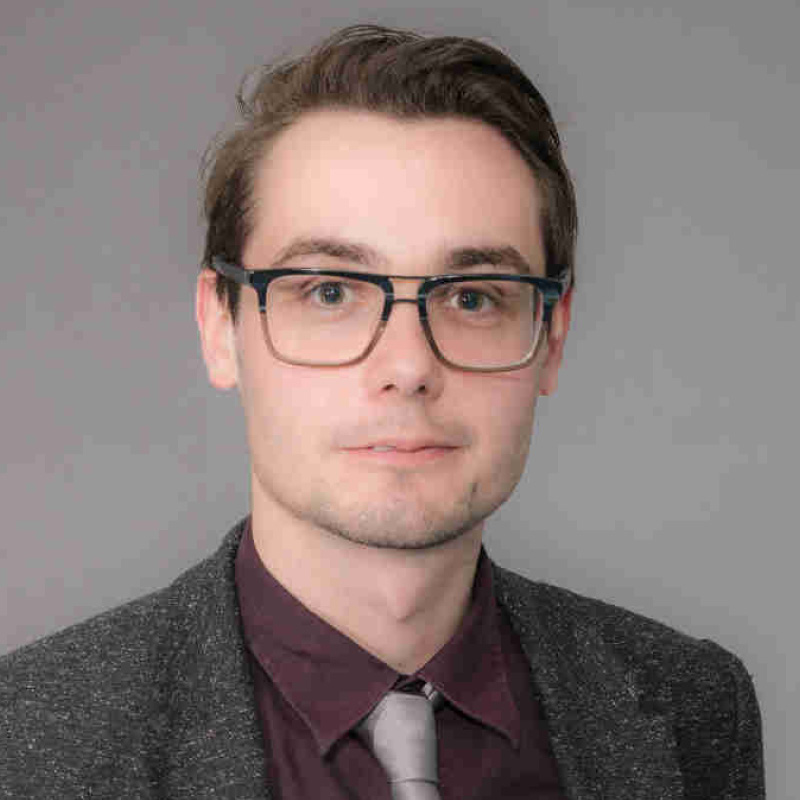
Ruairidh currently teaches International Political Theory and International Relations at Forward’s Lisbon Campus.
Before teaching at Forward, Ruairidh taught International Studies in mainland China, where he received the University of Nottingham’s Lord Dearing Award for outstanding contributions to teaching and learning in 2019.
He received his PhD from the University of St Andrews in 2017.
Ruairidh has researched and published on such topics as hermeneutics, political obligation, and the philosophy of friendship.
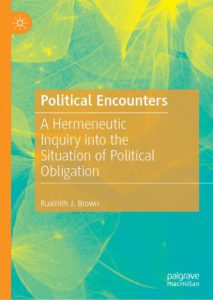
Political Encounters: A Hermeneutic Inquiry Into the Situation of Political Obligation
Springer, 2019
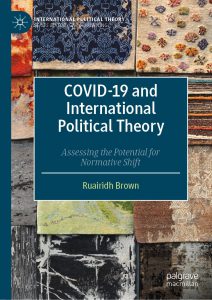
COVID-19 and International Political Theory: Assessing the Potential for Normative Shift
Springer, 2022