Karina Adamova argues that migration policies which attempt to address labour shortages and decrease refugee migration treat skilled migrants and refugees as separate categories. What they should do, she says, is treat them as the same people at different points in time. Recent events in Germany show that anti-migrant attitudes can affect migrants’ decisions about where to live – even as the country faces significant labour shortages
Recent wins for the far-right Alternative für Deutschland (AfD) party in state elections in Saxony-Anhalt and Mecklenburg-Western Pomerania reveal the party's growing electoral support in eastern Germany. Key AfD priorities are to prevent 'illegal' migration, to decrease dependency on skilled migration, and to stop accepting refugees.
For migrants, this political shift raises concerns that they might face heightened discrimination, prompting some to consider moving to other regions. Yet Germany – specifically Eastern German states – relies heavily on migrants to fill labour shortages.
And the problem is greater than the regions simply losing essential labour force. Preventing 'unwanted' asylum seekers ignores the fact that many migrants who arrive as asylum seekers go on to become skilled migrants.
Shortly after the AfD win in Saxony-Anhalt, media sources reported migrants were intending to leave the state. People with migrant backgrounds, many of whom have become German citizens, have, over the years, reported anti-immigrant abuse. Reuters reports that many would consider moving if the racism increased. Heads of non-governmental agencies supporting migrants say that many of the people they help have plans to leave. Some companies, meanwhile, are reconsidering plans to move to Saxony-Anhalt because they may not be able to ensure their workers' safety.
Recent research confirms that migrants across different groups tend to avoid, and leave, regions with strong right-wing support. High-skilled migrants are especially sensitive to this: compared with low- and medium-skilled migrants, they are less likely to move to such regions, and more likely to move away.
Migrants tend to avoid, and leave, regions of Germany with strong right-wing support
A survey conducted by the German Centre for Integration and Migration Research showed that 12.5% of respondents with a migrant background would consider moving to another German state if AfD entered the government. This, of course, affects demographics and migrants' sense of safety and belonging. But it also affects labour shortages.
In 2025, Germany's Federal Employment Agency (BA) listed 157 occupations in its 'labour shortages' list. Its list features occupations essential to the country's smooth running, including healthcare workers, cooks, drivers, and nursery teachers.
According to BA, the migrant workforce is key to addressing these shortages. Since 2014, the proportion of foreigners in sectors experiencing labour shortages doubled from 7% to 14%. Labour shortage is more pronounced in eastern Germany, where there are fewer foreign workers and an older population than in western Germany.
Since 2014 in Germany, the proportion of foreigners in sectors experiencing labour shortages has doubled
In Saxony-Anhalt, a fifth of healthcare workers have a migrant background, revealing how heavily the sector relies on foreigners. Some of the regions with the strongest anti-migrant attitudes, then, are also those facing the greatest workforce challenges.
In 2020, the German government introduced the Skilled Immigration Act to encourage the migration of skilled workers. This led to the number of migrant workers doubling from 200,000 in 2020 to 420,000 in June 2025.
While labour migrants are widely recognised as filling these gaps, refugees' contribution often gets overlooked. In 2024, 64% of refugees who had arrived in Germany in 2015 were employed; around three-quarters in qualified or higher-qualified occupations. This shows clearly that there is a pathway for people who arrive as refugees to become skilled workers.
Indeed, many refugees are educated to tertiary level, and 60% are overqualified for the jobs in which they are employed in their host country. Overqualification is widespread among migrants because their qualifications may not be recognised, and because they lack local language skills. However, over time, and with sufficient training, migrants can return to skilled work in the host country.
60% of refugees in the EU are overqualified for the jobs in which they are employed in their host country
This points to a puzzle in Germany's migration policy: it treats labour migration and asylum as different channels, with different policies and attitudes. However, these categories do not necessarily describe separate populations. Separation of the two ignores the trajectory of migrants arriving as refugees who later become skilled workers.
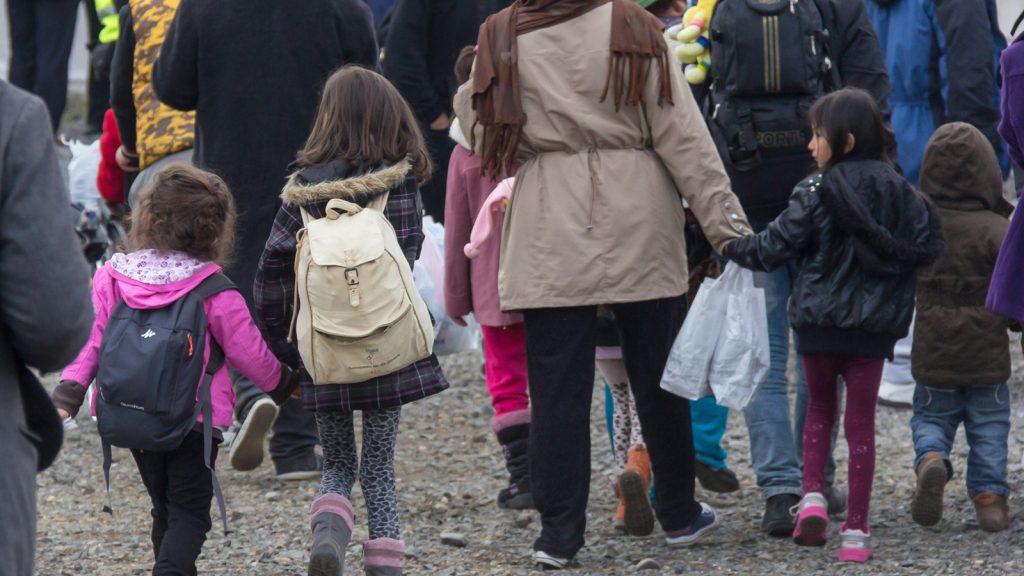
Similar contradictions exist elsewhere in Europe. The Cypriot government, for example, is attempting to fill shortages in its construction sector through agreements with Egyptian counterparts. At the same time, Cyprus is returning Syrian refugees, many of whom worked in construction, and restricting asylum seekers' access to the labour market. The government treats skilled migrants and refugees differently even when refugees are doing skilled work – ignoring migrants' integration trajectories.
A similar contradiction exists in Czechia's migration policy. There, the government actively seeks migrant labourers, while simultaneously implementing restrictive asylum policies. It also created a long-term residence route for Ukrainians with temporary protection, showing how migration status can change over time.
European states are trying to fill labour shortages while working to reduce the number of refugees. Hostile political climates push migrants away, and the split between labour and asylum policies ignores how migrants' circumstances change. A refugee and a skilled migrant are not always two different people. Often, they are the same person at two points in their life. States should ask whether today's asylum seeker could be tomorrow's worker in a job no one else can fill.