
The recent discovery in a Portuguese prison of a rulebook belonging to a Brazilian criminal organisation raises sharp questions for European security. But Ludmila Quirós examines why, despite a potential risk of ideological alignment, the presence of a foreign cartel doesn’t necessarily point to a full-scale takeover of Portugal’s penitentiary system
In September 2026, Portugal’s Judicial Police seized a handwritten document in Caldas da Rainha prison. It belonged to the Brazilian criminal organisation Primeiro Comando da Capital (PCC). The document listed ten commandments for a group of Brazilian thieves jailed for stealing €1 million from 15 banks across Portugal. The discovery may be an emerging red flag for European security, but is it hard evidence of structural infiltration?
The PCC is a prison-born criminal corporation founded in 1993 at the Taubaté penitentiary in São Paulo. In its early days, it framed itself as a defender of inmates’ human rights, opposing the state and its repressive, inhumane prison policies. It soon abandoned that founding cause. Today it is one of South America’s most dangerous and complex criminal organisations, and controls a large portion of drug exports from Brazil to Europe.
For the PCC, prison is both its ideological and its material base. Its core workforce and critical mass are behind bars: the penitentiary is where the PCC recruits, organises and acts. Crucially, much of its territorial expansion across Brazil and the wider region came through prison recruitment.
How far the PCC is present in Europe, on the streets and inside prisons, remains a matter of speculation. In 2025, the Brazilian news outlet O Globo published an exclusive report on the PCC’s global distribution. It found that other than Portugal, only Paraguay hosts more PCC members outside Brazil. In 2026, São Paulo state prosecutor Lincoln Gakiya told CNN Brasil that the PCC is active in at least six European countries. He said it has already set up local coordination branches, known as sintonias, on the continent.
That the PCC operates globally is no longer in doubt. It has expertise in infiltrating Brazilian ports, and strategic alliances with global syndicates such as Italy’s ‘Ndrangheta and Albanian networks. Together these have let it extend cocaine distribution to markets as distant as North America, Africa, Australia, Europe and Asia. The PCC is now a logistical pivot in the global drug supply chain. We still know very little, however, about whether its exploratory missions are becoming a permanent operational cell on Portuguese soil.
Roughly 1,000 PCC members may be operating across Portugal, but the true scale of prison infiltration remains unclear
By 2024, local journalists were reporting that PCC members were living in affluent areas of Lisbon. These members, including the high-profile figure André do Rap, had used migration flows from Brazil to blend in or lie low. However, the 2025 arrest of Ygor Daniel Zago (alias ‘Hulk’) pointed to a far more sophisticated footprint. Zago is a senior PCC figure who ran money-laundering operations in Cascais. News reports suggest that roughly 1,000 members may be operating across Portugal and recruiting new members inside Portuguese prisons. Even so, the true scale of institutional infiltration remains unclear.
Prison may be the PCC’s hard core. Yet conditions in European penitentiary systems seem ill-suited to copying the PCC’s Brazilian model of prison governance. Systemic corruption and severe overcrowding help sustain Latin American prison gangs, and both are far less common in Europe.
Corruption and overcrowding help sustain Latin American prison gangs; such problems are significantly less acute in Europe
Comparing the two penitentiary systems shows two fundamentally different realities:
| Portugal | Brazil |
|---|---|
| Portugal has a relatively compact and controlled system, broadly in line with EU norms. According to Prison Insider data, its incarceration rate is a stable 120 prisoners per 100,000 inhabitants. Its overall capacity is around 12,500 places, and occupancy stands at a manageable 105%. Some prisons are under pressure, but the system as a whole is not breaking down. | Brazil is between 250,000 and 290,000 prison places short of what it needs. National average occupancy is between 140% and 160%, and some facilities exceed 200% or even 250%. |
The two countries differ just as sharply on institutional corruption, which criminal groups need in order to grow and survive. In Brazil, collusion by the state has been decisive. Senior officials, including police chief Maria Virginia Grimwood Pinto, were recently detained on suspicion of protecting the PCC. Systemic bribery has long allowed mobile phones to be smuggled in on a large scale. That let leadership figures such as Marcos Willians Herbas Camacho, alias ‘Marcola’, direct transnational trafficking from their cells.
Transparency International’s Corruption Perceptions Index 2025 ranks Portugal 46th. Brazil ranks far lower, at 107th.
Given these factors, could the PCC realistically organise and control Portugal’s prison population? It seems unlikely. The PCC certainly has the money to bribe officials and attract recruits. But full control would mean reproducing its Brazilian model of prison governance. In Portugal, as elsewhere in Europe, it faces institutions with robust legal safeguards against gang formation and prisoner self-governance. For example, in the case of Portugal, the Code on the Execution of Sentences (Lei n.º 115/2009) enforces strict rules on prisoner separation and subjects high-risk individuals or organised crime leaders to maximum-security regimes, such as in the Monsanto High-Security Prison. Furthermore, state custodial regulations strictly prohibit the delegation of internal governance, security, or distribution duties to inmates, keeping prison management under exclusive state authority.
While the PCC has the money to attract recruits, full control would require reproducing its Brazilian model
The real question is not whether the PCC can gain territorial control of penitentiaries. Rather, it is whether the organisation could quietly shape inmates’ ideology.
The Caldas da Rainha rulebook points in this direction. A handwritten code of conduct needs no corrupt guards, no overcrowded wings and no territory to take hold. It travels through shared language, migration ties and the appeal of belonging to a powerful brand. A PCC that cannot govern Portuguese prisons may still be able to inspire inmates there.
It is in this realm of ideological affinity, rather than colonisation of the prison system, that the real debate over European security lies.

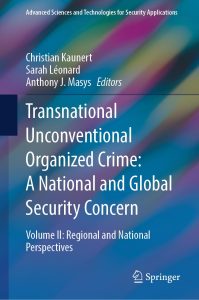
Ludmila contributed the chapter 'Environmental crimes in South America: the pervasive nexus between organised crime and land trafficking' to the book Transnational Unconventional Organized Crime: A National and Global Security Concern
Springer, 2025


