
France’s new nuclear posture and Russia’s nuclear build-up in Belarus have made Europe feel vulnerable. But, argues Olamide Samuel, stronger nuclear rhetoric will not make Europe safer or more independent. Europe’s real task is to rebuild arms control, consultation, and dialogue before nuclear danger becomes harder to contain
Europe’s nuclear debate has changed with unusual speed. New START expired on 5 February 2026, taking with it the last treaty that legally limited US and Russian strategic nuclear arsenals. Less than a month later, French President Emmanuel Macron used his speech at Île Longue to place French deterrence more explicitly within a European frame. For many Europeans, those two developments seem to confirm that the continent has entered a more dangerous era and must become more serious about nuclear deterrence. That instinct is understandable. But Europe’s newfound outspokenness will not suddenly make its adversaries treat it as a great nuclear power.
The attraction of that idea is easy enough to understand. Russia’s war against Ukraine has made European vulnerability impossible to ignore. Confidence in the long-term reliability of the United States has frayed, and Macron’s doctrine of 'forward deterrence' offers a language of leadership at a time when Europe feels exposed. Yet this is exactly where the present conversation risks becoming less clear-eyed than the moment requires. France’s move may reassure audiences inside Europe. It could, however, reinforce Moscow’s view that the European theatre is moving toward a more forward nuclear posture.
What follows from this is not that France should have remained still, nor that Europe must resign itself to helplessness. It is that Europe should resist the fantasy that strategic autonomy can now be built through nuclear signalling. The basic arithmetic is too unforgiving for that.
The US and Russia possess about 87% of the world's nuclear weapons. Europe is decades too late to 'catch up' with the deterrence gamble that Washington and Moscow have played for generations
According to the Federation of American Scientists, the United States and Russia still possess about 87% of the world’s nuclear weapons. France and the United Kingdom remain nuclear armed, but they are not the nucleus of a third superpower pole waiting to be activated by rhetoric. Europe is decades too late to 'catch up' with the deterrence gamble that Washington and Moscow have played for generations. The more likely result is a riskier mix of signals, deployments, and ambiguities in which everyone sees more danger and no one gains much control.
Belarus brings this problem into sharper relief. Most observers consider Minsk as little more than a passive extension of Russian power. That is too flat a picture. Recent satellite imagery analysed by RFE/RL points to a possible Oreshnik-related deployment site near Krychau, protected by air-defence and electronic-warfare systems. This clearly matters for European security, because it shortens the political and military distance between nuclear signalling and European territory. At the same time, Belarus is not merely hosting danger. It is trying to convert that role into diplomatic relevance, making itself too consequential to leave outside any future discussion of the region’s security order.
Belarus wants to be impossible to ignore in any future conversation about war and peace in Europe
That is what much of Europe still struggles to recognise. Belarus’s utility to Moscow does not cancel its own agency, however constrained and compromised that agency may be. Belarusian President Alexander Lukashenko’s message, stripped of its opportunism, has been consistent: Belarus wants to be impossible to ignore in any future conversation about war and peace in Europe. This does not make Belarus benign, nor does it erase its complicity in Russia’s war. It does, however, expose a weakness in the European approach. Dialogue is too often treated as a prize to be awarded after political improvement, or withheld as discipline. In security terms, that logic is backwards. Dialogue is not a reward. It is one of the few tools available for preventing catastrophe.
Once we take that seriously, the question confronting Europe looks different from the one currently dominating speeches about strategic autonomy. The issue is no longer whether Europe can project more confidence through a nuclear vocabulary. It is whether Europe is prepared to rebuild the architecture that makes dangerous rivalries less dangerous. Arms control is not a moral abstraction or a synonym for disarmament. It is the practical business of reducing the room for miscalculation through limits, notifications, hotlines, inspections, data exchanges, and repeated opportunities to clarify what one side is doing and what the other side thinks it is seeing.
Europe’s real comparative advantage lies here, in pressing for consultation on forward deployments, missile basing, non-strategic nuclear signalling, exercise notifications, and crisis communication that includes Belarus, because Belarus is already part of the actual geography of risk.
Arms control is not a moral abstraction or a synonym for disarmament. It is the practical business of reducing the room for miscalculation through limits, notifications, hotlines, inspections and data exchanges
What makes this work urgent is the degree to which the nuclear age has never demonstrated the kind of reliable control that official narratives imply. Benoît Pelopidas has shown how much confidence in the manageability of nuclear crises rests on stories that understate luck and flatter the judgment of decision-makers. More recently, Pelopidas and Kjølv Egeland warned that even the language of 'risk reduction' can create its own false reassurance by suggesting that policymakers possess a degree of knowledge and mastery they in fact lack. A denser deployment environment does not reward confidence for its own sake. It punishes error.
Europe does not need to become more fluent in nuclear theatre. It needs to become more serious about the conditions that make the theatre less combustible. It needs clarification where ambiguity is thickening, consultation where communication is thinning, and architecture where posturing is beginning to stand in for policy.
France’s new posture may be politically intelligible. Belarus’s new role may be deeply uncomfortable. Neither of those facts gives Europe a viable path into the old deterrence game. Europe’s task is more modest, more difficult, and far more useful. It must force strategic deployment talks back onto the agenda, treat diplomacy as an instrument of security rather than a prize for virtue, and rebuild the habits of arms control before the next crisis decides the terms under which everyone else must live.

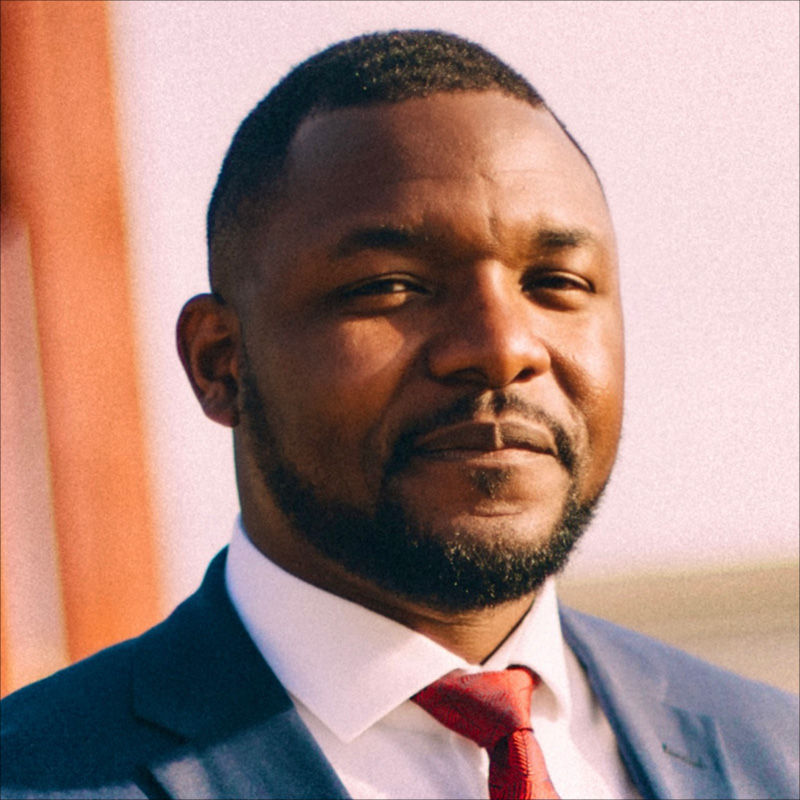
Olamide leads network and engagement initiatives at the Open Nuclear Network (ONN), a PAX sapiens programme.
His research focuses on international security, nuclear non-proliferation, and the intersection of open-source investigative methodology and diplomacy.
He is particularly interested in the dynamics of the Third Nuclear Age and the legal and political justifications surrounding attacks on nuclear facilities.
Prior to ONN, Olamide served as Special Envoy for the African Commission on Nuclear Energy (AFCONE) and led the European Leadership Network’s Protecting the Non-Proliferation Treaty programme.
His academic career includes serving as a Research Associate in Nuclear Politics at the University of Leicester and a Senior Teaching Fellow at SOAS University of London, where he led the global disarmament programme, SCRAP Weapons.
Olamide's article Justifying Attacks on Nuclear Facilities was The Nonproliferation Review’s most-read of 2024.
In 2023, he published Accommodating Nutopia in the Review of International Studies.
Olamide is a frequent commentator for Al-Jazeera, The BBC, France 24, and allAfrica.
He featured alongside Ireland's former President Mary Robinson in the film Solutions to Existential Threats.

Open Source Investigations in the Age of Google
World Scientific, 2024
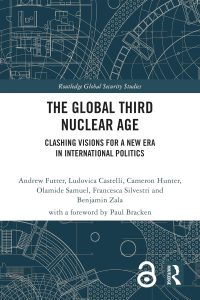
The Global Third Nuclear Age
Routledge, 2025


