From the Strait of Hormuz to Europe’s gas crisis, energy dependence lets states project power through prices, not troops. This, says Ilan Kapoor, is reshaping geopolitical influence
When missiles fly, markets move. But states don’t always need to fire a shot to exert power. Control over energy flows can be enough.
Recent tensions involving Iran, and renewed concerns over shipping through the Strait of Hormuz, underscore a persistent reality: fossil fuels remain central to global politics.
Despite decades of policy commitments to decarbonisation, oil and gas structure international relations in ways political science often underestimates. When crises erupt, energy-producing states gain leverage – not through force, but through their ability to influence markets, prices, and expectations.
Roughly a fifth of the world’s liquid petroleum passes through the Strait of Hormuz, making it a critical chokepoint in the global economy. According to the US Energy Information Administration, the Strait handles about 20 million barrels of oil each day, meaning even the risk of disruption can trigger price volatility.
This is not simply about supply. It is about power exercised through vulnerability.
Oil and gas are geographically concentrated, and transported through a limited number of pipelines, ports, and narrow maritime corridors.
This creates structural asymmetries. A small number of producers and transit states can disproportionately influence global markets. Even signalling potential disruption can move prices, alter investment decisions, and send ripples across the global economy.
The mere possibility of interference in the critical Strait of Hormuz threatens supply chains, and puts pressure on prices
Iran, for example, need not physically block the Strait of Hormuz to exert influence. The mere possibility of interference in the waterway raises shipping insurance costs, introduces uncertainty into supply chains, and puts pressure on prices.
These dynamics reveal a form of power that is indirect, but effective. Rather than coercion through military means, states can shape outcomes by exploiting the sensitivity of markets to risk and uncertainty. In tightly coupled global energy systems, perception alone can have material consequences.
If Hormuz illustrates the structural power of chokepoints, Russia’s conduct during the war with Ukraine weaponises energy dependence.
The International Energy Agency notes that after invading Ukraine in 2022, Russia cut 80 billion cubic metres of pipeline gas supplies to Europe. This led to a surge in energy prices that plunged the region into an energy crisis and forced European states to seek alternative supplies at speed.
While Europe has since reduced its dependence on Russian gas, particularly through liquefied natural gas imports, the episode revealed a deeper structural vulnerability. Longstanding reliance on a single supplier had created a lever that Russia could pull with immediate economic consequences.
Importantly, this leverage did not require additional military escalation. By adjusting supply, Russia exerted pressure across multiple European economies simultaneously. The effects were felt in household energy bills, industrial production, and broader inflationary trends.
The battlefield, in this case, extended well beyond Ukraine.
These examples point to a broader pattern. Fossil fuel dependence allows states to exert influence through price formation, supply manipulation, and uncertainty.
This form of power is diffuse but far-reaching. It operates through global markets rather than direct confrontation, and its consequences are visible in inflation rates, currency fluctuations, and domestic political pressures in energy-importing countries.
Energy price shocks quickly translate into higher transport and food costs, triggering political instability
Energy price shocks, for instance, quickly translate into higher transport and food costs. These can trigger political instability, especially in countries where governments subsidise fuel or rely heavily on imports. The International Monetary Fund reports that the global inflation surge of 2022–2023, partly driven by energy disruptions, had significant political ramifications across Europe and the Global South.
In this sense, energy producers can shape not only international outcomes but domestic political conditions abroad. They exercise influence not through direct intervention, but through the cascading effects of price shifts and supply constraints.
It is tempting to assume that the ongoing energy transition will diminish this form of geopolitical leverage. Yet current evidence suggests a more complex picture.
Renewable energy sources are expanding rapidly, but fossil fuels still dominate global energy consumption. According to the Energy Institute’s Statistical Review, oil, gas, and coal continue to account for the majority of global energy supply.
Moreover, the infrastructure underpinning fossil energy – pipelines, shipping routes, storage facilities, and refineries – remains deeply embedded in the global economy. These systems are capital-intensive and slow to change.
As a result, geopolitical leverage rooted in fossil fuels is likely to persist. Indeed, transitional periods may even heighten volatility, as new energy systems coexist with, and remain dependent on, older ones.
These developments carry broader implications for how we understand power.
First, they highlight the importance of material infrastructures. Power isn’t just institutional or ideational; it is embedded in physical systems of extraction and transport.
Second, they blur the distinction between war and peace. States can exert significant pressure without deploying troops, using markets as instruments of influence.
Energy dependence binds states together while exposing some to the strategic actions of others
Third, they underscore that interdependence produces asymmetry. Global economic integration has not eliminated power disparities; it has reorganised them around new forms of vulnerability.
Energy dependence is a particularly stark example. It binds states together while exposing some to the strategic actions of others.
Energy has always been a source of geopolitical power. What is changing is how that power is exercised.
From the Strait of Hormuz to Russian gas pipelines, fossil fuels continue to shape global politics, not only through conflict, but through prices, expectations, and systemic vulnerability.
Influence increasingly travels through markets rather than armies. Energy dependence has thus become one of the most effective – and least visible – tools of statecraft.
Until the structural foundations of fossil energy are fundamentally transformed, this quiet form of power will remain central to international politics. The most consequential struggles may not take place on battlefields, but in the fragile networks that keep energy flowing – and the global economy running.

Ilan’s research is in critical development studies, focusing on global politics, political ecology, and comparative critical theory (democracy, postcoloniality, psychoanalysis).
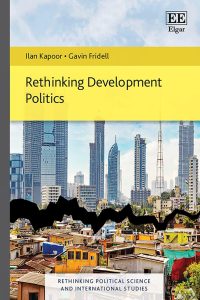
Rethinking Development Politics
Edward Elgar, 2024 (with Gavin Fridell)
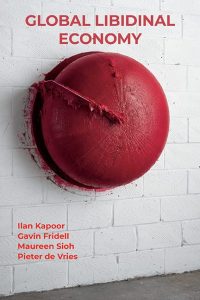
Global Libidinal Economy
SUNY Press, 2023 (Co-author, with Gavin Fridell, Maureen Sioh and Pieter de Vries)
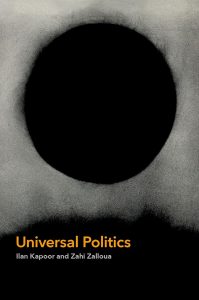
Universal Politics
Oxford University Press, 2022 (Co-author, with Zahi Zalloua)
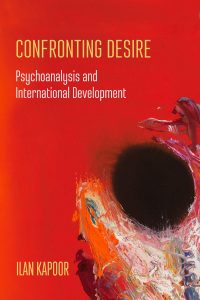
Confronting Desire: Psychoanalysis and International Development
Cornell University Press, 2020
Psychoanalysis and the Global
University of Nebraska Press, 2018 (Editor)
Celebrity Humanitarianism: The Ideology of Global Charity
Routledge, 2013
The Postcolonial Politics of Development
Routledge, 2008