Romania’s recent elections didn’t just happen at the ballot box. They unfolded across TikTok, Facebook, X, and other similar platforms on which nationalism, conspiracy, and algorithmic propaganda turned fringe voices into front-page politics. Madalina Botan argues that this digital battleground expanded beyond borders, as Romanians abroad became powerful co-authors of a polarised political story
Romania's recent elections remain at the centre of larger debates about electoral integrity across Europe. What happened in Romania was a test case for how digital ecosystems can hijack democracy. Recent research shows that TikTok, X and Facebook became arenas where manipulated emotions, remixed cultural themes, and platform incentives blurred the line between civic participation and digital warfare.
Citing manipulation and online disinformation, the Constitutional Court annulled the first round of elections. By the time watchdogs sounded the alarm about opaque ad spending and influencer-driven campaigning, the damage was done. When the elections were rerun, the battle lines were digital: hashtags, memes, and livestreams were the new campaign posters.
One of the biggest surprises was who became the driving force of online political debate. Romanian diaspora voters did not remain passive, but produced political content, created memes, remixed speeches, and linked Romania’s internal crisis to European culture wars. The Romanian diaspora was, in fact, co-writing the national narrative from thousands of kilometres away. Diaspora influencers blurred borders with bilingual posts, infusing Romanian nationalism with local frustrations.
During Romania's recent elections, the Romanian diaspora was surprisingly active, creating memes and remixing speeches; co-writing the national narrative from thousands of kilometres away
Drawing on joint research by the Italian (IDMO) and Romanian (BROD) Hubs of the European Digital Media Observatory (EDMO), my colleagues Domenico Cangemi, Andreea Stancea and I collected 8,000+ public posts from Facebook, TikTok, and X, made between December 2024 and May 2025, to analyse domestic and diaspora narratives for both rounds of elections.
Our network analysis across these platforms uncovered three mechanisms that turbocharge disinformation: normalisation of the fringe; hybrid virality (emotional videos remixed with humour, nostalgia, or outrage), and algorithmic amplification (the more emotional and polarising the post, the higher it climbs).
| Theme | X | TikTok | |
| Electoral fraud allegations | #fraudelectorala #deepstate | Embedded in humour/parody | Elaborate posts with citations |
| National sovereignty | #suverana #CG | Remix videos invoking 'the people' | Recurrent in party messaging |
| Institutional distrust | NATO/EU bashing | Hidden power symbolism | Direct geopolitical critique |
| Personalist narratives | Georgescu as martyr | Heroic remixes and edits | Religious/patriotic framing |
To zoom in on TikTok’s electoral discourses, we built hashtag co-occurrence networks (see the matrixes in the graphs below) that show the interconnection of ideas, slogans, and themes during elections. We embedded hashtags and associated words into a 768-dimensional vector, which reveals that platform interaction patterns are a bigger driver of political discourse clusters than content meaning. This finding suggests that algorithmic amplification and emotional virality are far more important than topic coherence.
TikTok emerged as the star player in the Romanian elections. The hashtag-map showed clusters of communities: nationalist pride (#RefacemRomania), diaspora mobilisation (#RomaniInItalia), and pro-European hope (#HaiLaVot). But it wasn’t just slogans, it was emotion, too.
TikTok was the star player in the Romanian elections, creating emotional feeds which blended personal nostalgia with political anger
Posts calling for 'unity', 'honour', or 'returning home' blended personal nostalgia with political anger. A user could scroll from dance videos to nationalist manifestos in seconds.
The result? A hyper-personalised, emotional feed where politics felt intimate and therefore real.
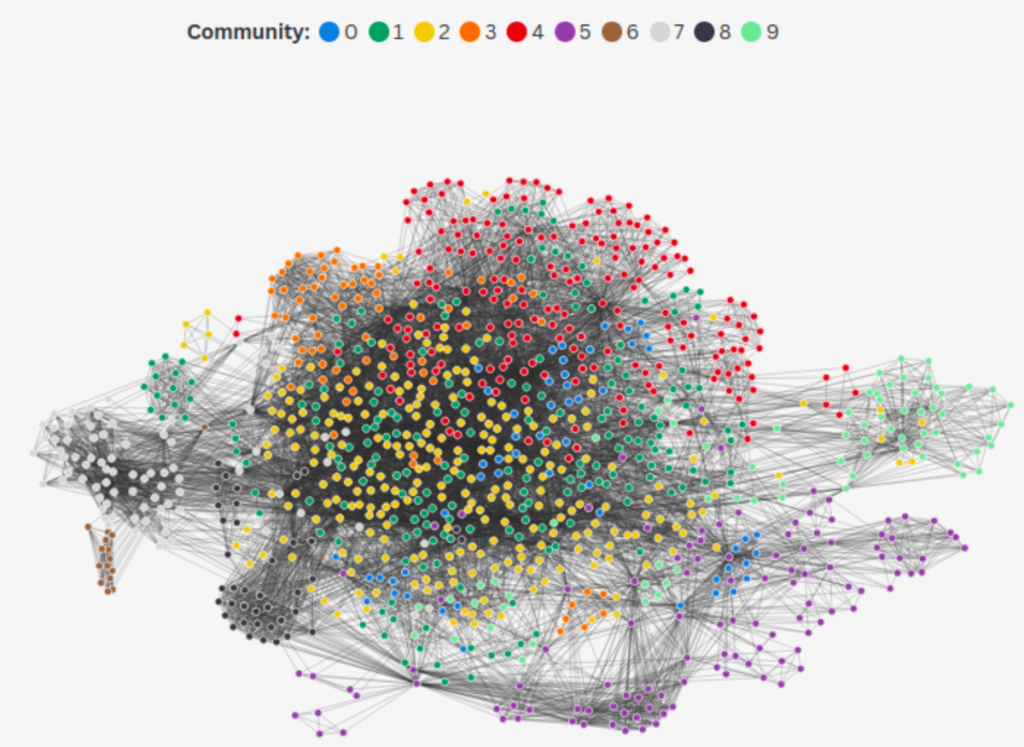
Communities identified on TikTok (10 communities, 1,109 hashtags and 10,939 links for the first election and 14 communities, 1,813 hashtags and 25,152 links for the second) had broad thematic diversity. Widespread narratives mixed patriotism (Community 0), diaspora pride (Community 1), and civic activism (Community 8). Disinformation risks, meanwhile, were more likely centred around identity and belonging, not ideology (Community 4). Furthermore, emotional appeals such as 'return home', 'sovereignty', and 'fraud' dominated factual discourse (Community 7).
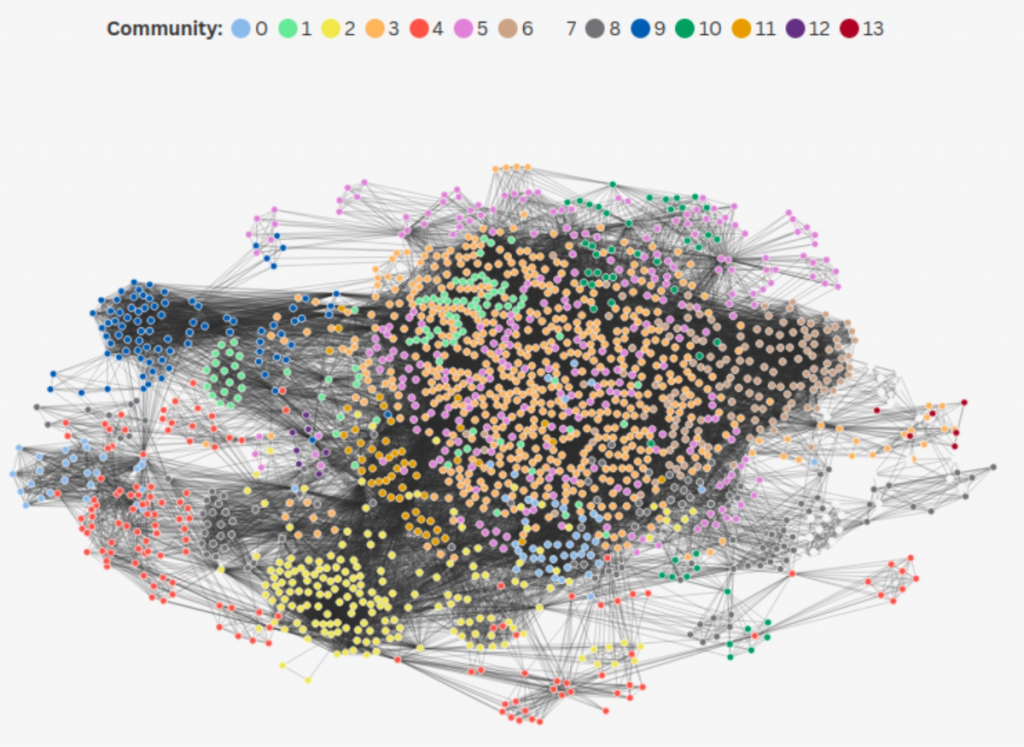
For the May 2025 elections, TikTok communities were more fragmented, issue-based and media-critical. During this period, diaspora narratives shifted from unity to competing identity frames, indicating not only that TikTok is an effective mobilisation tool, but that it also becomes an arena for real-time political commentary. The high modularity we identified for both elections implies tight echo chambers, reinforcing community-specific narratives.
If TikTok spread emotions, Facebook hardened them. Older users debated via long posts in private groups, circulating memes dressed as 'news' and fuelling collective outrage. Here, nationalist stories met conspiracy theories, from 'rigged elections' to 'foreign interference'.
Meanwhile, X acted like a megaphone for ideological elites. Hashtags like #Suverana (sovereign) or #DeepState connected conspiratorial and nationalist networks, making sovereignty the campaign buzzword. Each platform played its part: TikTok mobilised and entertained; Facebook reinforced; X declared war.
Diaspora politics isn’t new to Romania, but during these elections, it changed its form. Romanians in Italy didn’t just consume political content; they created it. They spoke to domestic and foreign audiences at once, mixing local frustrations with Romanian nationalism. This transnational remix reshaped public debate. When the diaspora spoke, its voice echoed back home, amplified by algorithms that transcended geography.
This is a new form of diasporic (digital) sovereignty in action: communities abroad influencing politics through digital participation that crosses borders and national jurisdictions.
When the Romanian diaspora spoke, algorithms that transcended geography amplified its voice. Algorithmic transparency is thus more important than ever for holding platforms accountable
But when disinformation travels across countries and languages, it becomes nearly impossible to regulate. Apart from clear legal cross-national frameworks, fighting digital disinformation requires proactive strategies such as community-specific media literacy that reaches domestic and diaspora audiences. Moreover, cross-platform (near)real-time monitoring can help researchers and relevant national authorities track narratives as they mutate between networks. And – most importantly, even if it seems unenforceable – algorithmic transparency is more important than ever to hold platforms accountable for the messaging they amplify. Democracy now lives in the feed; we must defend it there, too.