Lisa Janssen
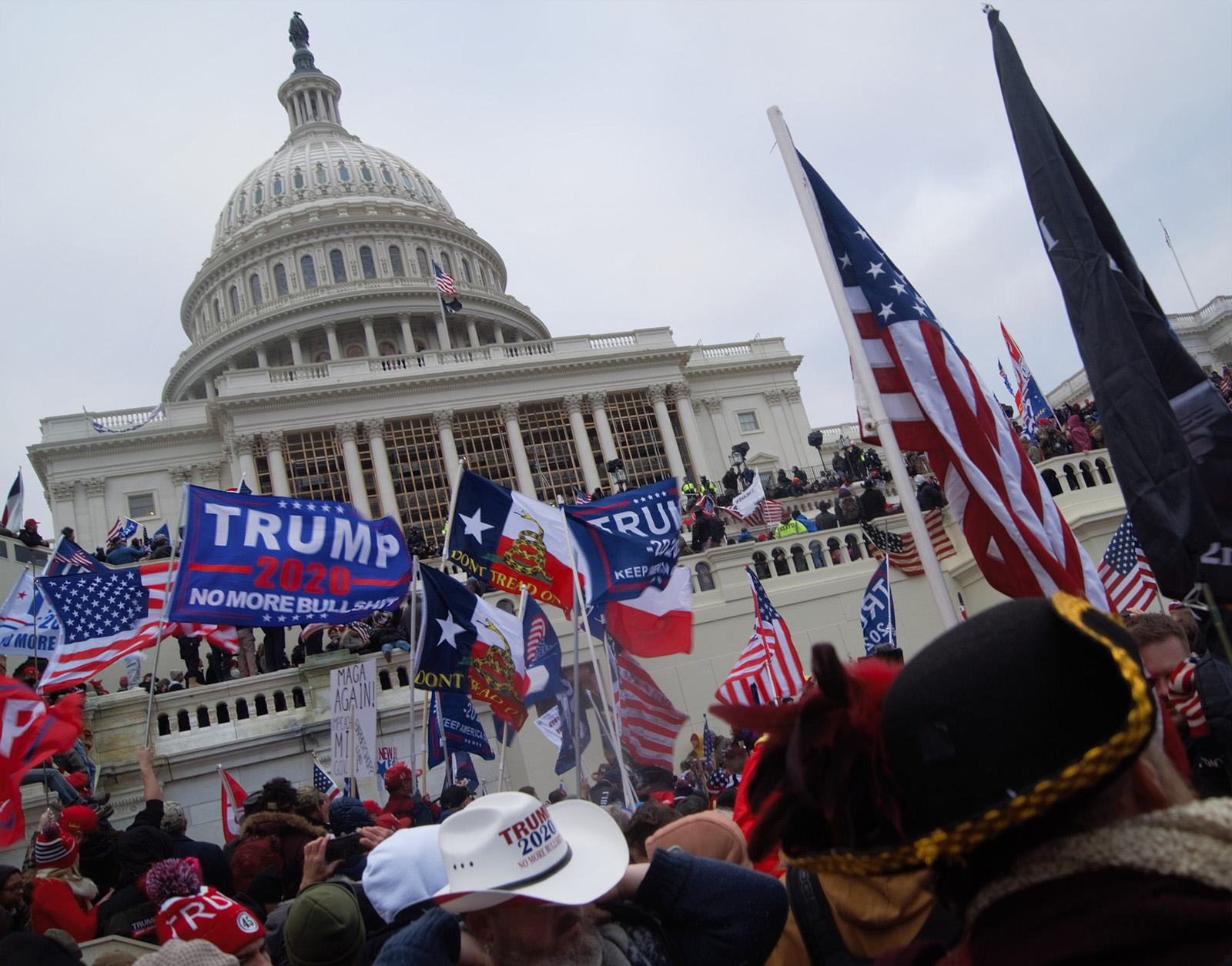
Accepting electoral defeat is essential for democratic stability. Yet, amid the political polarisation that followed the storming of the US Capitol and similar events in Brazil, losers’ consent became harder to obtain. Using case studies from UK elections, Lisa Janssen explains how polarisation influences citizens’ responses to election results Read more
Jasmin Sarah König
We know that there is an inherent tension between populism and liberal democracy. So how does this translate into law when populists are in power? Jasmin Sarah König and Tilko Swalve argue that constitutional changes by populist governments can have ambiguous implications for democratic quality Read more
Lukas Rudolph
The war in Ukraine has focussed attention on public attitudes to arms exports. New research by Lukas Rudolph, Markus Freitag, and Paul Thurner finds that in France and Germany, while a small minority is in principled opposition, a large majority makes nuanced trade-offs when articulating their positions on the issue of arms exports Read more
Simon Bienstman
Income inequality threatens democracy by depressing trust in political institutions. To better understand why, Simon Bienstman, Svenja Hense, and Markus Gangl argue that we should pay attention to inequality’s negative effect on citizens’ evaluations of the democratic process Read more
Nils Steiner
One way globalisation influences politics is by making new social categories ripe for politicisation. Nils Steiner, Matthias Mader and Harald Schoen examine the case of 'winners' and 'losers' of globalisation and show that significant proportions of citizens see themselves as part of these groups, showing distinct party preferences as a result Read more
Luca Versteegen
Luca Versteegen argues that specific emotions like nostalgia are not limited to populist radical right voters. We should therefore be more careful in ascribing emotions to this group, differentiating emotions and refraining from broad ascriptions like the so-called ‘left behind’ Read more
Christof Nägel
Research suggests that institutional trust increases in times of political crises. Christof Nägel, Amy Nivette and Christian Czymara test this notion for jihadist terror attacks in Europe. Their results imply that political leaders should not take these dynamics for granted Read more
Robert A. Huber
Populism is often considered to be high among parties with strong anti-immigration positions or Euroscepticism. Robert A. Huber, Michael Jankowski and Christina-Marie Juen argue that not the general left-right position of parties affects their level of populism but that collectivist positions on the parties’ salient issue dimension are crucial Read more
We use necessary cookies to make our site work. We'd also like to set analytics cookies that help us make improvements by measuring how you use the site. These will be set only if you accept.
▼
Strictly Necessary Cookies
Necessary cookies enable core functionality such as security, network management, and accessibility. You may disable these by changing your browser settings, but this may affect how the website functions.
▼
Analytics Cookies
Google Analytics
We'd like to set Google Analytics cookies to help us improve our website by collecting and reporting information on how you use it. The cookies collect information in a way that does not directly identify anyone. For more information on how these cookies work please see our Privacy Notice.