Matthew E Bergman
Austrian parties have finally formed a new government – on their third bargaining attempt. The failure of the previous rounds drew media criticism of timewasting. But Matthew E Bergman and Wolfgang C Müller argue that time spent bargaining is in fact an investment in future government policy productivity Read more
Jochem Vanagt
Jochem Vanagt and Markus Kollberg show that coalition governments bring voters of different parties closer together only if people believe those coalitions are doing a good job. When voters think coalitions are performing badly, partisan hostility remains high. Their insights have significant implications for efforts to reduce affective polarisation Read more
Alina Vrânceanu
Social policies shape public opinions on immigration. A study by Alina Vrânceanu and Bilyana Petrova shows that in Western Europe, generous welfare systems – perhaps counterintuitively – make natives more favourably inclined toward immigrants. Cutting benefits risks exacerbating anti-immigrant sentiment. These research findings have important implications for social conflict in modern capitalist democracies Read more
Louise Halberg Nielsen
During the Covid-19 pandemic, many citizens put full faith in 'the system' to keep them safe. Others were inherently mistrustful. Louise Halberg Nielsen argues that such trust, or the lack of it, was a key source of pandemic-era political disagreement. Her research findings could help societies navigate future collective crises more effectively Read more
Fabian Habersack
Political parties often adjust their policies to address emerging issues, or to attract — or regain — support. However, warns Fabian Habersack, such strategic pivots carry significant risks, especially if parties misjudge their electoral potential Read more
Laura Sudulich
Women are not a demographic minority, but they are certainly still a minority in politics. Laura Sudulich, Siim Trumm, and Iakovos Makropoulos show that a significant gender resource gap continues to be a feature of contemporary parliamentary campaigns. Women face an uphill battle to get elected Read more
Jessica Smith
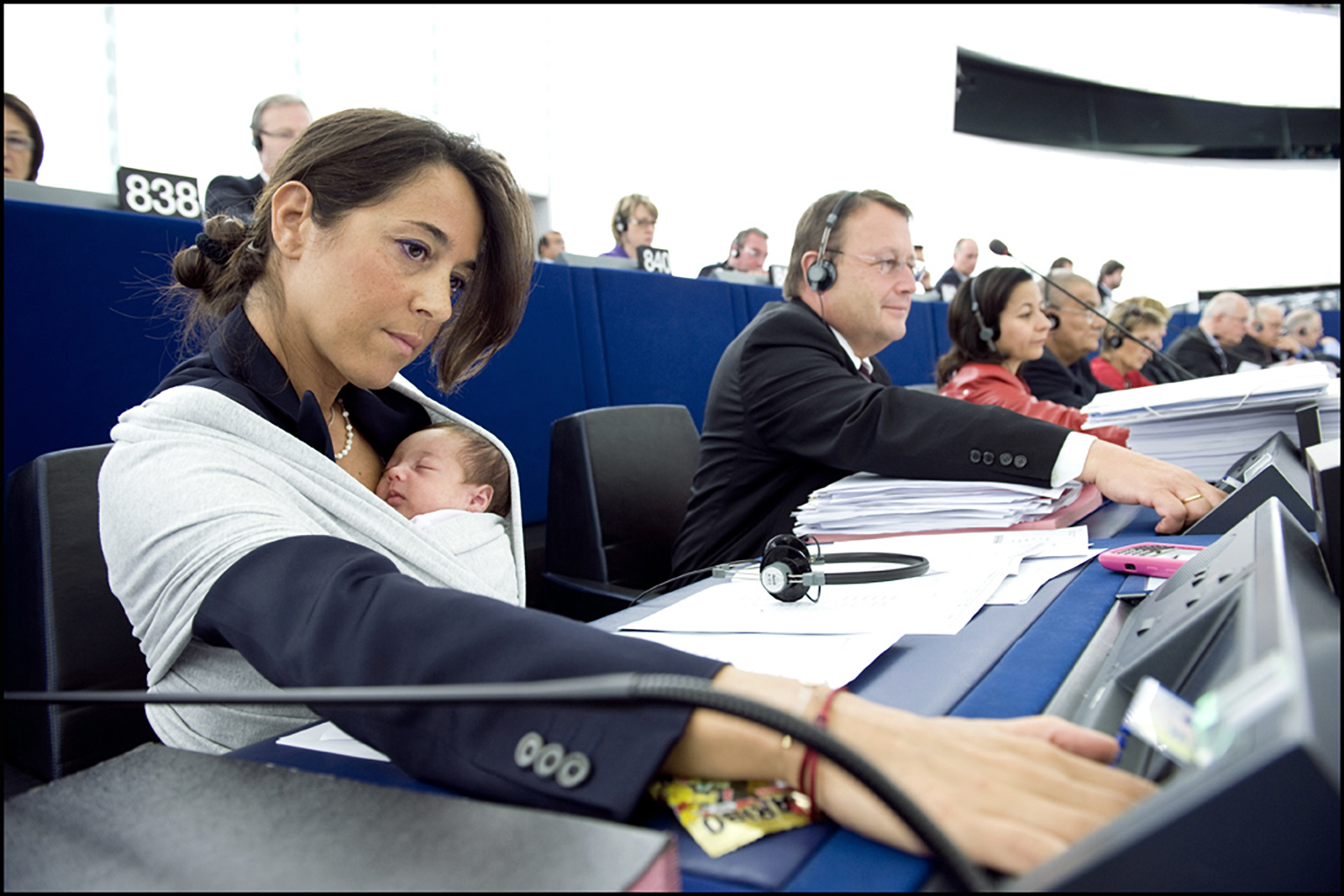
Parliaments often overlook MPs' family needs, and this poses challenges for recruiting and retaining diverse politicians. Yet, argues Jessica Smith, recent research in the UK reveals that voters don’t penalise MPs for taking parental leave; indeed, women MPs even gain more support as mothers. Read more
Anja Durovic
Democratic governments conduct extensive public opinion research, but we know little about how they use it. When and why do they seek to find out what the public thinks? Opening the black box of government polling in Germany, Anja Durovic and Tinette Schnatterer find governments exploit polls in a highly strategic way. Read more
We use necessary cookies to make our site work. We'd also like to set analytics cookies that help us make improvements by measuring how you use the site. These will be set only if you accept.
▼
Strictly Necessary Cookies
Necessary cookies enable core functionality such as security, network management, and accessibility. You may disable these by changing your browser settings, but this may affect how the website functions.
▼
Analytics Cookies
Google Analytics
We'd like to set Google Analytics cookies to help us improve our website by collecting and reporting information on how you use it. The cookies collect information in a way that does not directly identify anyone. For more information on how these cookies work please see our Privacy Notice.