
Hossein Kermani argues that a largely voiceless majority in Iran is routinely misrepresented by both the Islamic regime and its loudest opponents. Amid the current Iran-Israel-US conflict, he shows how many Iranians are rejecting simplistic binaries and instead are confronting the war’s causes, costs, and uncertainties
I have come to believe that there is a voiceless majority in Iran: one persistently misrepresented, silenced, and overshadowed by powerful actors such as the Islamic regime and sections of the opposition, especially the monarchist camp.
During the Woman, Life, Freedom mobilisation, this majority often rejected both regime narratives and oppositional polarisation. What many seemed to want instead was simple but profound: a normal, peaceful, and dignified life, free from hatred and instrumentalisation by competing political forces. This is now playing out in the context of the Iran-Israel-US conflict.
Responsibility for Iran’s current situation lies with the Islamic regime. From its inception, the regime has grounded its political identity in hostility toward external enemies, particularly the United States, Israel, and the broader West. For decades, official discourse has normalised permanent confrontation. At the same time, state propaganda has repeatedly framed Israel’s elimination as both an ideological commitment and a strategic goal. In line with this orientation, the regime has devoted vast national resources to militarisation: advancing its missile and nuclear programmes and sustaining regional proxy groups such as Hezbollah and Hamas.
Yet this posture has long been at odds with the priorities of many ordinary Iranians. Public resistance to the regime’s regional agenda was already visible during the 2009 Green Movement, when protesters chanted, 'No Gaza, No Lebanon, my life for Iran'. The slogan captured a wider frustration: while the state poured resources into geopolitical confrontation, it neglected the welfare, safety, and livelihoods of its own population. Even amid severe economic decline and inflation, the authorities failed to invest adequately in basic protective infrastructure, such as shelters or effective warning systems, which might have safeguarded civilians during military crises.
Iran's regime has poured resources into geopolitical confrontation and refused to tolerate genuine criticism. Meanwhile, it has neglected the welfare, safety, and livelihoods of its own population
At the same time, the regime has systematically refused to tolerate genuine criticism. Rather than responding to dissent through reform or dialogue, it has met protests with intimidation, mass arrests, and extreme violence. The 2026 January massacre and the Woman, Life, Freedom uprising are only the most visible examples of a broader pattern of repression. For many Iranians, nearly every peaceful avenue for political change seems to have been exhausted, only to produce deeper repression in return. For some, these accumulated conditions have led to the tragic conclusion that war, despite all its dangers, may appear less unbearable than the indefinite continuation of the current order.
Recognising why some Iranians may see war as unavoidable does not mean denying its human cost. Even the most precise military strikes can kill ordinary people or destroy their homes and livelihoods. Because regime propaganda, censorship, and restrictions on information flows make independent verification extremely difficult, the exact scale of civilian harm remains unclear. What is not unclear, however, is that civilian casualties and material damage do occur.
This view stands against more simplistic narratives, often voiced by some pro-monarchist circles, which dismiss civilian harm altogether or portray it as negligible. Such claims assume that any damage inflicted during war can easily be repaired once the regime falls. Yet many Iranians, even those who may see war as a last resort, do not accept this view. They recognise that the destruction is real, that it carries immediate human consequences, and that damage to critical infrastructure can endanger lives not only in the short term but for years to come.
Many Iranians don't believe that damage inflicted during war will be easily repaired once the regime falls. Such damage can endanger lives not only in the short term but for years to come
Another reductionist assumption is that war would automatically produce democracy and freedom. There is no such guarantee. The weakening of an authoritarian regime can open political possibilities, but it can also generate instability, violence, and fragmentation. Even in the event of regime change, a democratic alternative is far from certain. The end of one authoritarian order does not automatically produce a just, stable, or inclusive political future.
Israel and the United States bear responsibility for protecting civilians and avoiding damage to non-military sites and residential areas. The Islamic regime’s deeply unethical practices cannot justify indiscriminate attacks on civilians or non-military spaces. Even when military action appears to weaken a repressive state, civilian protection must remain a red line.
Even when military action appears to overlap with the demands of Iranian protesters, citizens must remember that Israel and the US are acting in pursuit of their own strategic interests
If we consider possible outcomes, some of the current attacks may appear advantageous from the perspective of many Iranian protesters. But this should not obscure a basic political reality: Israel and the US are acting primarily in pursuit of their own strategic interests. Some of those interests may currently overlap with the demands of Iranian protesters, but this should not lead to naïve idealisation. Neither Israel nor the US are altruistic agents of freedom.
An effective way of marginalising this voiceless majority is to emphasise one part of the story while erasing the rest. Iran's theocratic regime, along with many anti-war and some leftist groups, focus narrowly on civilian casualties and destruction. But this fails to acknowledge the Islamic regime’s decisive role in creating the conditions that made war possible. By contrast, some opposition groups, especially monarchists, highlight the regime’s crimes and responsibilities while downplaying or rationalising the role of Israel and the US in causing civilian harm. The fragmentation of anti-regime politics has become increasingly visible.
Yet we cannot reduce the position of many ordinary Iranians to either of these selective narratives. For the voiceless majority, these realities are inseparable: the regime is deeply culpable, war inflicts real and unacceptable suffering on civilians, and foreign powers act according to their own strategic interests. Any serious understanding of Iranian public sentiment must begin by recognising this complexity rather than flattening it into politically convenient binaries.

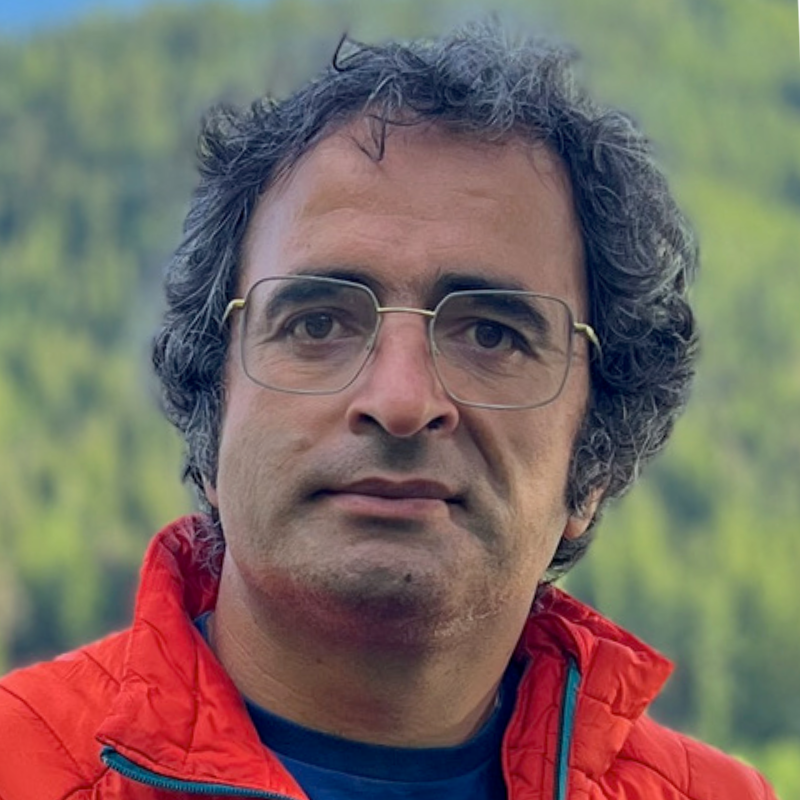
Hossein is studying social media, digital repression, computational propaganda, and political activism in restrictive contexts, with particular attention to Iran.
His research mainly revolves around a) the discursive power of social media in changing the microphysics of power and playing with the political and social structures, and b) the strategies that have been employed to manipulate and dismantle social media activism in non-democratic societies.
In his research, Hossein is primarily combining social and communication theories with computational techniques, particularly Social Network Analysis (SNA), Natural Language Processing (NLP), and critical discourse analysis.
He is the principal investigator of the BeyondCBA project, which is funded by WWTF.
Hossein has recently published in, among others, New Media & Society, Big Data & Society, Information, Communication and Society, and Asian Journal of Communication.
His first book, Social Media Research in Iran (in Farsi), was published in 2020. His first English book, Twitter Activism in Iran, was published in 2025. Hossein is now working on his second monograph, The Art of Delirium: Social Media Suppression in Authoritarian Regimes, which will be published by Springer Nature in 2027.
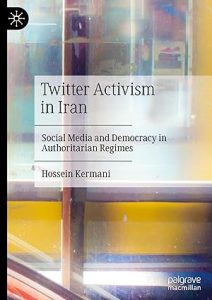
Twitter Activism in Iran, Palgrave Macmillan, 2025


