Andrew Richard Ryder argues that Trump is intent on political vandalism that will undermine the postwar rules-based international order. That order may not have been perfect, but Trump's administration desires a return to interwar dog-eat-dog expansionism and virulent nationalism. Forthcoming elections in Hungary in April, and the USA in November, represent an important opportunity to thwart these regressive ambitions
On 16 February 2026, US Secretary of State Marco Rubio made a visit to the Hungarian capital, Budapest. There, he endorsed Hungarian Prime Minister Viktor Orbán’s bid to serve a fifth consecutive term.
Orbán has long sought to undermine core values that America once proclaimed to support; primarily respect for the rule of law. America's endorsement is therefore deeply troubling. The EU has repeatedly sanctioned and reprimanded Hungary for its systemic undermining of EU values. This includes attacks on judicial autonomy, corruption, and the erosion of democratic checks and balances. Former US Presidents and Secretaries of State would certainly never have endorsed such a figure.

The Trump administration's sea change in values became especially apparent with the publication in late 2025 of the US Security Strategy. The document signalled America’s intention to prioritise strong relations with nationalistic countries, and placed a premium on national sovereignty.
America's constitution and principles once cherished the rule of law. The country now seems to be turning its back on these core values
America therefore holds Hungary in higher esteem than other EU member states which, according to the US administration, are responsible for 'civilizational erasure'. Trump has claimed Europe is enfeebled by its immigration policies, declining birth rates, censorship of free speech, suppression of political opposition, and loss of national identities and self-confidence.
The US was founded on mass migration. The country's constitution and principles once cherished the rule of law. Yet America seems to be turning its back on its core values. Recent controversial ICE roundups indicate that America, like Hungary, has succumbed to a base form of nativism that demonises migrants.
On 14 February 2025, US Vice President JD Vance addressed the Munich Security Conference. His speech included controversial claims that Europe was exercising censorship and stifling political opposition. Vance referenced stricter EU controls on social media and the treatment of British far-right activist Tommy Robinson, who has a string of convictions for assault, threats, harassment, and fraud. Robinson recently received a jail sentence for contempt of court.
US Vice President JD Vance used his platform at last year's Munich Security Conference to claim that Europe is exercising censorship and stifling political opposition
Observers interpreted Vance's talk of the problems associated with censoring political opponents or putting them in jail as a reference to Robinson. Many felt deep unease at the suggestion that firebrands like Robinson, who often stirs racial division, should remain unpunished. Vance also seemed to suggest it was wrong to cancel Romania's presidential election following accusations that Russian money had been pumped into the campaign of one far-right candidate.
Rubio's endorsement of Viktor Orbán – delivered while neighbouring Ukraine still struggles to repel Russian aggression – is another indicator of the Trump administration's troubling new direction. Orbán has done everything in his power to frustrate Ukraine’s efforts, including obstructing Ukraine’s admission to the EU. Orbán also continues to court Putin, vetoing EU sanctions against Russia. Despite this, Orbán attracted America's praise, and Rubio voiced hope for a 'new golden age' of cooperation between the two countries.
Orbán has long proclaimed himself a champion of illiberalism. Hungary is now a closed and authoritarian society, and this is the model America now seeks to emulate. Trump has voiced ambitions to annex Greenland; he has pushed around and insulted neighbours. All this indicates a transition from the postwar international order, which defended international law and deterred aggressive expansionism, to a new world order in which regional hegemons exert unchecked influence over smaller neighbours.
Hungary is now a closed and authoritarian society, and this is the model America now seeks to emulate
This is why Trump has sympathy for Putin’s position on Ukraine, and has been a biased and weak mediator in pursuit of peace. Rather than pressuring the Kremlin to make concessions, Trump and his administration have zealously pressed Kyiv.
This new world to which the Trump administration aspires resembles the anarchic, dog-eat-dog tensions of the interwar period where the bombastic nationalism of regional hegemons culminated in the tragedy of World War Two. History warns us that the authoritarianism and illiberalism of closed societies have tragic consequences.
Orbán may have laid a path for Trump to emulate. But Hungarian voters are growing wise to his administration's excesses. Years of corruption, cronyism and mismanagement have created a crisis. Recent polls suggest that moderate conservative opposition candidate Péter Magyar may well win in April.
A loss for Orbán will show that Hungarians value governments with probity and respect for the rule of law. In the November midterms, American voters may well deliver the same message to the Trump administration.


From 1990 to 2001 Andrew worked as a teacher in state schools and with the British Council. He also taught Roma children in the UK, Hungary, and Portugal.
Between 2002 and 2006, Andrew was the policy officer for the Gypsy and Traveller Law Reform Coalition (GTLRC), which lobbied for more caravan sites and social justice for Gypsies and Travellers. The GTLRC was awarded the Liberty Human Rights Award in 2004.
Andrew was the researcher for the Westminster All-Party Parliamentary Group for Roma and Travellers from 2002 to 2007.
Between 2006 and 2009 Andrew was the National Policy Officer for the Traveller Movement.
His interests focus on Roma Travellers / marginalised groups, social justice; community groups / social movements, and participatory action research.
Andrew has published books on Roma, Brexit, and academic freedom.
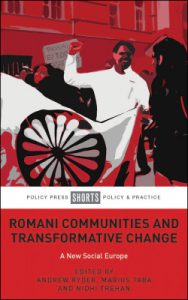
With Marius Taba and Nidhi Trehan, Andrew is the editor of Romani Communities and Transformative Change: A New Social Europe (Policy Press 2021).
He is the author of Britain and Europe at a Crossroads: The Politics of Anxiety and Transformation (Bristol University Press 2020).