Selina Mabrouki
Populist leaders don’t just claim to represent the people – they embody them. Through strongman toughness or maternal guardianship, populists model idealised versions of a nation’s citizens, and they naturalise exclusion. Selina Mabrouki shows how contemporary populist leaders exploit gendered role models as tools of emotional persuasion Read more
Francesco Vittonetto
Brought together by a shared ideology, converging around global events, and united in their support for radical-right leaders, populist audiences on social media are becoming increasingly global. Francesco Vittonetto discusses why we can now start talking about transnational populist publics Read more
Ugur Tekiner
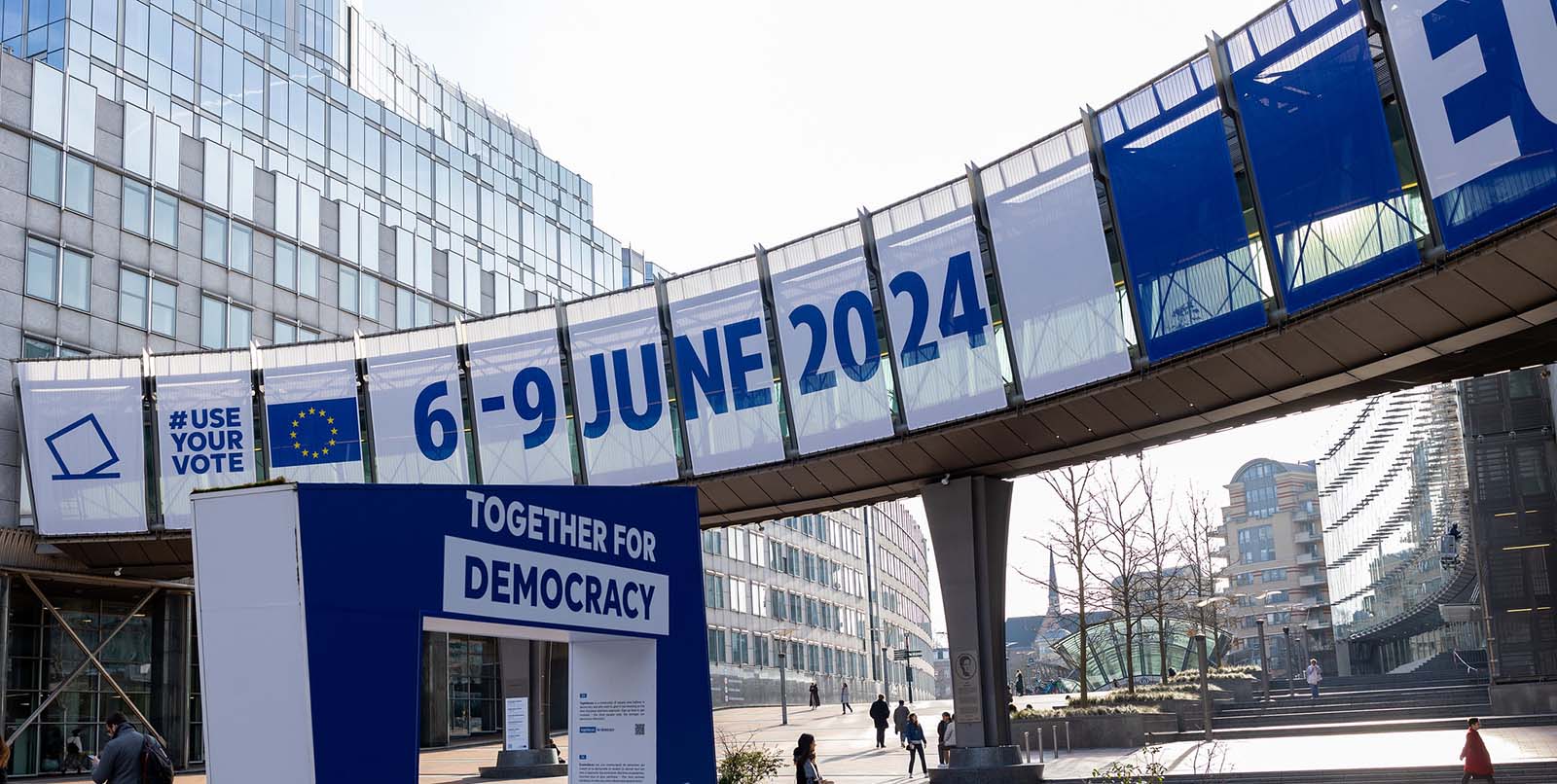
European elections are traditionally seen as less significant than national elections. But Ugur Tekiner argues that the recent challenges facing the EU force us to rethink this classification. Recent European elections accurately reflect the national political mood in Member States, and reveal the growing polarisation around Europe Read more
Yunus Poblome
Right-wing populism has gone beyond the nation state. Analysing JD Vance’s speech at the Munich Security Conference earlier this year, Yunus Poblome describes how US foreign policy under Trump depicts Europe as being led by a corrupt elite which refuses to listen to its conservative people. This, he argues, further legitimise Europe’s own right-wing populists Read more
Martino Comelli
Across Europe, mainstream conservative parties are edging closer to ultranationalists and far-right populists. Many see this as a sudden turn. But Martino Comelli argues its roots are part of Christian Democratic strategy DNA. Historically, this strategy has balanced market liberalism with the desire to constrain mass politics Read more
Janina Heaphy
Italy’s new cross-border surrogacy ban is typical of the way democratic nations are adopting authoritarian measures to target citizens who travel abroad to circumvent restrictions at home. The new law targets LGBTQ+ families in particular. Janina Heaphy argues that Italy's actions reflect a global trend of transnational restrictions on personal freedoms and human rights. Read more
Polina Zavershinskaia
Russia-friendly parties are exploiting Europe’s war-torn past to justify Russia’s aggression and undermine Europe’s support for Ukraine. Polina Zavershinskaia argues that there is evidence in Germany and Italy that the strategy is working. Read more
Jacob Wentz
Jacob Wentz analyses populist rhetoric and communication strategies in the election campaigns of Donald Trump and Giorgia Meloni. Both leaders adopt similar approaches, criticising traditional media, personalising politics, and using language that marginalises immigrants and the LGBTQ+ community. We should not, he argues, underestimate the power of their rhetoric. Read more
We use necessary cookies to make our site work. We'd also like to set analytics cookies that help us make improvements by measuring how you use the site. These will be set only if you accept.
▼
Strictly Necessary Cookies
Necessary cookies enable core functionality such as security, network management, and accessibility. You may disable these by changing your browser settings, but this may affect how the website functions.
▼
Analytics Cookies
Google Analytics
We'd like to set Google Analytics cookies to help us improve our website by collecting and reporting information on how you use it. The cookies collect information in a way that does not directly identify anyone. For more information on how these cookies work please see our Privacy Notice.