A distinct centrism which goes ‘beyond’ left and right remains elusive, argues Karl Pike. Centrists act as managers of an ideological context shaped by existing ideologies of left and right, moderate and extreme
The term ‘centrist’ can mean a few things. It can be juxtaposed with populism, with a ‘centrist’ being a non-populist, of either the centre-left or centre-right variety.
It can be used as a relative descriptor, sometimes within political parties or movements, to say someone is a little less left, or a little less right. They are more ‘centrist’, or more ‘moderate’ – words used interchangeably at times.
What I want to focus on here, besides dwelling on the meanings attached to centrism, is centrism as a politics that is, somehow, ‘beyond’ left and right and how that might manifest itself in practice: as a structure for political action.
Centrism has long been an ambiguous political term within liberal democracies. And when you contemplate centrism as something potentially novel, and distinct, the ambiguities soon stack up.
Avowedly centrist political figures do not like the word ‘ideology’, seemingly on the basis that it implies dogma. Yet if centrism represents a distinct ideational space that is neither left nor right, what else can it be?
If centrism represents a distinct ideational space that is neither left nor right, what else can it be?
If the words ‘centrist’ and ‘moderate’ are used sometimes interchangeably, is that because they just denote the same thing? For example, a politics that proceeds incrementally, and is pragmatic.
And to complicate things further, how should we interpret a centrism that disrupts a centre-left and centre-right establishment, as with French president Emmanuel Macron’s political project?
In short, if we try to take centrism seriously as a set of political ideas, what are we dealing with?
Centrist politics today includes some rhetorical overlap with the ‘third way’ debates of the 1990s. We can therefore consider the latter as providing a kind of intellectual inheritance. But how substantive is that inheritance?
In terms of political concepts that have retained relevance, my view is that the third way has not proven particularly substantive. Some of the third-way debates signalled a post-distributional politics; that who gets what was becoming less important, certainly in the good times.
That has not stood the test of time, nor did it really represent some of the achievements of the centre-left in the 2000s, which included – among many other things – the former Labour UK chancellor Gordon Brown’s tax credit system.
Without a substantive intellectual inheritance that we might consider to be the ballast of ideological traditions, we then turn to the centrist political projects around us.
Centrism is a restless political space, antagonising left and right parties and privileging ‘reforms’ seen as necessary and ‘sensible'
Centrism is a restless political space. It is often antagonistic towards established left and right parties (something that is electorally necessary, but also acts as a raison d'être). And it privileges ‘reforms’ seen as necessary and ‘sensible’, though this framing is highly contingent, rather than representing ‘means’ to longstanding ideological ‘ends’.
Emmanuel Macron’s presidency is instructive for understanding centrism in practice.
Pundits and analysts consider Macron to be a competent administrator. However, he has also made it near impossible for his governments to do much at all, following his call to hold snap 2024 legislative elections. Centrism is paradoxical and so is Macron: the establishment disruptor.
Macron wanted to ‘go beyond the conflict between the left and the right’. Gabriel Attal, who may run for the presidency as leader of the Macronist movement, wants to continue this.
In practice, though, Macron has oscillated between left and right, settling in what I consider to be a recognisably centre-right politics (as has Attal).
Centrism rests upon a critique of left and right (including centre-left and centre-right) establishments. Yet it begins and ends there. It does not go beyond, but rather deprioritises the commitments (such as they may be in a particular polity) of existing centre-left and centre-right politics.
Oscillation is, then, presumed to be the correct, even obvious politics for a centrist to adopt. Observers can track these oscillations before they judge – in the aggregate – whether a political project has been centre-left or centre-right, overall.
This theory of centrism that I offer – centrism as a structure for political action – is a political strategy that centre-left and centre-right politicians may adopt, to varying extents.
Current UK prime minister Keir Starmer has oscillated – at times – between left and right. As Starmer’s experience shows, this strategy is not without its risks for politicians. We can question their sense of political purpose: what is that political actor really for?
When politicians oscillate between left and right, they employ a risky strategy: citizens start to question what that political actor is really for
But there are others risks, too, including more significant ones for publics within liberal democracies.
Because centrists deprioritise ideological commitment, they become managers of an ideological context shaped by others. They are managing the political space, choosing between options that are, ultimately, the products of ideologues and the social and economic context of the time.
This betrays a lack of agency, the opposite of what centrism – so restless, focused on ‘action’ – seems to promise. And depending upon which ideologues are making the political weather, there lies a risk to liberal values.

Karl completed his PhD at Queen Mary University of London, and was awarded the Political Studies Association Walter Bagehot Prize for best dissertation in the field of government and public administration.
He has been a lecturer at QMUL since January 2021, following completion of a postdoctoral fellowship.
Karl’s research interests include political ideologies, political parties, public policy and political judgement, and interpretive approaches to political science.
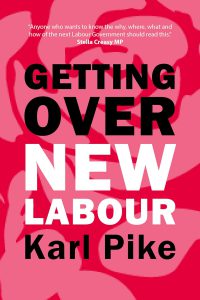
Getting Over New Labour
Agenda Publishing, 2024