Elected politicians face rising mistrust, gridlock, and citizen disengagement. In their research, Şule Yaylacı, Edana Beauvais and Mark E. Warren show how democratic innovations can help elites tackle inclusion gaps, agenda-setting dilemmas, and decision-making deadlocks. The authors also highlight the risks of co-optation and 'democracy washing'
Electoral democracy is under strain. Elections and traditional representative channels are no longer sufficient to sustain legitimacy in many established democracies. Citizens feel excluded from political and economic decision-making, while politicians face mobilised opposition, policy gridlock, and mistrust. As Luca Verzichelli highlighted, this disconnect between citizens and institutions underscores the need for new mechanisms to reconnect demos and kratos.
Here is where democratic innovations come into play. Structured forms of citizen participation that combine deliberation, representation, and learning could, in principle, help governments include affected publics and build legitimacy. But they also carry risks: empowering unelected citizens may challenge established authority. So why would elected politicians adopt them?
Democratic innovations are practices or institutions that aim to deepen democracy by expanding citizen participation beyond conventional voting and elections. They involve ordinary citizens directly – through random selection or open invitation – to deliberate on public issues, usually in advisory roles. Unlike referendums or town halls, they are designed to foster informed discussion and mutual learning. Well-designed democratic innovations promise to strengthen inclusion, agenda-setting, and collective decision-making – three core functions of a democratic political system.
For elected officials, democratic innovations can seem alien or even threatening. Many simply do not know much about them. For others, these processes often reinforce the perception that direct citizen involvement may lead to policy paralysis. On top of that, elected politicians already claim democratic mandates. They are accustomed to equating electoral victory with legitimacy. From this perspective, involving unelected citizens can appear redundant – and possibly even 'undemocratic'.
Elected politicians are accustomed to equating electoral victory with legitimacy. Involving unelected citizens in policy-making could therefore appear 'undemocratic'
Finally, democratic innovations may seem to fragment authority by creating competing sites of power. In Victoria, Australia, for instance, legislators unwilling to share power with citizen bodies rejected a proposal for mandatory deliberative engagement. The worry is that such institutions might undermine elected democratic legitimacy rather than strengthen it.
Yet under certain conditions, elected elites can find democratic innovations strategically useful. Some may be motivated by principle – that is, by a genuine belief in inclusion or deliberation. But most incentives are admittedly strategic, rooted in the logics of electoral competition. Politicians are vote-seeking and office-seeking; they aim to win and maintain office. In doing so, they must respond to evolving democratic deficits that affect their legitimacy and ability to govern. Theoretically, incentives to adopt democratic innovations can be understood through three kinds of democratic deficits: inclusion, collective will formation, and collective decision-making.
Elections mobilise some citizens while leaving others behind. Falling turnout, especially among younger and less-educated voters, weakens claims to represent 'the people'. Democratic innovations can help reach those who normally remain outside electoral politics.
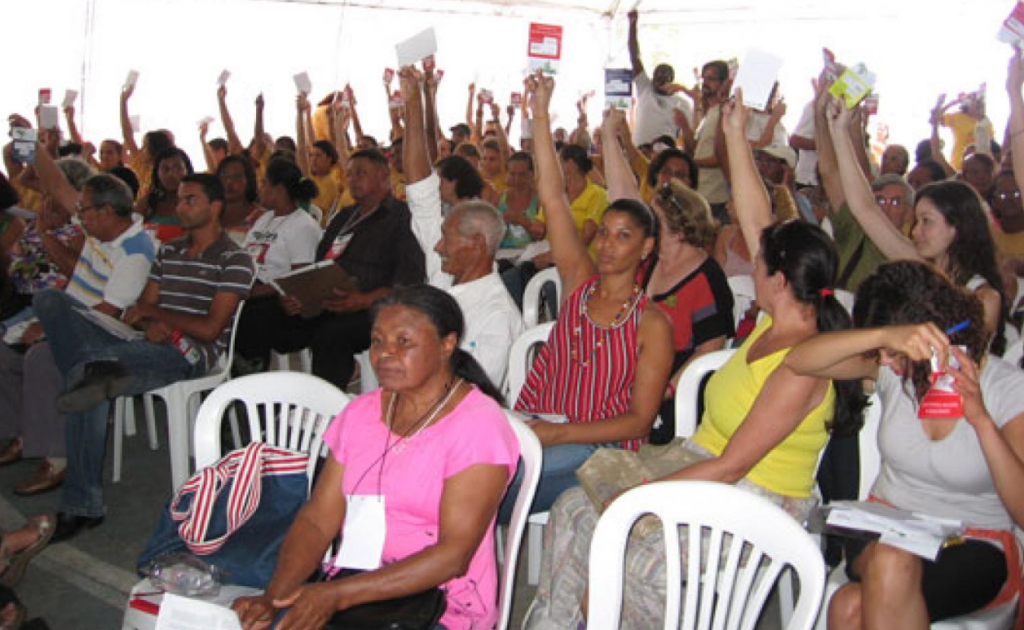
Participatory budgeting in Brazil, for example, was introduced to mobilise marginalised citizens in favelas. By giving them real influence over spending priorities, it expanded participation and built electoral support for the governing party. At the same time, innovations can help politicians neutralise opposition without appearing to capitulate.
When Vancouver faced fierce resistance to a long-term housing plan, the city convened a citizens’ assembly to include renters and other groups underrepresented in the debate, defusing conflict while preserving legitimacy. Finally, innovations can enhance transparency and curb perceptions of corruption. In contexts where elected officials are suspected of self-dealing, citizen participation can serve as a visible commitment to fairness. An example is the participatory budgeting adopted in China.
Democratic innovations can also help politicians confront issues that are too divisive or complex. Problems like those involving values or identity can deeply fracture electoral coalitions. Other issues, such as climate change, require long-term sacrifices that are hard to justify within electoral cycles.
Democratic innovations can gauge public opinion on divisive or complex issues, resulting in policy recommendations with greater legitimacy
In Ireland, citizens’ assemblies on marriage equality and abortion enabled politicians to gauge public sentiment on morally charged issues, and to act on the resulting recommendations with greater legitimacy.
In the United Kingdom and France, citizens’ assemblies on climate change provided governments with a measure of public cover for difficult policy choices. By outsourcing deliberation to well-designed citizen bodies, elected elites can test preferences and build public understanding without bearing the full political cost of unpopular decisions.
Even when citizens possess a good grasp of political issues, elected institutions can become paralysed. Legislative gridlock, coalition tensions, or polarised publics can block policy action. Democratic innovations can offer a way to regain capacity to decide. Processes like Oregon’s Citizens’ Initiative Review, which evaluates ballot measures, show how citizen deliberation can improve the quality of popular decision-making. In other cases, citizens’ assemblies or citizens’ juries can generate consensus that legislators alone cannot achieve.
Successful democratic innovations do not replace representative institutions but extend their problem-solving capacity
When successful, these innovations do not replace representative institutions but extend their problem-solving capacity, helping politicians make, justify, and implement decisions that would otherwise be politically costly or infeasible.
Of course, elites can also use democratic innovations strategically but cynically. 'Democracy washing' occurs when politicians convene participatory processes mainly to signal openness while ignoring their outcomes. Politicians can also cherry-pick recommendations that align with their pre-existing preferences. Both risks highlight a paradox: democratic innovations have the potential to become instruments of renewal but also of manipulation. Their democratic value depends on whether they genuinely expand inclusion and deliberation or merely simulate them.
At a time of lost connection between citizens and elites, democratic innovations can serve as instruments of reconnection by rebuilding trust and communication between them. They also invite a redirection of representative democracy itself, pointing toward a more distributed system of governance – one in which citizens and elected officials share, rather than monopolise, democratic agency.
For such a system to flourish, elected elites must see in these innovations not a threat but an opportunity: a way to strengthen their capacity to act democratically and effectively in an era of fragmentation and widespread mistrust.