Jacob Wentz
Jacob Wentz analyses populist rhetoric and communication strategies in the election campaigns of Donald Trump and Giorgia Meloni. Both leaders adopt similar approaches, criticising traditional media, personalising politics, and using language that marginalises immigrants and the LGBTQ+ community. We should not, he argues, underestimate the power of their rhetoric. Read more
Jamie Gillies
Populist impulses are having a growing impact on the political landscape of several Western-style democracies. Jamie Gillies, Vincent Raynauld and Angela Wisniewski unpack the effects of populism in Canada, arguing that populist strategies grew as public faith in government messaging eroded during the Covid-19 pandemic. Read more
Elisa Bellè
The study of the populist radical right has recently turned to localism. Elisa Bellè argues that this is related to the distinctly territorial nature of some of its recent successes. Read more
Frederik Henriksen
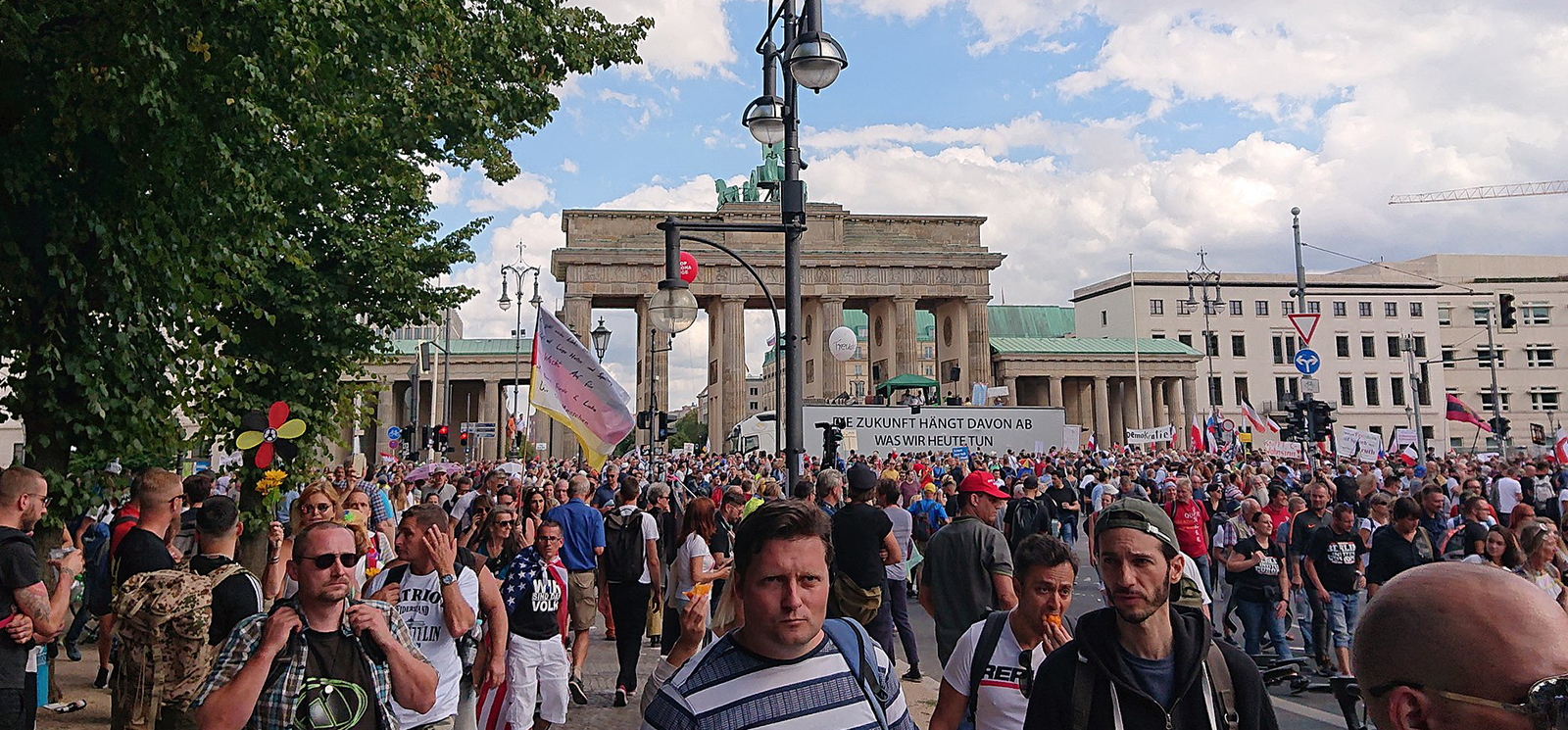
Frederik Henriksen analyses anti-systemic, populist movements during the Covid-19 pandemic. Here, he explains how these movements rely on alternative news media to establish their own digital information bubbles, and shows how ideological partisanship evolved in these environments Read more
Marie-Isabel Theuwis
Populist attitudes are responsive to perceived improvements in the democratic system. Marie-Isabel Theuwis and Rosa Kindt argue that this makes them a useful means to measure democratic quality Read more
Niels Nyholt
Niels Nyholt argues that voters’ everyday experiences with political decisions can substantiate populist parties' anti-elitist arguments. When mainstream politicians accommodate changes in settlement patterns by merging schools and hospitals, some communities are left without nearby services. Here, right-wing populist parties offer an electoral outlet for residents feeling left behind Read more
Lone Sorensen
Lone Sorensen argues we should pay close attention to political communication in the study of populism. Particularly important is how populist ideology and performance interact in the creation of meaning, how populists adapt their communications to various media, and how they talk about political communication as a democratic deficit Read more
We use necessary cookies to make our site work. We'd also like to set analytics cookies that help us make improvements by measuring how you use the site. These will be set only if you accept.
▼
Strictly Necessary Cookies
Necessary cookies enable core functionality such as security, network management, and accessibility. You may disable these by changing your browser settings, but this may affect how the website functions.
▼
Analytics Cookies
Google Analytics
We'd like to set Google Analytics cookies to help us improve our website by collecting and reporting information on how you use it. The cookies collect information in a way that does not directly identify anyone. For more information on how these cookies work please see our Privacy Notice.