Agnese Pacciardi
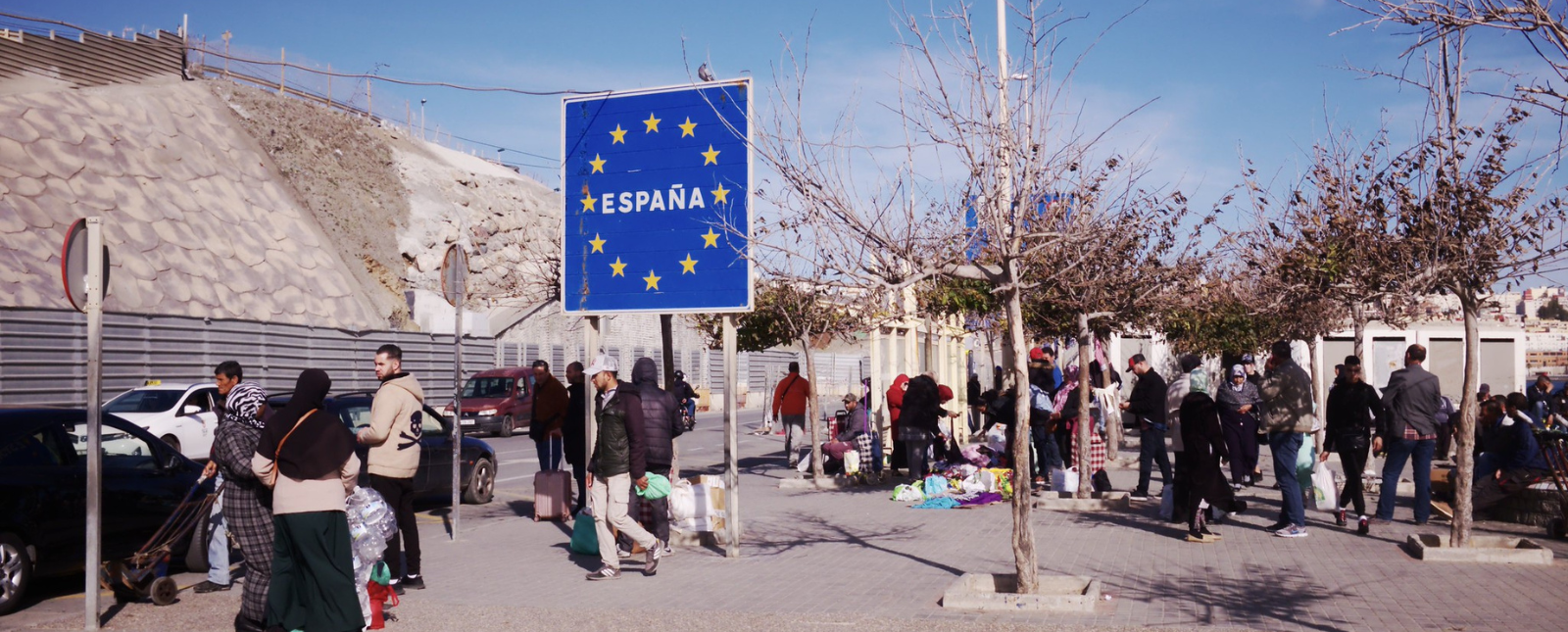
At the end of July, over the space of two days, around 72,000 people crossed from Morocco into the Spanish enclave of Ceuta. The largest such crossing on record, it became the first real-world test of the EU's Pact on Migration and Asylum. Agnese Pacciardi says the crisis resulted in weakened solidarity between member states, rushed deportations, and the neglect of human rights Read more
Marcela Linková
Intersectionality is already shaping Europe’s fight against gender-based violence in research and higher education. Using evidence from the UniSAFE project, new EU policy frameworks, and the next generation of gender equality plans, Marcela Linkova and Lut Mergaert reveal the impact of intersectional initiatives Read more
Frederik Stevens
We often consider business groups to be the dominant lobbying force in Brussels. But, based on his latest research, Frederik Stevens shows the opposite: citizen groups are more likely to influence what gets on, or stays off, the EU’s agenda. And when they attract media attention, their influence clearly outweighs that of business interests Read more
Ann-Kathrin Reinl
Ann-Kathrin Reinl argues that welfare security is the quiet hinge of public support for EU enlargement. Credible guarantees on national benefits blunt fears about costs and migration. If we reassure citizens on welfare, support for a larger EU holds Read more
Giuseppe Cannata
Evidence-informed policy-making promises to deliver better policies. Yet, people working at the science-policy interface in Europe face multiple challenges in making the most of it – from political constraints to a lack of administrative capacity and limited opportunity for productive exchange. Giuseppe Cannata discusses these challenges and their normative implications for European science-for-policy ecosystems Read more
Özlem Terzi
European politics are becoming increasingly emotional. But in times of war and rising autocratic populism, rational policy choices depend upon emotions to be effective. Özlem Terzi and Seda Gürkan argue that it's time for policy makers to start paying attention to fear and anger, but also to positive feelings. Read more
Ariadna Ripoll Servent
The presence of populist governments in European Union policy-making has been largely ignored. Ariadna Ripoll Servent and Natascha Zaun argue that we should pay attention to populists’ behaviour in the Council of the EU. Populist governments do not play by the normal rules of the game; rather, they use ‘unpolitics’. This destructive approach to policy-making was instrumental in blocking a reform of EU migration politics Read more
The Loop
Cutting-edge analysis showcasing the work of the political science discipline at its best.
We use necessary cookies to make our site work. We'd also like to set analytics cookies that help us make improvements by measuring how you use the site. These will be set only if you accept.
▼
Strictly Necessary Cookies
Necessary cookies enable core functionality such as security, network management, and accessibility. You may disable these by changing your browser settings, but this may affect how the website functions.
▼
Analytics Cookies
Google Analytics
We'd like to set Google Analytics cookies to help us improve our website by collecting and reporting information on how you use it. The cookies collect information in a way that does not directly identify anyone. For more information on how these cookies work please see our Privacy Notice.