Klaudia Koxha
Gender equality is a fundamental EU value and a condition for the accession of new members. Yet political parties in Western Balkan candidate countries rarely prioritise it. Klaudia Koxha explains why: parties respond when Brussels and voters agree, but go quiet when their positions clash, especially on LGBTQ+ rights Read more
Silvia Díaz Fernández
Research on digital violence must account for its metapolitical dimension. Silvia Díaz Fernández reveals how proponents of the far-right metapolitical project are shaping public discourse to fit their anti-democratic interests. Digital violence against women, racialised people and queer communities is all part of their strategy Read more
Varvara Prodai
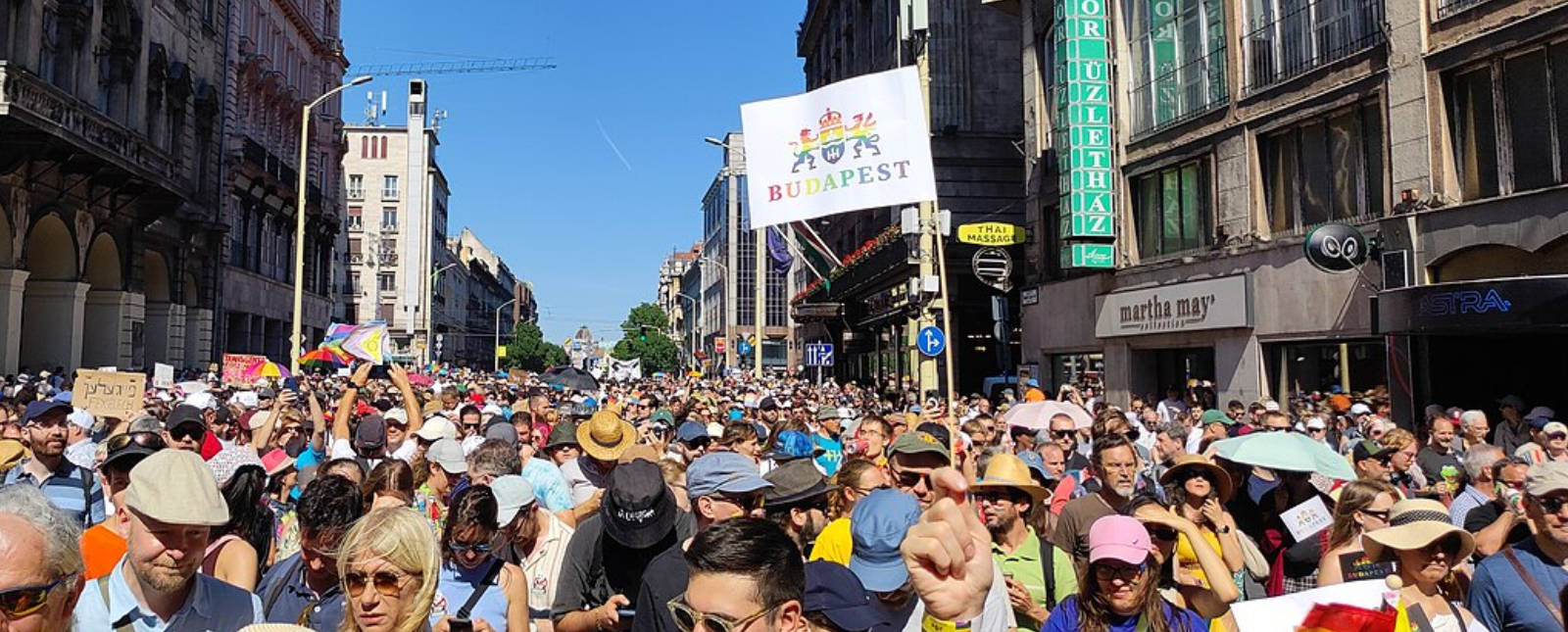
Hungary’s government recast Budapest Pride as a danger to children and national security, then banned the 2025 march. Varvara Prodai’s data show that the 'security threat' framing spiked in Hungarian, while English-language messaging remained legalistic, revealing a two-track playbook that weakens minority rights and narrows civic space Read more
Alexander Kondakov
In 2024, Georgia adopted a new legal framework that mirrors Russia’s ‘gay propaganda’ ban. Alexander Kondakov and Sandro Tabatadze explore how this law blends Russian-inspired anti-gender policies with homegrown political logic. It is reshaping Georgia’s identity and challenging its Western ties, while raising broader implications for global authoritarian movements Read more
Avery Gozu
Anti-LGBTQ+ sentiment has surged in Romania, especially since the 2024 presidential elections. Avery Gozu argues that illiberal candidates' weaponisation of homophobia runs deeper than surface-level insults – it is embedded in a socio-cultural web of hetero-nationalism and hegemonic masculinity Read more
We use necessary cookies to make our site work. We'd also like to set analytics cookies that help us make improvements by measuring how you use the site. These will be set only if you accept.
▼
Strictly Necessary Cookies
Necessary cookies enable core functionality such as security, network management, and accessibility. You may disable these by changing your browser settings, but this may affect how the website functions.
▼
Analytics Cookies
Google Analytics
We'd like to set Google Analytics cookies to help us improve our website by collecting and reporting information on how you use it. The cookies collect information in a way that does not directly identify anyone. For more information on how these cookies work please see our Privacy Notice.