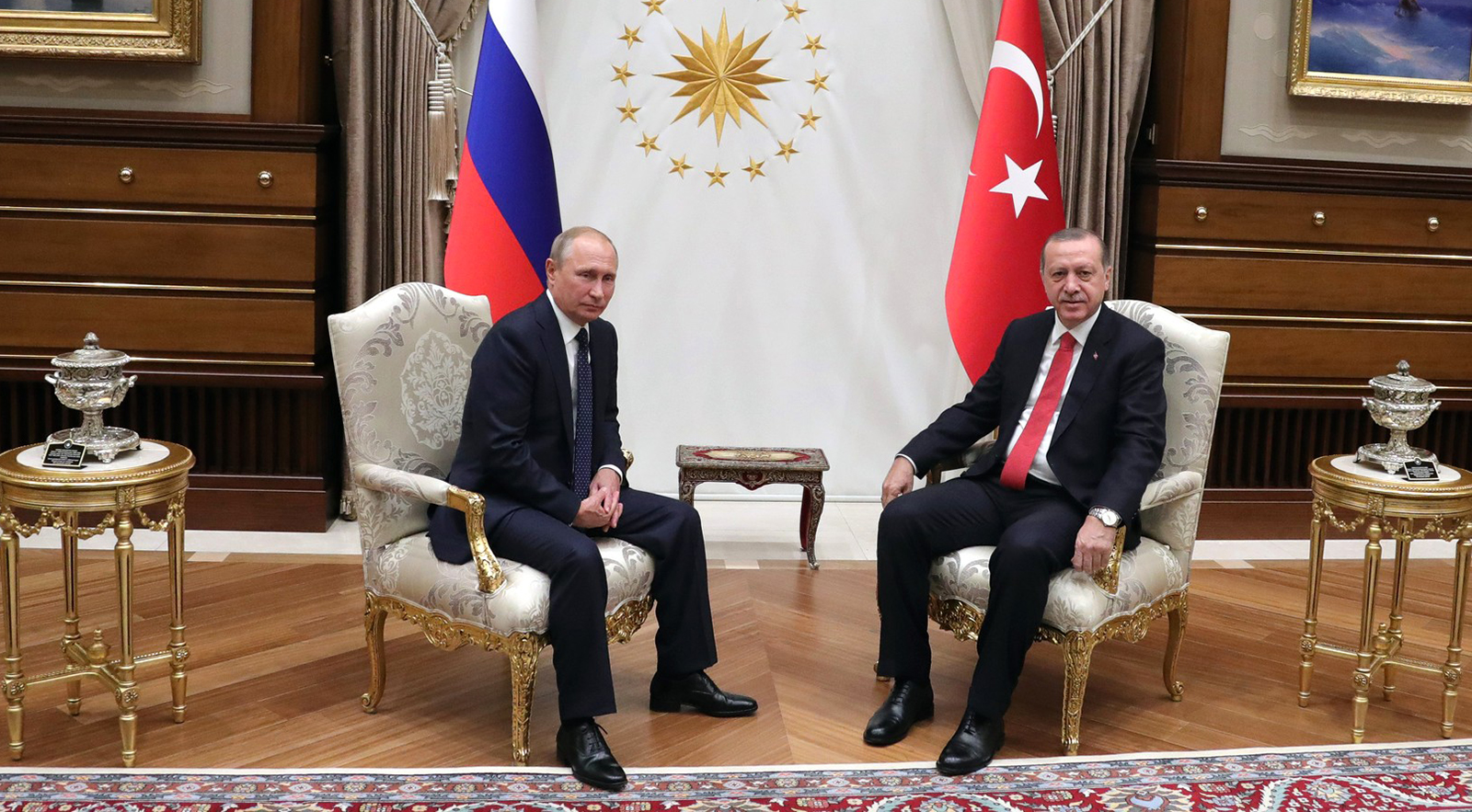
In recent years, Turkish foreign policy has oscillated between traditional alignments with the West, and a new Eastern orientation. Partnerships with Russia and China are becoming increasingly important, write Ziya Öniş and Mustafa Kutlay. Yet Turkey must be firmly anchored to the club of democratic states to regain its benign regional and global role
Professor of International Political Economy, Department of International Relations, Koç University
Ziya is the former Director of the Center for Research on Globalization, Peace and Democratic Governance (GLODEM) and the Graduate School of Social Sciences and Humanities at Koç University.
His recent research focuses on rising powers and the emerging post-liberal international order, varieties of populism in a global context, democratic backsliding and authoritarian turns in the global South and the European Periphery, domestic politics-foreign policy linkages and the new wave of economic crises in emerging powers.
His articles have been published in Review of International Political Economy, New Political Economy, Global Governance, Journal of Democracy, Comparative Politics, Government and Opposition, Development and Change, Mediterranean Politics, Third World Quarterly, Democratization, Political Science Quarterly, International Affairs inter alia.
He is the co-recipient, with Mustafa Kutlay, of the Elizabeth Meehan Prize for the best article published in Government and Opposition in 2019.
We use necessary cookies to make our site work. We'd also like to set analytics cookies that help us make improvements by measuring how you use the site. These will be set only if you accept.
▼
Strictly Necessary Cookies
Necessary cookies enable core functionality such as security, network management, and accessibility. You may disable these by changing your browser settings, but this may affect how the website functions.
▼
Analytics Cookies
Google Analytics
We'd like to set Google Analytics cookies to help us improve our website by collecting and reporting information on how you use it. The cookies collect information in a way that does not directly identify anyone. For more information on how these cookies work please see our Privacy Notice.