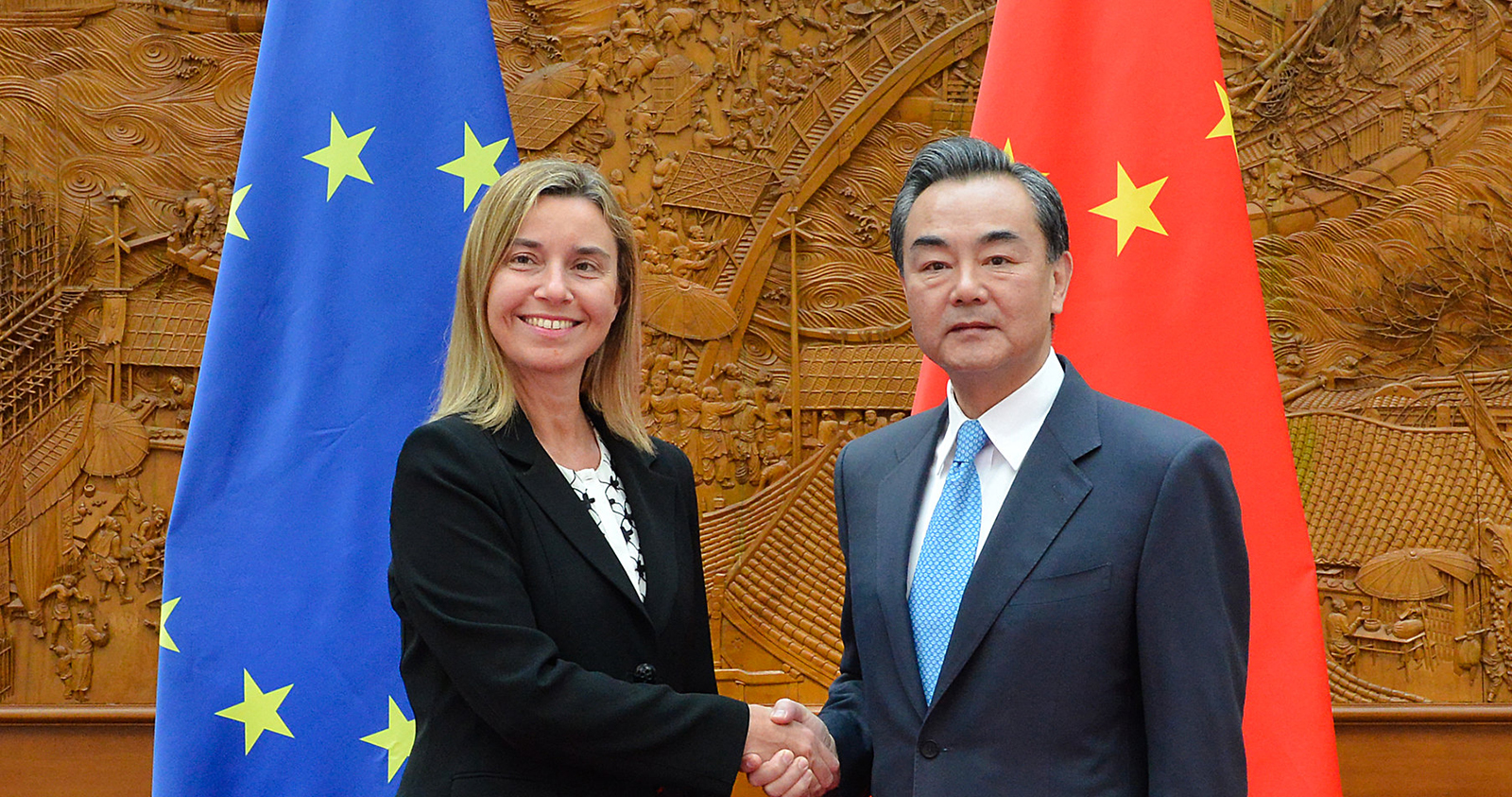
Xuechen Chen and Xinchuchu Gao contend that the bilateral relationship between the EU and China must be examined in a broader context. Specifically, that of the EU's increasingly proactive strategy towards the wider Asian region
Xuechen Chen and Xinchuchu Gao argue that the EU’s decision to securitise China lies behind the recent deterioration in EU-China relations. Yet divergent views among member states are hampering EU policy, resulting in incoherent and inconsistent implementation at national levels
Fellow in European Political Economy, London School of Economics
Xinchuchu also holds a visiting position at the London Asia-Pacific Centre for Social Science.
Prior to joining LSE, she held research and teaching positions at SOAS, New College of the Humanities, Université Libre de Bruxelles, and the Institute of Economic Affairs.
She received her PhD in European and International Studies from King’s College London.
Her work explored the political dynamics of European economic integration, with an empirical focus on the EU’s telecommunication services policy.
Xinchuchu's research interests lie at the intersection between European and/or international political economy, European integration and international relations.
Her latest publications appear in the European Yearbook of International Economic Law, Asia Pacific Journal of EU Studies, Asia Europe Journal and L’Europe en formation.
We use necessary cookies to make our site work. We'd also like to set analytics cookies that help us make improvements by measuring how you use the site. These will be set only if you accept.
▼
Strictly Necessary Cookies
Necessary cookies enable core functionality such as security, network management, and accessibility. You may disable these by changing your browser settings, but this may affect how the website functions.
▼
Analytics Cookies
Google Analytics
We'd like to set Google Analytics cookies to help us improve our website by collecting and reporting information on how you use it. The cookies collect information in a way that does not directly identify anyone. For more information on how these cookies work please see our Privacy Notice.