Sweden's election defeated the Tidö bloc and blocked the Sweden Democrats' route into government. Yet the restrictive political settlement they helped construct may endure. Vera Tika argues that far-right normalisation is not automatically reversed by electoral defeat: once institutionalised, illiberal change can acquire a political life of its own
Recent contributions to this series have shown how enlargement has returned to the centre of European geopolitics. Vera Tika argues that the emerging model of gradual accession is transforming the meaning of EU membership from a binary status separating insiders from outsiders into a continuum of differentiated participation
Vera Tika argues that Europe’s populist radical right no longer operates only through parties and elections. Its growing influence lies in its ability to shape migration policy, public discourse, digital communication, and the democratic mainstream itself. Now, the populist radical right shapes the very logic through which democratic systems govern, define threats, manage borders, construct belonging, and normalise exclusion
Vera Tika argues that contemporary illiberalism rarely arrives through dramatic democratic rupture. Instead, it advances quietly through routine governance and administrative practices that normalise exclusion. Examining Greece’s regulation of civil society, she shows how democratic erosion can occur incrementally — through law, procedure, and bureaucratic control
Albania has appointed an AI minister for public procurement. But Vera Tika argues that while 'Diella' embodies gendered symbolism and digital modernity, her appointment exposes a gap between European aspiration and democratic accountability
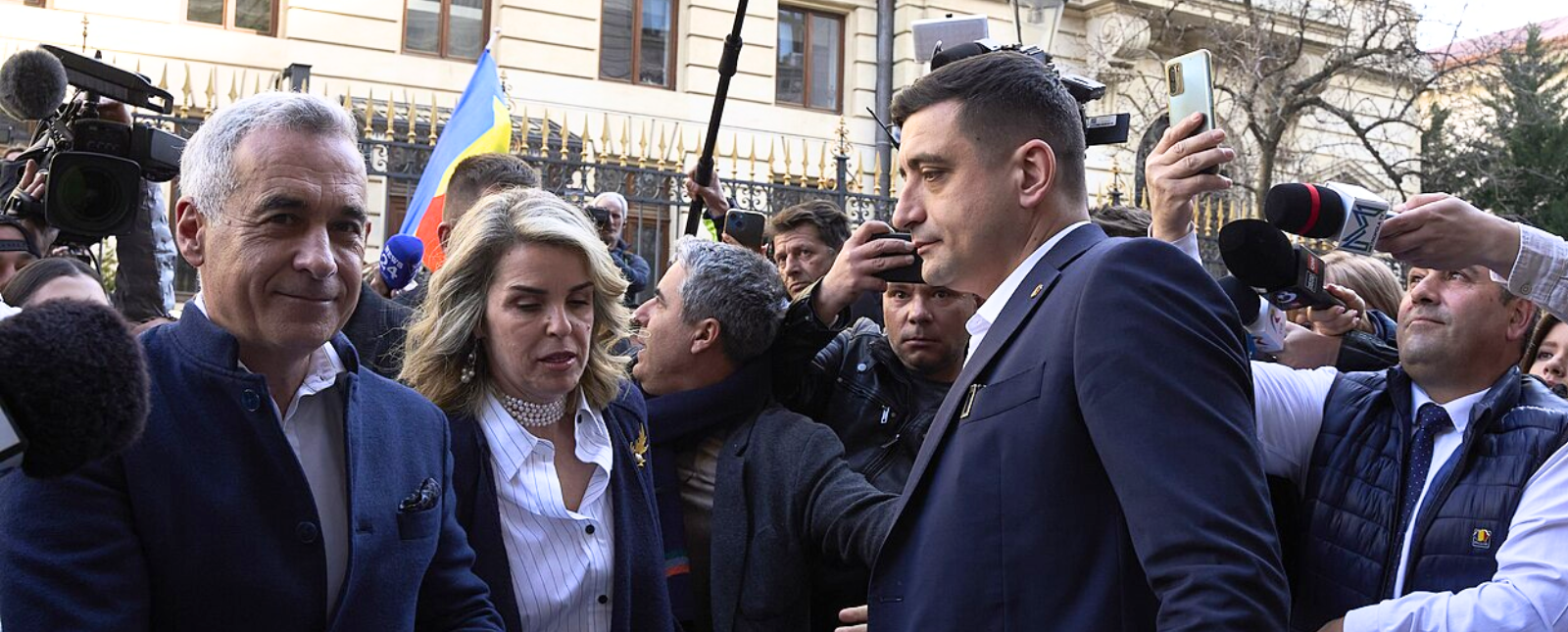
Nicușor Dan’s narrow victory over far-right challenger George Simion on 18 May averted the election of Romania's first openly illiberal president. Yet Simion still managed to attract 46.4% of the vote. Vera Tika reveals how ideas born under the Iron Guard, refined under Nicolae Ceaușescu’s national-communism, and weaponised by TikTok, now dominate Romanian politics — and are testing Europe’s eastern frontier of democracy
Research Associate, Centre for Political Research, Panteion University of Social and Political Sciences, Athens
Vera's work explores the intersections of far-right extremism, xenophobia, online hate speech, and the erosion of democratic norms in contemporary Europe.
She serves on the Executive Committee of the Far Right Analysis Network (FRAN) and contributes to Demolish Greece, a research initiative dedicated to uncovering and challenging authoritarian narratives, antisemitism, and digitally mediated discrimination.
Vera is actively engaged in European projects focused on Preventing and Countering Violent Extremism (P/CVE), and is a member of the continent-wide network on conspiracy theories and disinformation.
Her approach integrates political theory, digital sociology, and comparative research, with a particular focus on Southern and post-communist European contexts.
We use necessary cookies to make our site work. We'd also like to set analytics cookies that help us make improvements by measuring how you use the site. These will be set only if you accept.
▼
Strictly Necessary Cookies
Necessary cookies enable core functionality such as security, network management, and accessibility. You may disable these by changing your browser settings, but this may affect how the website functions.
▼
Analytics Cookies
Google Analytics
We'd like to set Google Analytics cookies to help us improve our website by collecting and reporting information on how you use it. The cookies collect information in a way that does not directly identify anyone. For more information on how these cookies work please see our Privacy Notice.