


Vassilis is working on the Horizon 2020 POPREBEL international project.
His expertise is in European Politics and Ethnopolitics.
Vassilis has developed a regional specialisation in the countries of Central and Eastern Europe.
He has conducted research and taught at universities and research institutes in Estonia (Tartu University), Germany (Herder Institut in Marburg), Denmark (Copenhagen University), Sweden (Lund University, Malmö University, Södertörn University, and Uppsala University), Hungary (Collegium Budapest/Institute for Advanced Study), Slovakia (Comenius University in Bratislava), Romania (New Europe College) and Serbia (University of Novi Sad).
He holds a PhD in Russian and East European Studies from the University of Birmingham.
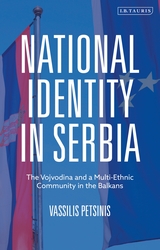
Vassilis is the author of National Identity in Serbia: The Vojvodina and a Multiethnic Community in the Balkans (Bloomsbury and I.B. Tauris Publishing: London, 2020) and various academic publications that cover a range of countries as diverse as Serbia, Croatia, Romania, Hungary, Slovakia, Estonia, Latvia, and Greece.

