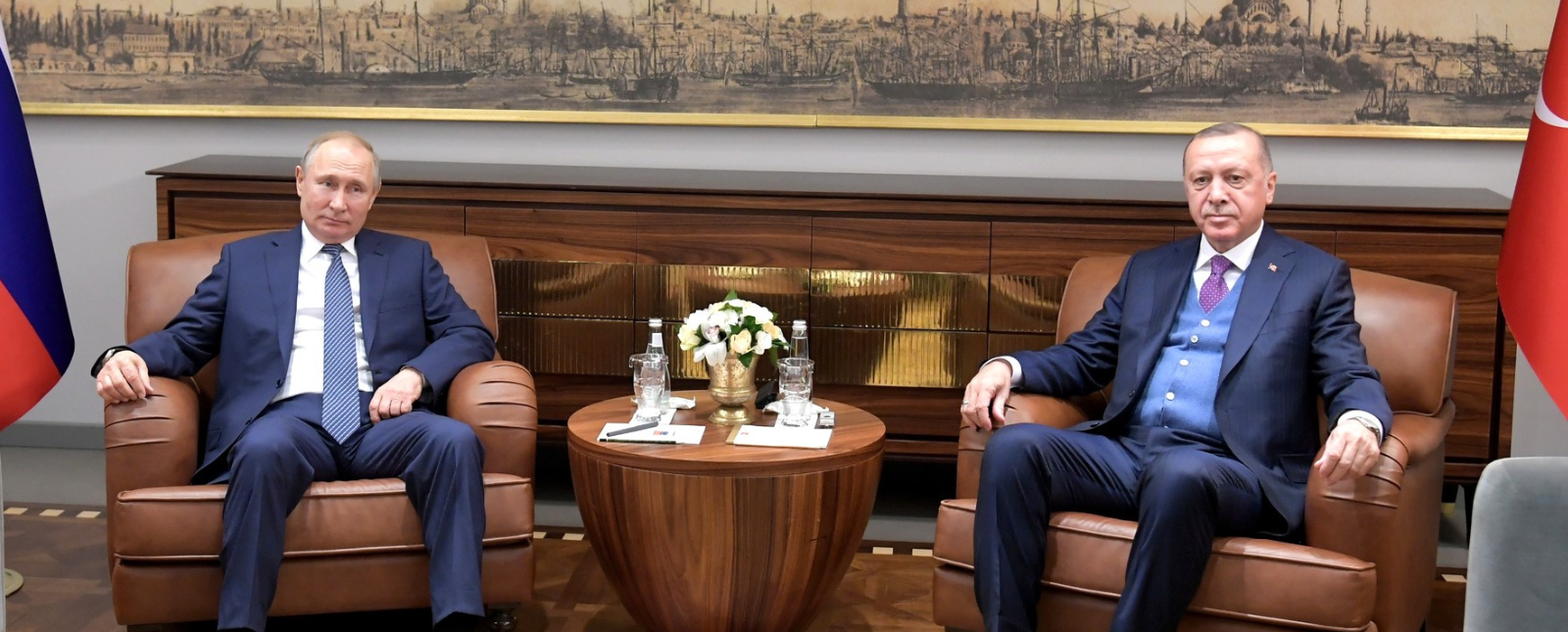
Taylan Düzgün argues that Turkish–Russian coordination in Syria has never reflected a true strategic alliance. Instead, both sides have developed limited forms of cooperation to contain escalation while pursuing fundamentally incompatible goals. The Syrian conflict shows how rivalry and coordination increasingly coexist in contemporary international politics
Taylan Utku holds an MA in International Relations from Leiden University.
His research focuses on international relations and security studies, with particular emphasis on securitisation theory, Turkish foreign policy, and Middle Eastern conflicts.
He also works on proxy warfare, alliance politics, peacebuilding and post-conflict state formation, and US foreign policy in the Middle East.
His current research examines Turkey-Russia relations, NATO dynamics, and conflict governance in Syria, with a focus on escalation management, alliance behaviour, and regional security orders.
His MA thesis analysed competing interpretations of how the Syrian Civil War has shaped Türkiye’s relations with Russia, focusing on ideological and pragmatic explanations of foreign policy behaviour.
Taylan's broader research interests include BRICS and global power shifts, migration and border politics, climate change governance in Southeast Asia, and the historical legacy of the Sykes-Picot Agreement in shaping contemporary Middle Eastern geopolitics.
We use necessary cookies to make our site work. We'd also like to set analytics cookies that help us make improvements by measuring how you use the site. These will be set only if you accept.
▼
Strictly Necessary Cookies
Necessary cookies enable core functionality such as security, network management, and accessibility. You may disable these by changing your browser settings, but this may affect how the website functions.
▼
Analytics Cookies
Google Analytics
We'd like to set Google Analytics cookies to help us improve our website by collecting and reporting information on how you use it. The cookies collect information in a way that does not directly identify anyone. For more information on how these cookies work please see our Privacy Notice.