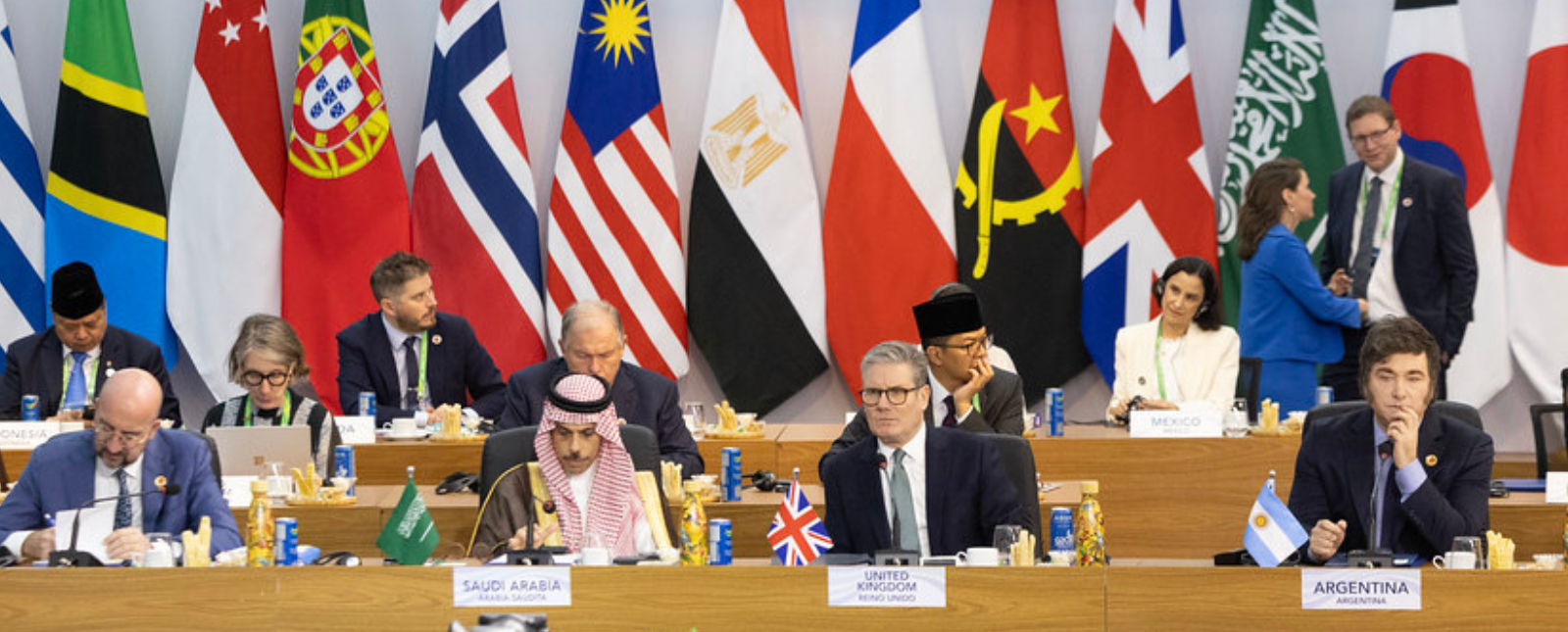
From Ukraine to global finance, informal organisations are stepping into gaps left by traditional institutions at a time of great power competition. With speed, flexibility, and a lack of constraining rules, these informal bodies are quietly reshaping international order write Steve Biedermann and Matthew Stephen
Secretariats of international organisations have long favoured staff from developed, Western countries. Rising powers are trying to change this, though with mixed success, they are now looking at other ways to achieve their goals, write Michal Parízek and Matthew Stephen
The Regional Comprehensive Economic Partnership is only the latest of many new multilateral institutions created by China. An alternative to the American-led liberal international order looks increasingly viable, suggests Matthew Stephen
Professor of International Political Economy, Helmut Schmidt University / University of the Federal Armed Forces Hamburg
Matthew is a political scientist specialising in global political economy and global governance.
He holds the Chair of Political Science (International Political Economy) at Helmut Schmidt University / Universität der Bundeswehr Hamburg since 2024 and is a member of the Heisenberg Programme of the German Research Foundation.
Matthew's research examines how power shifts challenge and reshape the legitimacy and functioning of global governance and has been published in journals such as the European Journal of International Relations, International Studies Quarterly, and International Studies Review.
We use necessary cookies to make our site work. We'd also like to set analytics cookies that help us make improvements by measuring how you use the site. These will be set only if you accept.
▼
Strictly Necessary Cookies
Necessary cookies enable core functionality such as security, network management, and accessibility. You may disable these by changing your browser settings, but this may affect how the website functions.
▼
Analytics Cookies
Google Analytics
We'd like to set Google Analytics cookies to help us improve our website by collecting and reporting information on how you use it. The cookies collect information in a way that does not directly identify anyone. For more information on how these cookies work please see our Privacy Notice.