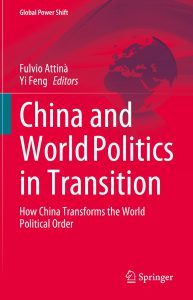

Why do regime-change wars re-emerge when global order is under strain? As multilateral institutions lose effectiveness and legitimacy, Fulvio Attinà argues that states are increasingly turning to unilateral or coalition-based force. Interventions such as those in Iraq, Libya, Ukraine, and Iran reflect not isolated crises, but a deeper process of coalition reconfiguration during systemic transition
The world order is not simply shifting from unipolarity to multipolarity, but undergoing a deeper struggle over political authority. Who has the right to make binding global rules, through which institutions, and with what legitimacy? Fulvio Attinà argues that multipolarity helps explain today’s stalled reforms, institutional paralysis, and fragmented alternatives
Professor Emeritus of Political Science (International Relations), Department of Political and Social Sciences, University of Catania
Fulvio's research and teaching has consistently focused on international politics and the European Union.
He has been Chair of the Italian Association of Political Science and Jean Monnet Chair Ad Personam.
He is the author of books and essays on world politics, multilateral security, EU politics, Euro-Mediterranean relations, mass migration and climate policy.
He has been a visiting professor at foreign universities, including the Chinese Academy of Social Sciences, Columbia University, New York University, and Shandong University.
At Catania, he currently teaches ‘World Institutions and Policies’ and ‘Methodology of Political Research’.

We use necessary cookies to make our site work. We'd also like to set analytics cookies that help us make improvements by measuring how you use the site. These will be set only if you accept.
▼
Strictly Necessary Cookies
Necessary cookies enable core functionality such as security, network management, and accessibility. You may disable these by changing your browser settings, but this may affect how the website functions.
▼
Analytics Cookies
Google Analytics
We'd like to set Google Analytics cookies to help us improve our website by collecting and reporting information on how you use it. The cookies collect information in a way that does not directly identify anyone. For more information on how these cookies work please see our Privacy Notice.