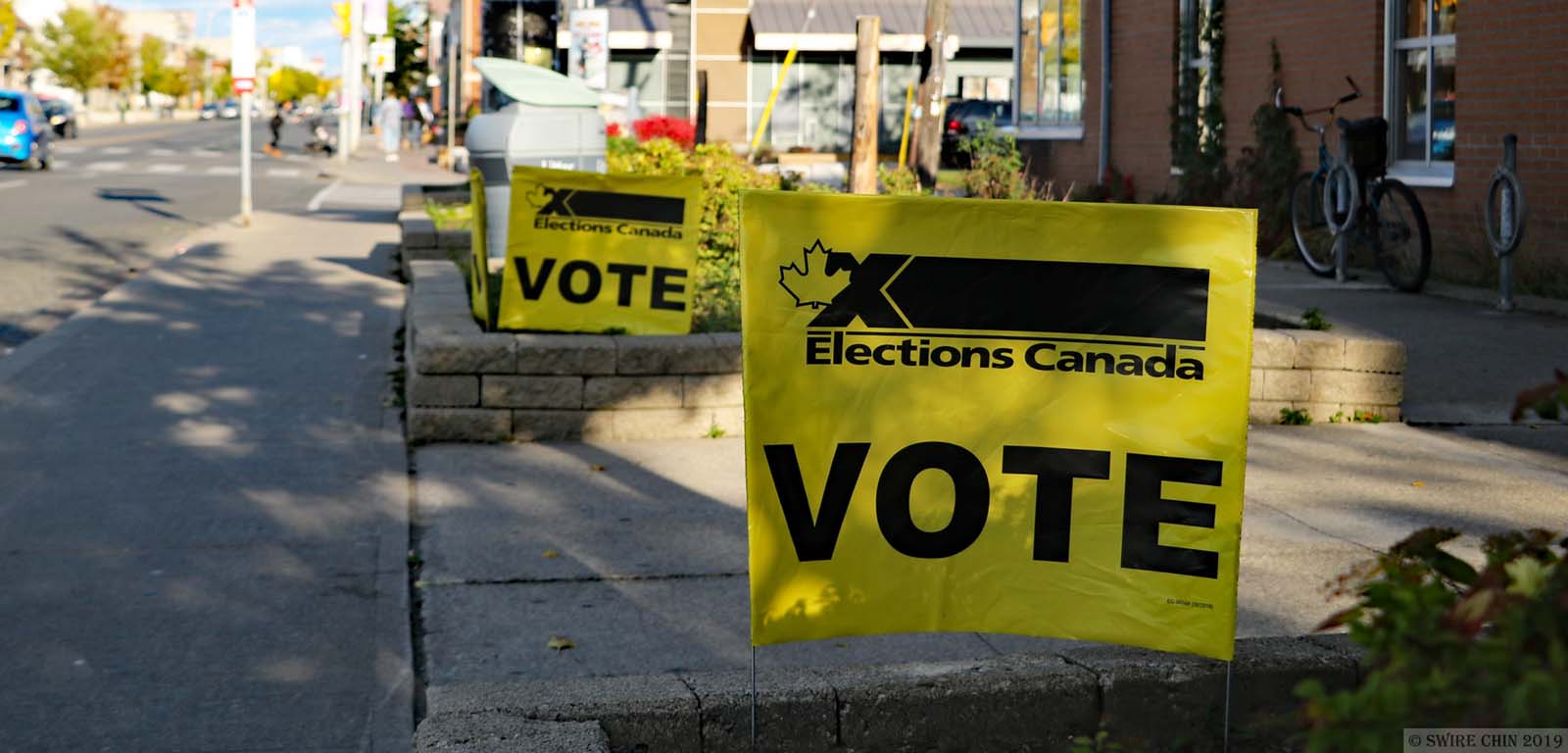
Clareta Treger examines whether political identities dominate policy preferences in Canadians' political decision-making process. Her recent work finds that even in an era of prominent partisan and ideological competition, Canadian voters continue to evaluate electoral candidates on what they propose to do – not simply on the labels they wear
Liron Lavi and Clareta Treger argue that citizens hold a multi-dimensional perception of political representation. Using Israel as a case study, they find that citizens feel represented on dimensions that are not important to them, and also on dimensions that reflect their satisfaction with democracy
In a study of public attitudes towards government paternalism, Clareta Treger finds that, when it comes to their own safety and health, individuals prefer coercive government policies over nudges that steer them towards welfare-enhancing behaviour. This should be taken into consideration when devising strategies to mitigate COVID-19 and future crises.
Lady Davis Postdoctoral Fellow, Department of Political Science, Hebrew University of Jerusalem
Clareta studies the political behaviour of citizens and politicians using surveys and experiments.
She is also a researcher with the RegTrust ERC project at the Hebrew University of Jerusalem.
Clareta's research focuses on the determinants of attitudes toward government intervention, with an emphasis on preferences for coercive and paternalistic policies.
Her work has been published in Public Opinion Quarterly, Regulation & Governance, and European Political Science.
We use necessary cookies to make our site work. We'd also like to set analytics cookies that help us make improvements by measuring how you use the site. These will be set only if you accept.
▼
Strictly Necessary Cookies
Necessary cookies enable core functionality such as security, network management, and accessibility. You may disable these by changing your browser settings, but this may affect how the website functions.
▼
Analytics Cookies
Google Analytics
We'd like to set Google Analytics cookies to help us improve our website by collecting and reporting information on how you use it. The cookies collect information in a way that does not directly identify anyone. For more information on how these cookies work please see our Privacy Notice.