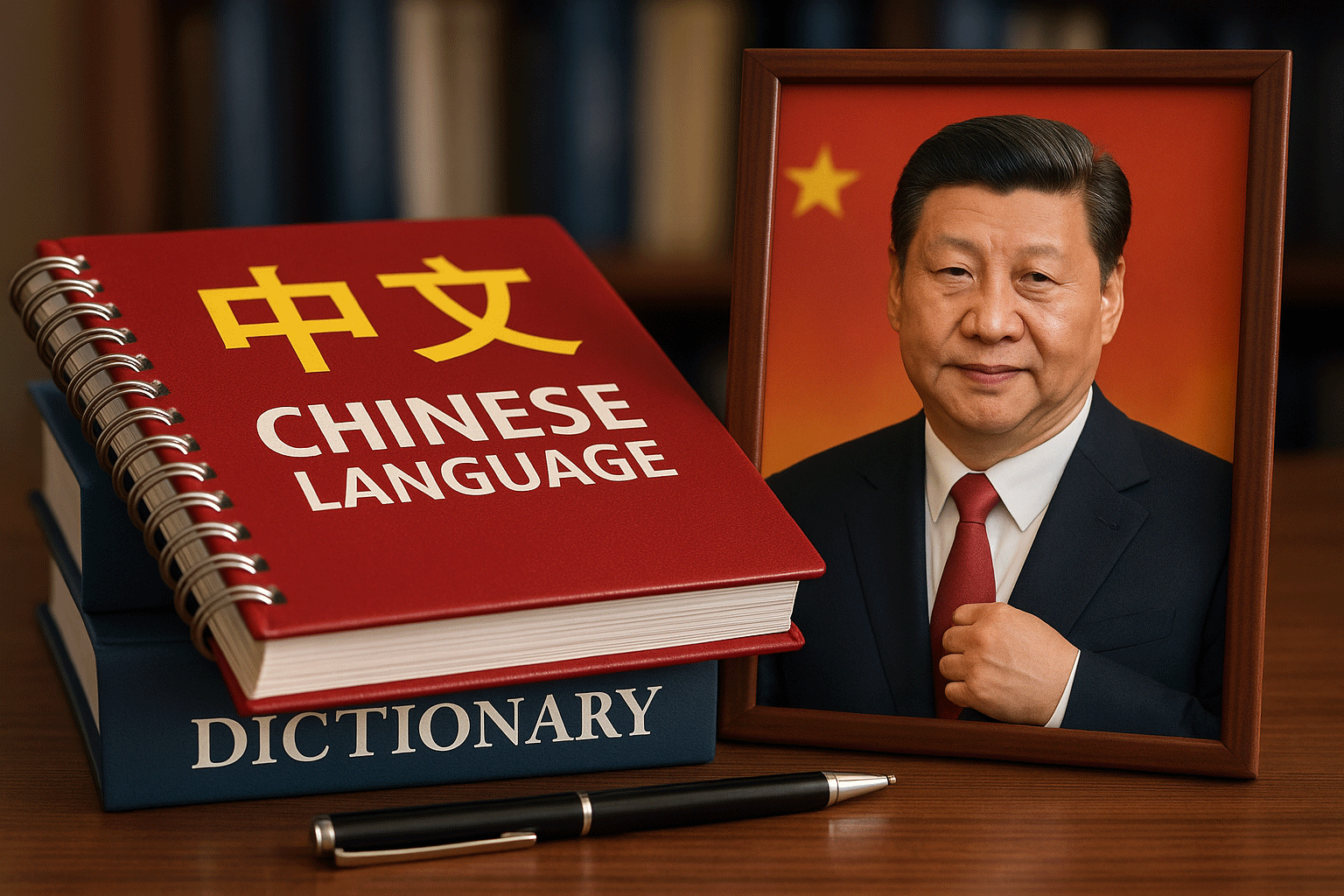
Western governments have armies of Mandarin speakers and AI translators, yet they keep misreading Beijing. What’s missing, as Stefan Messingschlager argues, is independent, context-rich expertise – people able to decode China’s history-laden signals and puncture bureaucratic groupthink. This kind of knowledge is strategic insurance every democracy needs before the next crisis hits
Research Associate (PhD Candidate), Chair of Modern History, Helmut-Schmidt-University Hamburg
Stefan is a historian and political scientist, educated at the University of Konstanz and Peking University.
His research focuses on the history and politics of modern China since the 1970s, the evolving dynamics of Sino-German relations in the twentieth century, China’s changing role in global affairs, and contemporary challenges in foreign and security policy amid Sino-American competition.
His work has appeared in peer-reviewed journals in German, English, and Mandarin.
In his PhD thesis, Stefan examines the history of China expertise from the 1960s to the 1980s, analysing how journalists, scholars, businesspeople, and diplomats served as mediators between political systems, forming an epistemic community that shaped West Germany’s understanding of 'Black Box China'.
Beyond academia, Stefan regularly contributes to public debates on Sino-Western relations through interviews and commentary in national and international media.
Since 2022, he has advised federal institutions on aspects of German China policy.
We use necessary cookies to make our site work. We'd also like to set analytics cookies that help us make improvements by measuring how you use the site. These will be set only if you accept.
▼
Strictly Necessary Cookies
Necessary cookies enable core functionality such as security, network management, and accessibility. You may disable these by changing your browser settings, but this may affect how the website functions.
▼
Analytics Cookies
Google Analytics
We'd like to set Google Analytics cookies to help us improve our website by collecting and reporting information on how you use it. The cookies collect information in a way that does not directly identify anyone. For more information on how these cookies work please see our Privacy Notice.