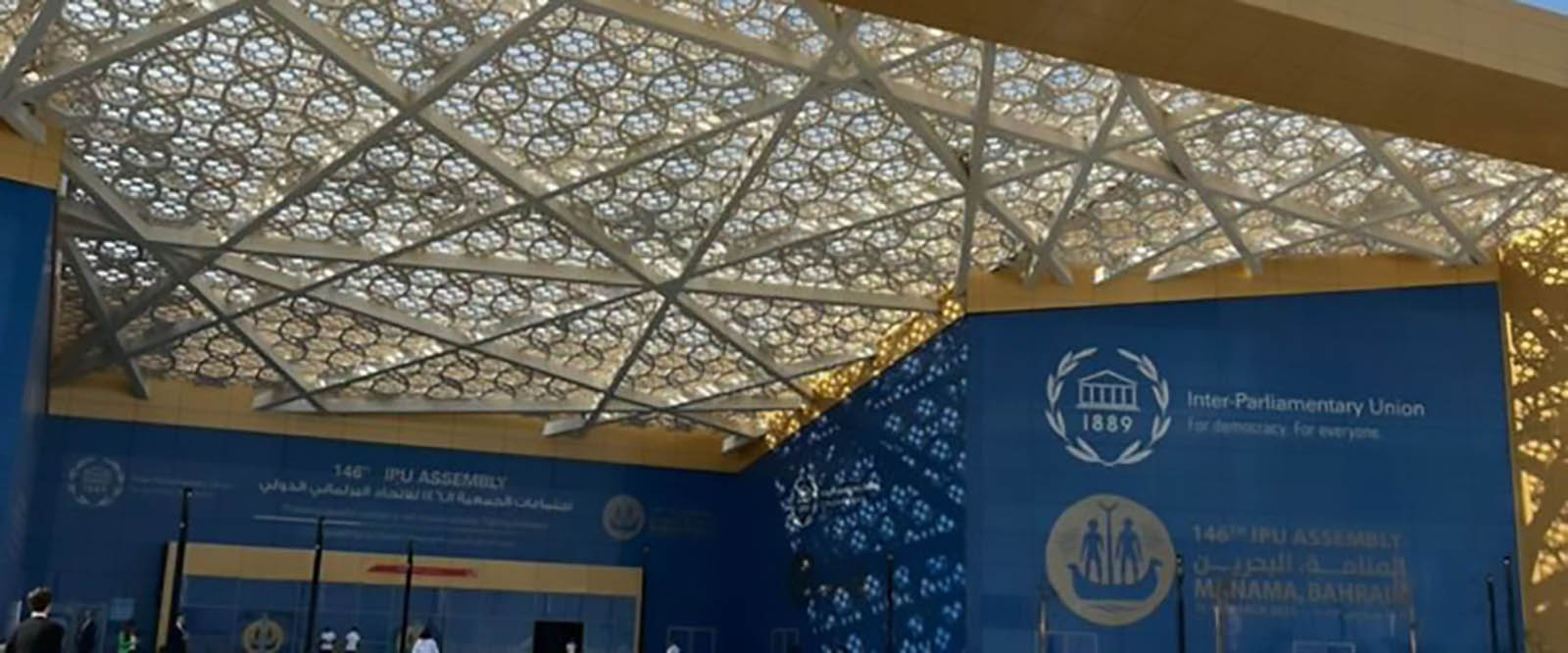
When we consider national parliaments, we think of the domestic arena. However, there are rarely observed foreign dimensions to the work of national legislators. Philipp Bien, Meray Maddah and Thomas Malang argue that, through fora like the Inter-Parliamentary Union, national legislators have become an important group in international politics
PhD Candidate, Department of Politics and Public Administration / Graduate School of Behavioral Sciences, University of Konstanz
Philipp is part of the research project Legislators in International Politics.
His dissertation focuses on multilateral international parliamentary institutions (IPIs).
Specifically, he is interested in how IPIs and parliamentary participation in international and global governance more broadly affect the outcomes of international policy-making and their legitimacy.
Previously, Philipp was a postgraduate research assistant at the Global Summitry Project at the University of Toronto, where he supported research projects on global governance, UN Sustainable Development Goals, and the consequences of civil war on domestic violence.
Philipp obtained his Bachelor’s degree in political science and public administration from the University of Konstanz in 2018.
Subsequently, he graduated with a Master’s degree in Global Affairs from the Munk School of Global Affairs and Public Policy at the University of Toronto in 2021.
We use necessary cookies to make our site work. We'd also like to set analytics cookies that help us make improvements by measuring how you use the site. These will be set only if you accept.
▼
Strictly Necessary Cookies
Necessary cookies enable core functionality such as security, network management, and accessibility. You may disable these by changing your browser settings, but this may affect how the website functions.
▼
Analytics Cookies
Google Analytics
We'd like to set Google Analytics cookies to help us improve our website by collecting and reporting information on how you use it. The cookies collect information in a way that does not directly identify anyone. For more information on how these cookies work please see our Privacy Notice.