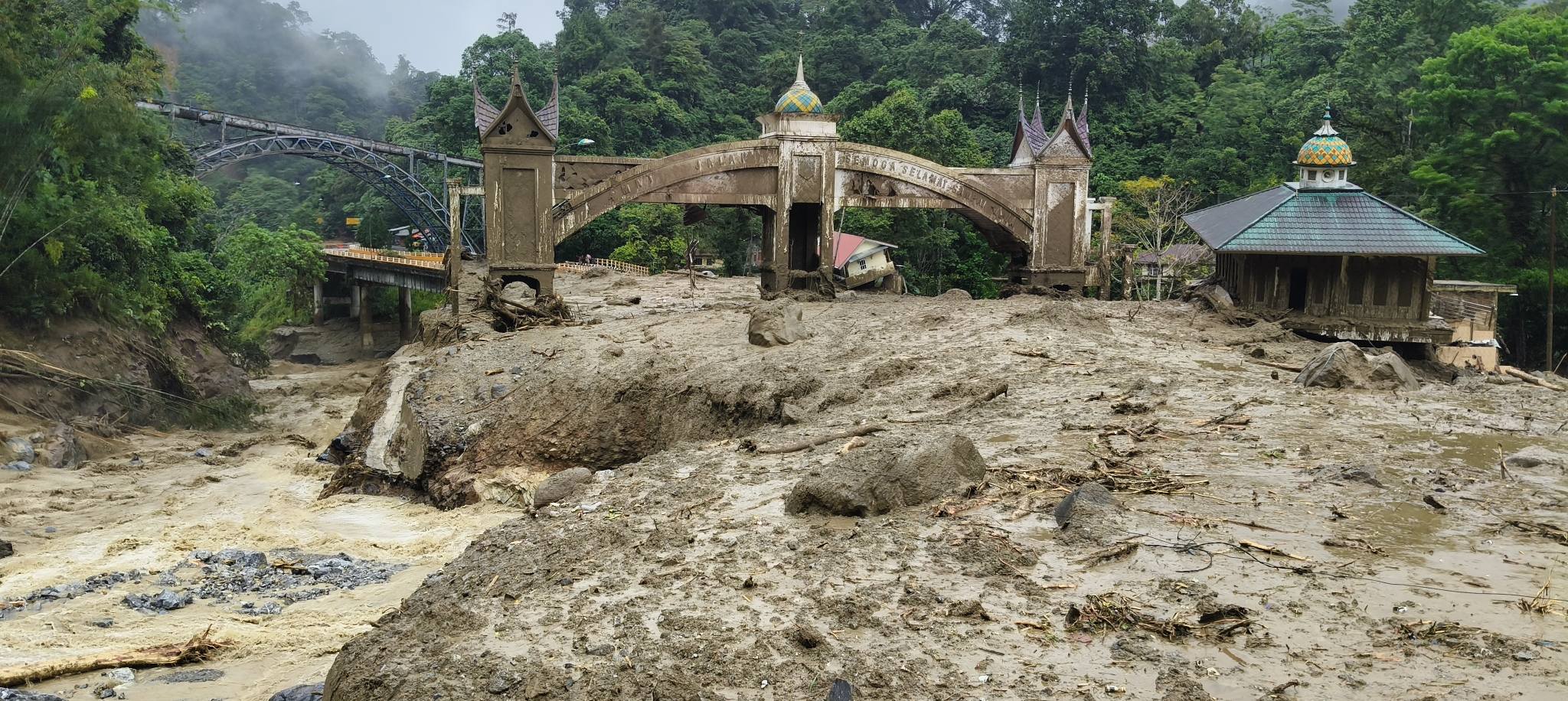
Fadhilah Primandari and M. Ammar Hidayahtulloh reflect on the Indonesian government’s response to Sumatra's calamitous floods in November 2025. They argue that when authorities gaslight disaster victims into believing they can handle the consequences, they merely prolong and delegitimise victims’ suffering
Postdoctoral Researcher, Radboud University Nijmegen
Ammar is a postdoctoral researcher at the Centre for International Conflict Analysis & Management (CICAM).
He obtained his PhD in political science from the University of Queensland (UQ), Australia in 2025.
His research focus broadly falls under the field of gender politics, including women’s political activism and participation, the intersection of gender and Islam, gender, peace and security, and gender policymaking.
He has a strong interest in progressing feminist institutionalism as an analytical framework and a methodology, using Southeast Asia as a site for knowledge production.
Throughout his research journey, he has worked closely with women's rights and feminist organisations in Indonesia and Timor Leste.
Ammar has published his research in the aforementioned areas both independently and collaboratively, in peer-reviewed journals, including Journal of Contemporary Asia, Revista UNISCI, and Jurnal Hubungan Internasional.
He has also contributed to public debate by writing short analyses and commentaries on online media platforms, such as Indonesia at Melbourne, The Conversation Indonesia, and ASEAN Notes.
We use necessary cookies to make our site work. We'd also like to set analytics cookies that help us make improvements by measuring how you use the site. These will be set only if you accept.
▼
Strictly Necessary Cookies
Necessary cookies enable core functionality such as security, network management, and accessibility. You may disable these by changing your browser settings, but this may affect how the website functions.
▼
Analytics Cookies
Google Analytics
We'd like to set Google Analytics cookies to help us improve our website by collecting and reporting information on how you use it. The cookies collect information in a way that does not directly identify anyone. For more information on how these cookies work please see our Privacy Notice.