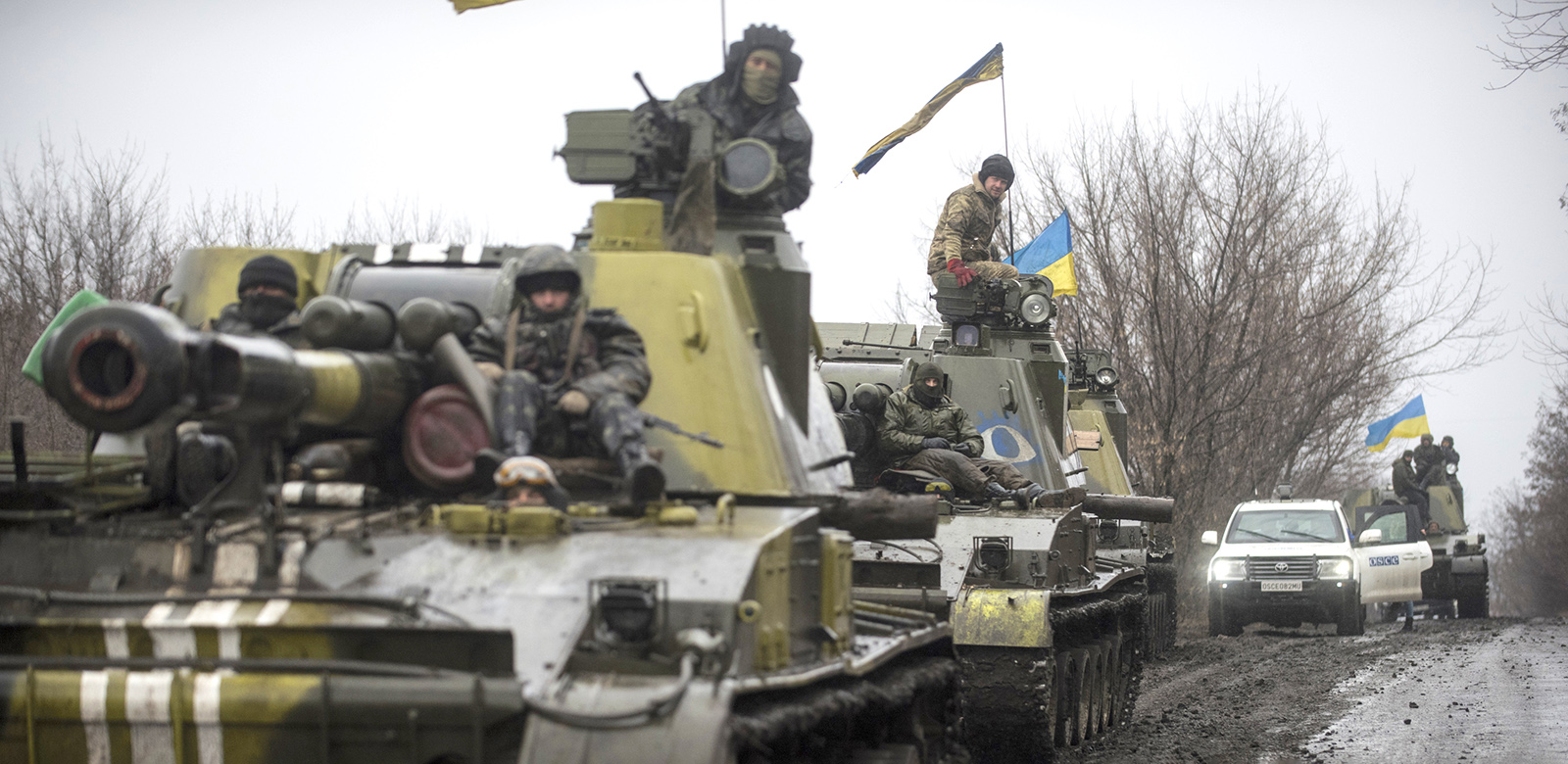
How do small and medium-sized states safeguard their sovereignty and national interests amid intensifying great-power rivalry and a fragmented international order? To answer this question, John Karlsrud, Maryna Rabinovych, and Marianne Riddervold introduce the concept of diplomatic resilience
Maryna Rabinovych argues that Russia’s invasion of Ukraine reshaped EU enlargement dynamics, creating both pressure and opportunity. To sustain momentum, the EU needs a strategic vision and transparent policies. By harnessing wartime spillover effects, the EU can transform reactive measures into structured accession pathways for Ukraine and Moldova
Postdoctoral Researcher, Department of Social Sciences, UiT: the Arctic University of Norway
Maryna is also affiliated with the Department of Public Policy at Kyiv School of Economics, and holds a non-residential fellowship with the U-NET Ukraine Research Network at the Centre for East European and International Studies, ZOiS, Berlin.
She holds a PhD from the University of Hamburg and has researched at the the Aristotle University of Thessaloniki, Vienna University, the University of Agder (Norway) and, most recently, Sydney University of Technology.
Her research interests include the European Union and its external relations, Ukraine’s European integration, politico-legal developments in Ukraine, and the 2014 decentralisation reform and its long-term effects, in particular on municipalities’ wartime resilience.
The Loop
Cutting-edge analysis showcasing the work of the political science discipline at its best.
We use necessary cookies to make our site work. We'd also like to set analytics cookies that help us make improvements by measuring how you use the site. These will be set only if you accept.
▼
Strictly Necessary Cookies
Necessary cookies enable core functionality such as security, network management, and accessibility. You may disable these by changing your browser settings, but this may affect how the website functions.
▼
Analytics Cookies
Google Analytics
We'd like to set Google Analytics cookies to help us improve our website by collecting and reporting information on how you use it. The cookies collect information in a way that does not directly identify anyone. For more information on how these cookies work please see our Privacy Notice.