


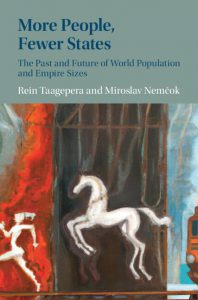
As population growth slows, Miroslav Nemčok and Rein Taagepera draw on a striking demographic stall 2,000 years ago that preceded political fragmentation and imperial collapse. What does it mean for today’s institutions — and can modern states withstand the pressures of a post-growth world?
Postal voting is praised for its ability to lower the costs of electoral participation. However, Miroslav Nemčok and Johanna Peltoniemi argue that postal voting has its limits. If voters doubt their ballots will make it to the ballot box uncompromised, they are unlikely to exercise their democratic right
Researcher, Department of Political Science, University of Oslo
Miroslav's research focuses on the foundations of public support for democratic systems; in particular the performance of democratic institutions, welfare state policies, and, more recently, the strains placed on public administration by increasingly complex legislation.
His articles have appeared in the European Journal of Political Research, Public Management Review, Political Behavior, West European Politics, Electoral Studies, Party Politics, and other leading journals.
We use necessary cookies to make our site work. We'd also like to set analytics cookies that help us make improvements by measuring how you use the site. These will be set only if you accept.
▼
Strictly Necessary Cookies
Necessary cookies enable core functionality such as security, network management, and accessibility. You may disable these by changing your browser settings, but this may affect how the website functions.
▼
Analytics Cookies
Google Analytics
We'd like to set Google Analytics cookies to help us improve our website by collecting and reporting information on how you use it. The cookies collect information in a way that does not directly identify anyone. For more information on how these cookies work please see our Privacy Notice.
