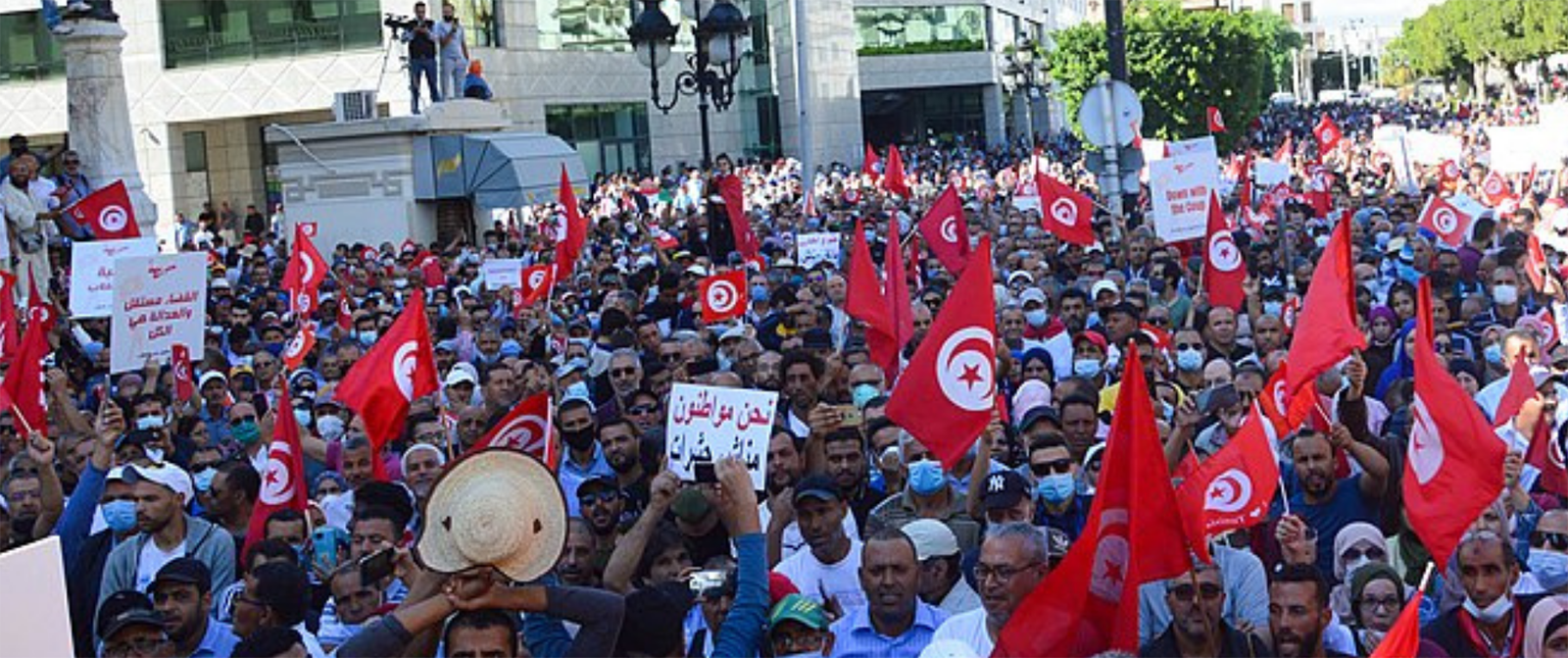

Throughout 2023 Tunisia's immigration policies have made headlines, with authoritarian President Saied’s xenophobic speech, a new EU-Tunisia migration deal, and repeated protests condemning violence against Black migrants. But authoritarianism doesn’t inevitably result in increased migrant rights violations. Nor, however, does democratisation guarantee improved rights, as Katharina Natter shows
Senior Assistant Professor, Institute of Political Science, Leiden University
Katharina researches migration politics from a comparative perspective, with a particular focus on the role of political regimes in immigration policymaking.
Her work seeks to advance migration policy theory and to connect it with broader social science research on modern statehood and political change.
She also hopes to contribute to the wider academic effort of bridging theorisations of socio-political processes in the Global South and the Global North.
Katharina has published, inter alia, in International Migration Review, Population and Development Review, Mediterranean Politics, Third World Quarterly and the Journal of North African Studies.
We use necessary cookies to make our site work. We'd also like to set analytics cookies that help us make improvements by measuring how you use the site. These will be set only if you accept.
▼
Strictly Necessary Cookies
Necessary cookies enable core functionality such as security, network management, and accessibility. You may disable these by changing your browser settings, but this may affect how the website functions.
▼
Analytics Cookies
Google Analytics
We'd like to set Google Analytics cookies to help us improve our website by collecting and reporting information on how you use it. The cookies collect information in a way that does not directly identify anyone. For more information on how these cookies work please see our Privacy Notice.
