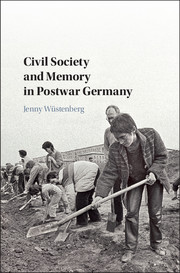
Memory is crucial for democracy, but not only because it can teach citizens important norms like tolerance and inclusion. Mnemonic democracy would also mean taking into account whether the views of the majority are represented and public memory is underpinned by legitimate state power, Jenny Wüstenberg writes
Professor of History and Memory Studies, School of Arts and Humanities, Nottingham Trent University
Jenny is a project leader in NTU’s Global Heritage Theme, and co-lead, with Chris Reynolds, of Memory Studies@NTU.
Her research interests include comparative politics and history; memory politics in Europe, in settler colonial societies, and transnationally; civic activism, social movements, and democratisation; the memory of slow-moving and large-scale change; children and families in history and memory; and qualitative and network methodology.
She has held various leadership positions, particularly as one of the founding Co-Presidents of the Memory Studies Association (together with Aline Sierp and Jeffrey Olick).
Jenny is Chair of the COST Action CA20105 on Slow Memory, which will run from 2021–2025.
We use necessary cookies to make our site work. We'd also like to set analytics cookies that help us make improvements by measuring how you use the site. These will be set only if you accept.
▼
Strictly Necessary Cookies
Necessary cookies enable core functionality such as security, network management, and accessibility. You may disable these by changing your browser settings, but this may affect how the website functions.
▼
Analytics Cookies
Google Analytics
We'd like to set Google Analytics cookies to help us improve our website by collecting and reporting information on how you use it. The cookies collect information in a way that does not directly identify anyone. For more information on how these cookies work please see our Privacy Notice.