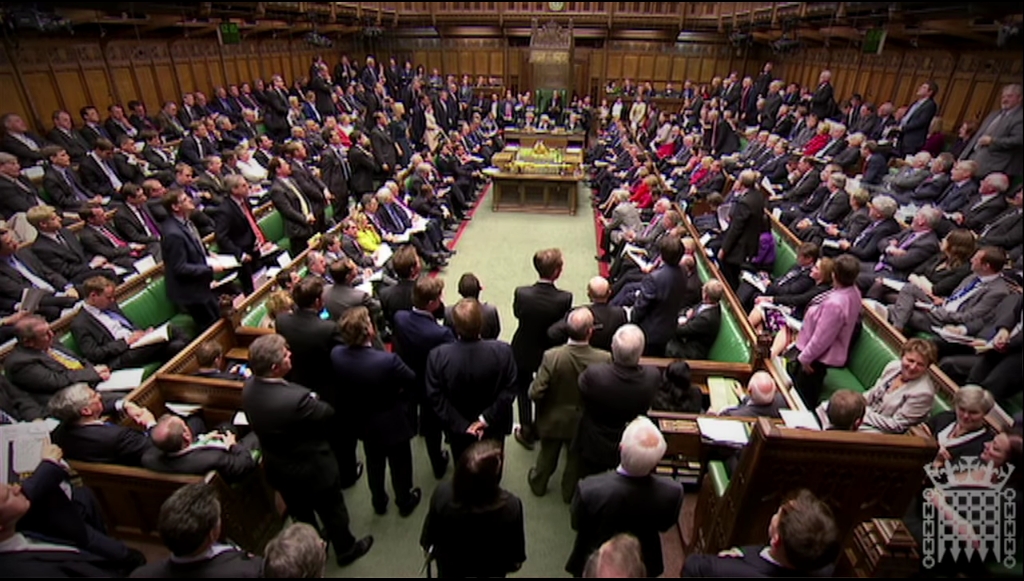
Westminster's voting system is failing, and 193 MPs have demanded change. But democracy's defenders must guard institutional gains and address the grievances on which the far-right feeds. A National Commission, says Gulay Icoz, honours both. Hasty legislation honours neither
Gulay Icoz explores how the rejuvenated Science of Democracy series – Science of Democracy 2.0 – challenges conventional democratic theory. Here, she explains how it opens new pathways for citizen-led innovation while raising critical questions about institutional grounding and feasibility
Visiting Researcher, Department of Law and Social Sciences, Middlesex University / Labour Councillor Candidate for Bethnal Green West, 2026 Local Elections
Gulay is interested in exploring democratic backsliding, democratic resilience, and the strategic behaviour of political parties within constraining institutional environments.
Her work draws on historical institutionalism and process tracing to examine how political actors navigate, resist, or enable shifts in governance and the rule of law, with a regional focus on Central and Eastern Europe, Turkey, and the UK.
She has published peer reviewed research on EU-Turkey relations in the Journal of Contemporary European Studies, contributed a book chapter and special issues on historical institutionalism and accession politics, and authored multiple reviews for the Journal of Common Market Studies and Political Studies Review.
Her current projects include comparative studies of pre-election alliances, post-election democratic restoration, and the institutional constraints shaping party strategies, alongside forthcoming public scholarship for Verfassungsblog and Democratic Theory’s 'Dispatch from the Field' series.
We use necessary cookies to make our site work. We'd also like to set analytics cookies that help us make improvements by measuring how you use the site. These will be set only if you accept.
▼
Strictly Necessary Cookies
Necessary cookies enable core functionality such as security, network management, and accessibility. You may disable these by changing your browser settings, but this may affect how the website functions.
▼
Analytics Cookies
Google Analytics
We'd like to set Google Analytics cookies to help us improve our website by collecting and reporting information on how you use it. The cookies collect information in a way that does not directly identify anyone. For more information on how these cookies work please see our Privacy Notice.