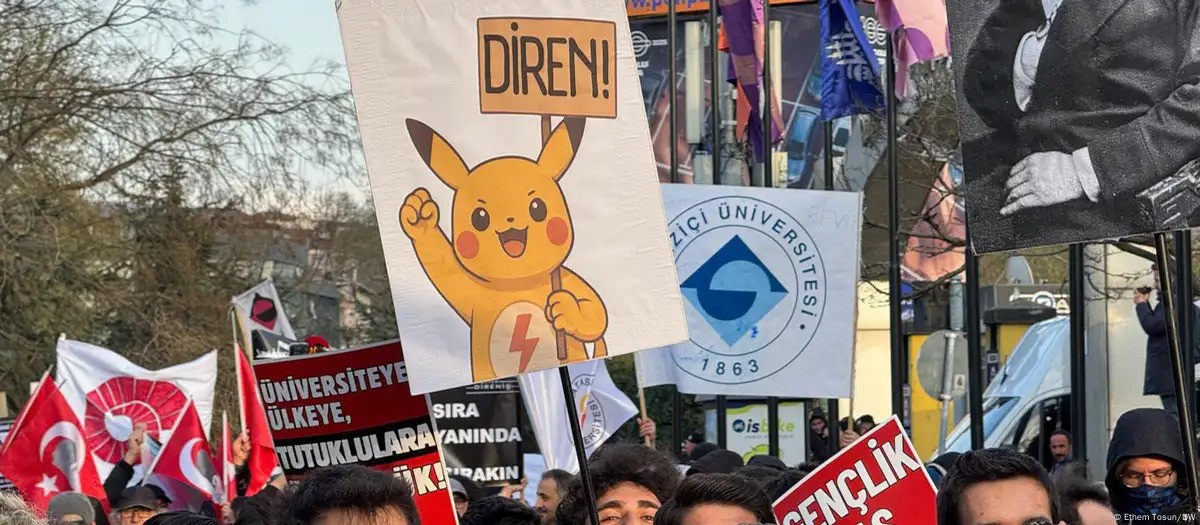
Ecem Nazlı Üçok explores how student protests in Turkey, Serbia, and Georgia reflect more than isolated unrest — they reveal a transnational wave of political mourning, democratic erosion, and Gen Z-led resistance. In the face of authoritarianism, students are not just reacting — they are reimagining the future
PhD Candidate and Lecturer, Department of Sociology, Charles University, Prague
Ecem teaches courses on Political Sociology and Gender Studies at Charles University and Urban Sociology the Architectural Institute in Prague (ARCHIP).
She holds an MSc in Sociology and Gender Studies from Lund University, Sweden, and has been a visiting doctoral fellow at the University of Vienna and Scuola Normale Superiore in Italy.
Her research interests span political sociology and psychology, social movement studies, political activism, anti-gender movements in Europe, far-right politics, urban sociology, transnational migration, and critical studies on men and masculinities.
Her PhD project aims to de-westernise the narratives surrounding anti-gender politics by focusing on feminist diaspora activism from CEE and SWANA regions, particularly through the lens of political activism from Poland and Turkey.
Ecem's doctoral research examines how activist migrant women from Turkey and Poland navigate their migration, activist identities and practices in exile, amid the challenges of political polarisation, rising authoritarianism, neoliberalism, and the rise of religious fundamentalism.
We use necessary cookies to make our site work. We'd also like to set analytics cookies that help us make improvements by measuring how you use the site. These will be set only if you accept.
▼
Strictly Necessary Cookies
Necessary cookies enable core functionality such as security, network management, and accessibility. You may disable these by changing your browser settings, but this may affect how the website functions.
▼
Analytics Cookies
Google Analytics
We'd like to set Google Analytics cookies to help us improve our website by collecting and reporting information on how you use it. The cookies collect information in a way that does not directly identify anyone. For more information on how these cookies work please see our Privacy Notice.