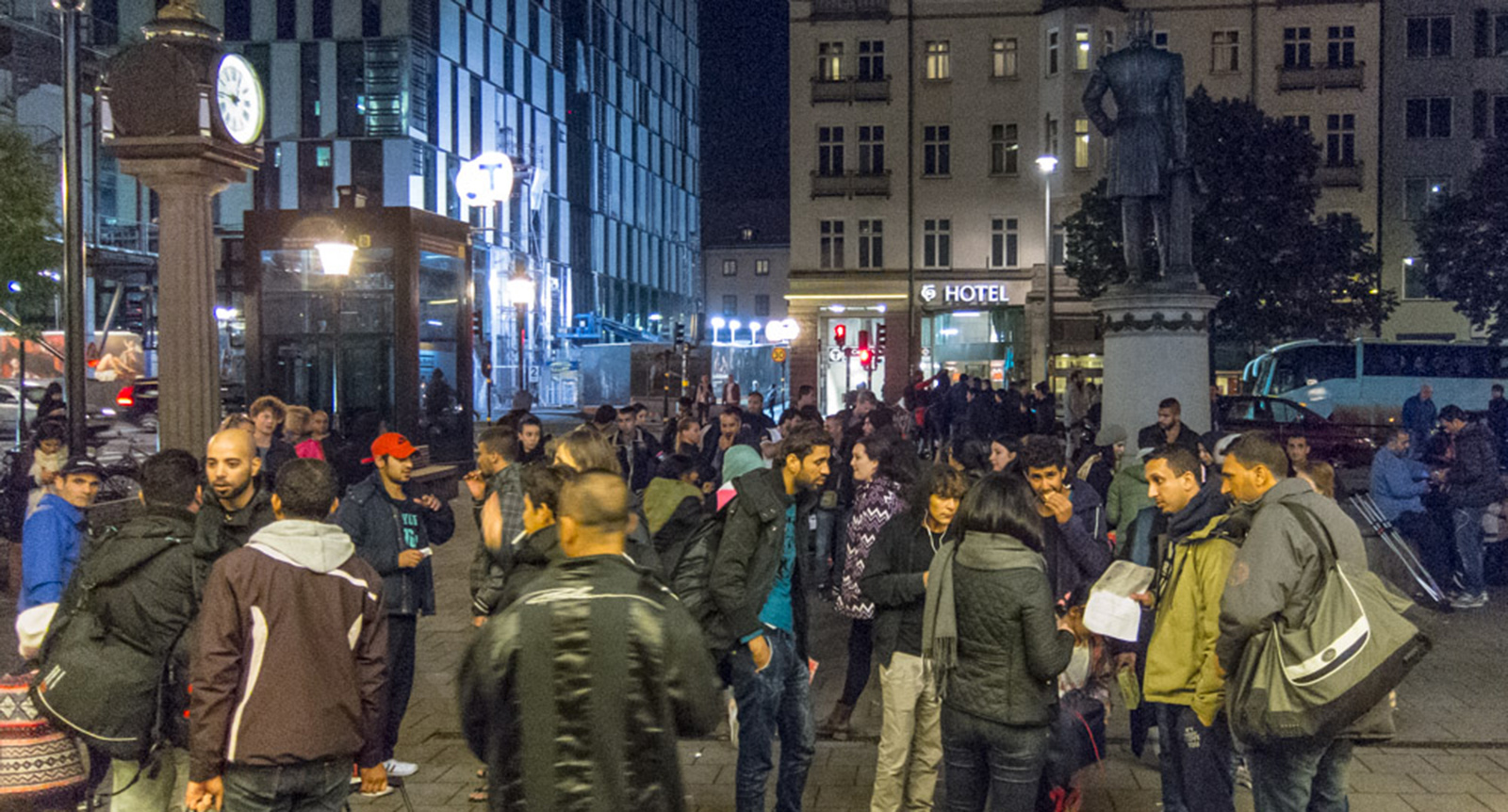
In the run-up to Sweden's 2026 election, far-right parties treated the hijab as proof that migrants neither belong nor can be assimilated. Azher Hameed Qamar argues that this debate reveals a democratic tension. Does equality demand sameness? Or does it protect participation despite cultural differences
Denmark recently adopted a law to ban inappropriate treatment of any writing or object with religious significance – a peace initiative in the best interests of a multicultural society. Azher Hameed Qamar sees this law as a step towards freedom of expression that will also help bridge social divides
The Swedish government has proposed an obligation that would require public sector workers to notify police and immigration authorities about undocumented migrants. Azher Hameed Qamar says the proposal contradicts professional ethics and human rights. Using employees as 'agents' compromises social care, welfare organisations' credibility and humanitarian ethics
Sweden has seen several Quran-burning incidents, which can reinforce anti-religious discourses and politicised campaigns against religious minorities. It can also put Swedish multicultural harmony at risk. Laws permitting this must be interpreted in the best interest of the people and their holistic well-being, argues Azher Hameed Qamar
Postdoctoral Researcher, COFUND Migration, Diaspora, and Citizenship Programme, University of Münster
Azher is a writer, anthropologist, and teacher.
He obtained his doctorate from the Norwegian University of Science and Technology.
Azher's research focuses on social resilience, migration, and social integration.
His postdoctoral study is about the social resilience of young adult migrants in Sweden; phenomenological research exploring young adult migrants' lived experiences.
He recently published a paper in Geoforum entitled Conceptualizing social resilience in the context of migrants' lived experiences, which deals with the challenges of conceptualising social resilience in migration studies, and provided a definition of social resilience in this context.
We use necessary cookies to make our site work. We'd also like to set analytics cookies that help us make improvements by measuring how you use the site. These will be set only if you accept.
▼
Strictly Necessary Cookies
Necessary cookies enable core functionality such as security, network management, and accessibility. You may disable these by changing your browser settings, but this may affect how the website functions.
▼
Analytics Cookies
Google Analytics
We'd like to set Google Analytics cookies to help us improve our website by collecting and reporting information on how you use it. The cookies collect information in a way that does not directly identify anyone. For more information on how these cookies work please see our Privacy Notice.