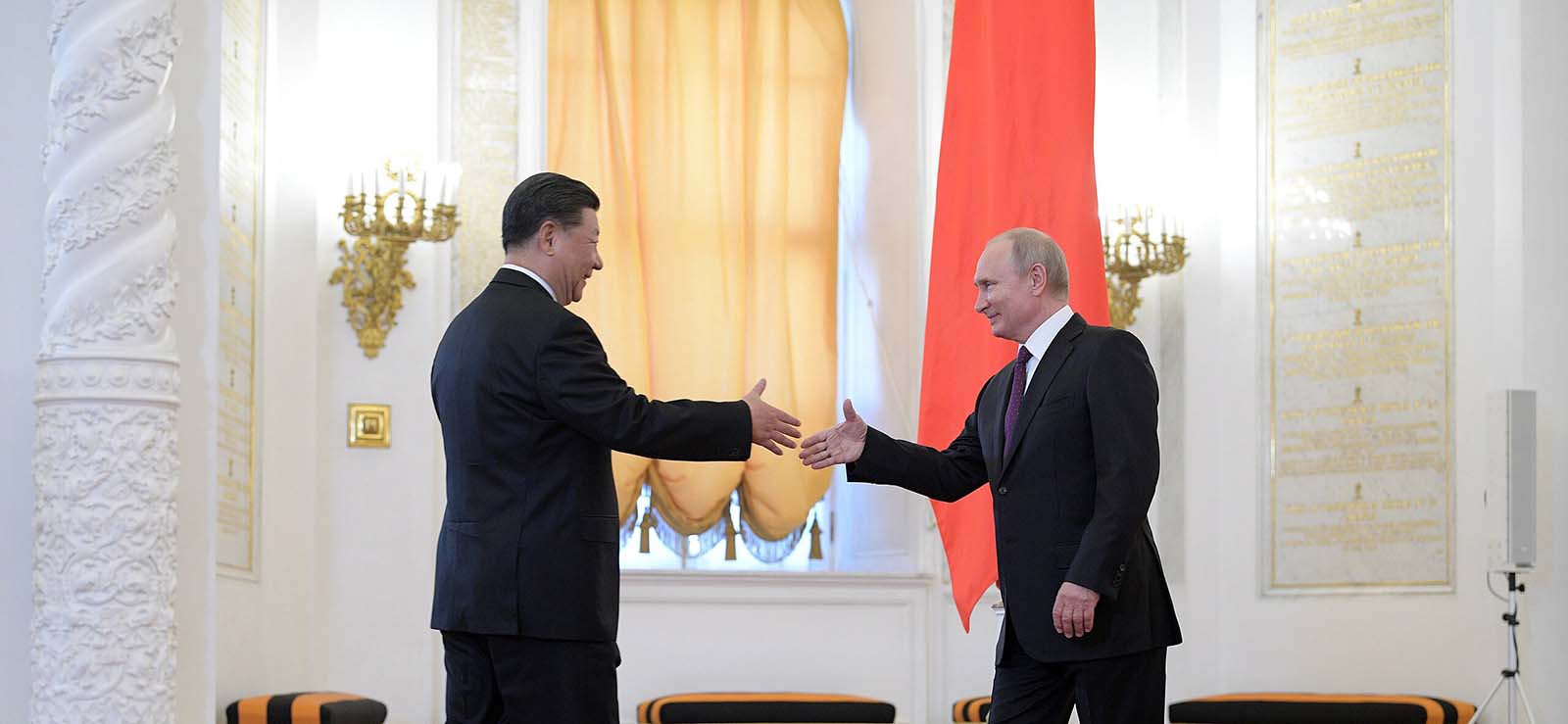
The rise of China as a nuclear peer to the US, amid deepening strategic ties with Russia, poses an unprecedented 'two-peer challenge' to NATO. Adérito Vicente examines how this shifting landscape endangers alliance cohesion. Here, he argues for a fundamental rethinking of Europe’s deterrence and defence posture
Assistant Professor of International Relations and Integrated Researcher, Center for Legal, Economic, International and Environmental Studies, Lusíada University of Porto
Adérito is a nuclear-policy scholar who holds a PhD in Political and Social Sciences from the European University Institute in Florence.
He also serves as a Non-Resident Fellow at the Odesa Center for Nonproliferation at I.I. Mechnikov National University of Odesa, an Associate Researcher at the Portuguese Institute of International Relations, and an External Researcher at the Wilfried Martens Centre for European Studies in Brussels.
Adérito's research interests focus primarily on nuclear politics and strategy, with a particular emphasis on European foreign, security, and defence policy, transatlantic security, and US foreign policy.
He previously held academic positions at James Madison University, the James Martin Center for Nonproliferation Studies, and the Robert Schuman Centre for Advanced Studies. He has also served in professional and diplomatic roles at the European Parliament, NATO, the European External Action Service, and the Disarmament and Non-Proliferation Division of the Portuguese Ministry of Foreign Affairs.
Adérito has published extensively on European security and nuclear politics. His work has been published in TheNonproliferation Review and Bulletin of the Atomic Scientists, as well as in reports and policy papers by Fondation pour la Recherche Stratégique and Istituto Affari Internazionali. He has also contributed to books published by Springer.
We use necessary cookies to make our site work. We'd also like to set analytics cookies that help us make improvements by measuring how you use the site. These will be set only if you accept.
▼
Strictly Necessary Cookies
Necessary cookies enable core functionality such as security, network management, and accessibility. You may disable these by changing your browser settings, but this may affect how the website functions.
▼
Analytics Cookies
Google Analytics
We'd like to set Google Analytics cookies to help us improve our website by collecting and reporting information on how you use it. The cookies collect information in a way that does not directly identify anyone. For more information on how these cookies work please see our Privacy Notice.