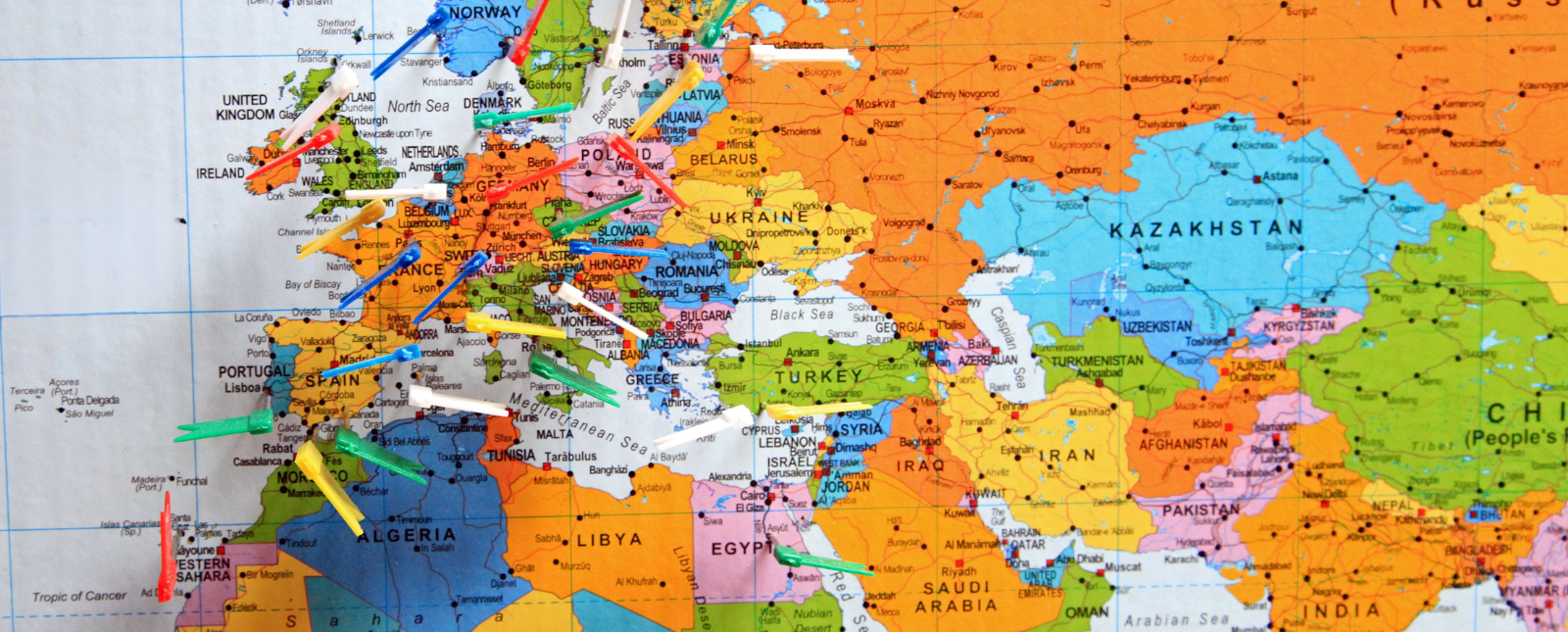
The recent Dutch parliamentary elections and the popular vote on electronic ID in Switzerland revealed the considerable influence of the expat diaspora, which adds crucial votes to overall election results. National political parties, argue Adrian Favero and Gilles Pittoors, need to harness the power of transnational organisations to mobilise non-resident voters
Despite Donald Trump's erratic behaviour, his fan base has formed a loyalty ‘cult’ around him. Yet Elizaveta Gaufman and Adrian Favero explain how it is precisely his transgressive behaviour that is feeding Trump's charismatic authority. And this cult-like devotion of Trump loyalists, they argue, is reminiscent of darker times in US history
How much do national political parties in Europe try to reach citizens who live abroad? Traditionally, party organisations operated within state borders but the increasing mobility of national citizens requires new forms of interconnectedness. A transnational arena has emerged in which parties connect external citizens with domestic politics to secure votes, writes Adrian Favero
Adrian Favero explores the claim that populist leaders are generally charismatic and invaluable for the functioning of 'their' parties. 'Charismatic leadership', he says, is not well conceptualised, nor are leaders unreservedly seen as charismatic by their followers despite being helpful for populist parties’ success
Assistant Professor in European Politics & Society, University of Groningen
Adrian gained his PhD in Politics from the University of Edinburgh in 2018.
He investigates how different social groups engage with the political realities within the European Union.
His research focuses on attitudes towards the EU, intra-EU migration in post-communist settings, and party organisations and right-wing populism within and across European states.
He is also interested in comparative research and mixed methods approaches.
Adrian's research has been published in, among others, the Journal of Contemporary European Studies, the Journal of Common Market Studies, European Political Science Review, and East European Politics.
We use necessary cookies to make our site work. We'd also like to set analytics cookies that help us make improvements by measuring how you use the site. These will be set only if you accept.
▼
Strictly Necessary Cookies
Necessary cookies enable core functionality such as security, network management, and accessibility. You may disable these by changing your browser settings, but this may affect how the website functions.
▼
Analytics Cookies
Google Analytics
We'd like to set Google Analytics cookies to help us improve our website by collecting and reporting information on how you use it. The cookies collect information in a way that does not directly identify anyone. For more information on how these cookies work please see our Privacy Notice.